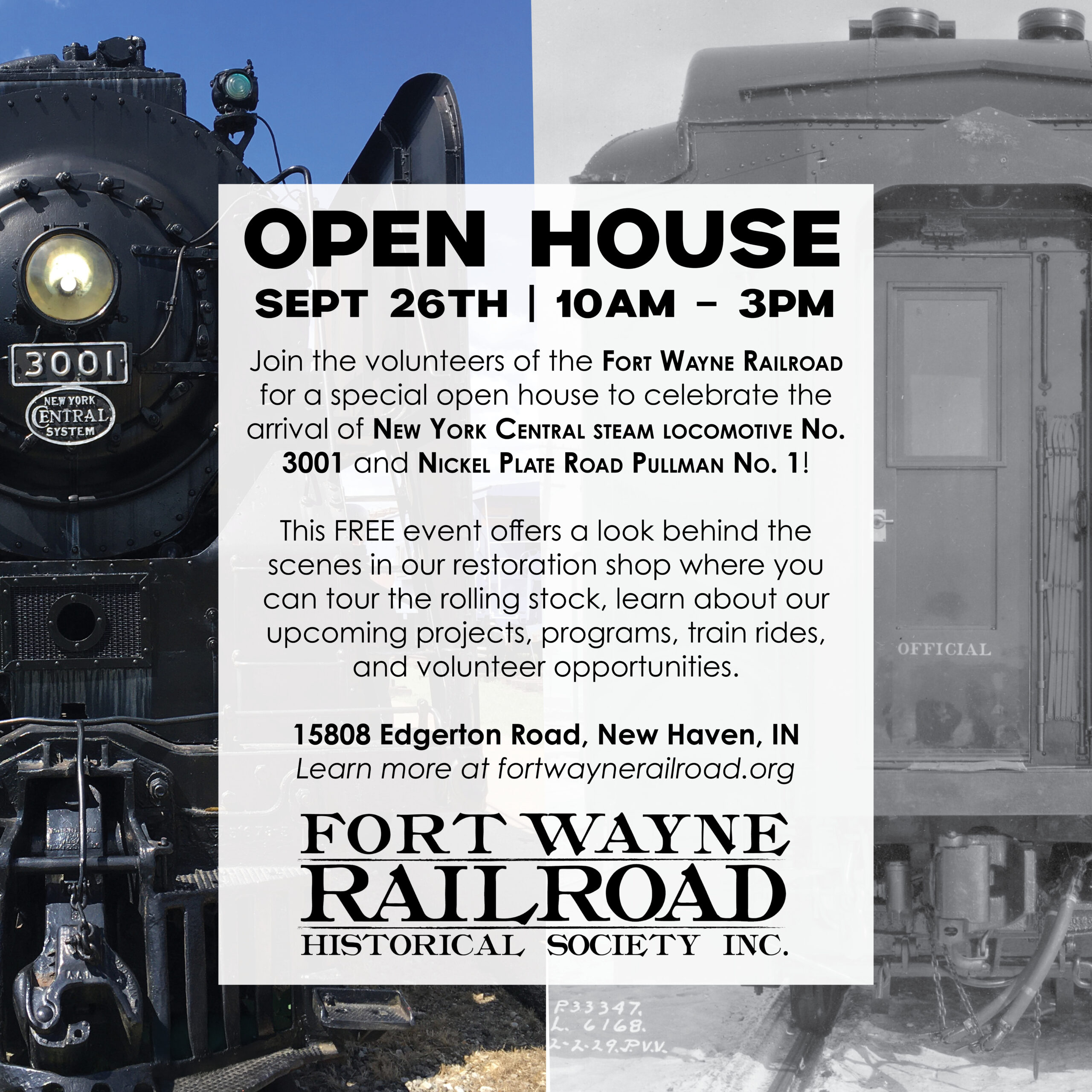
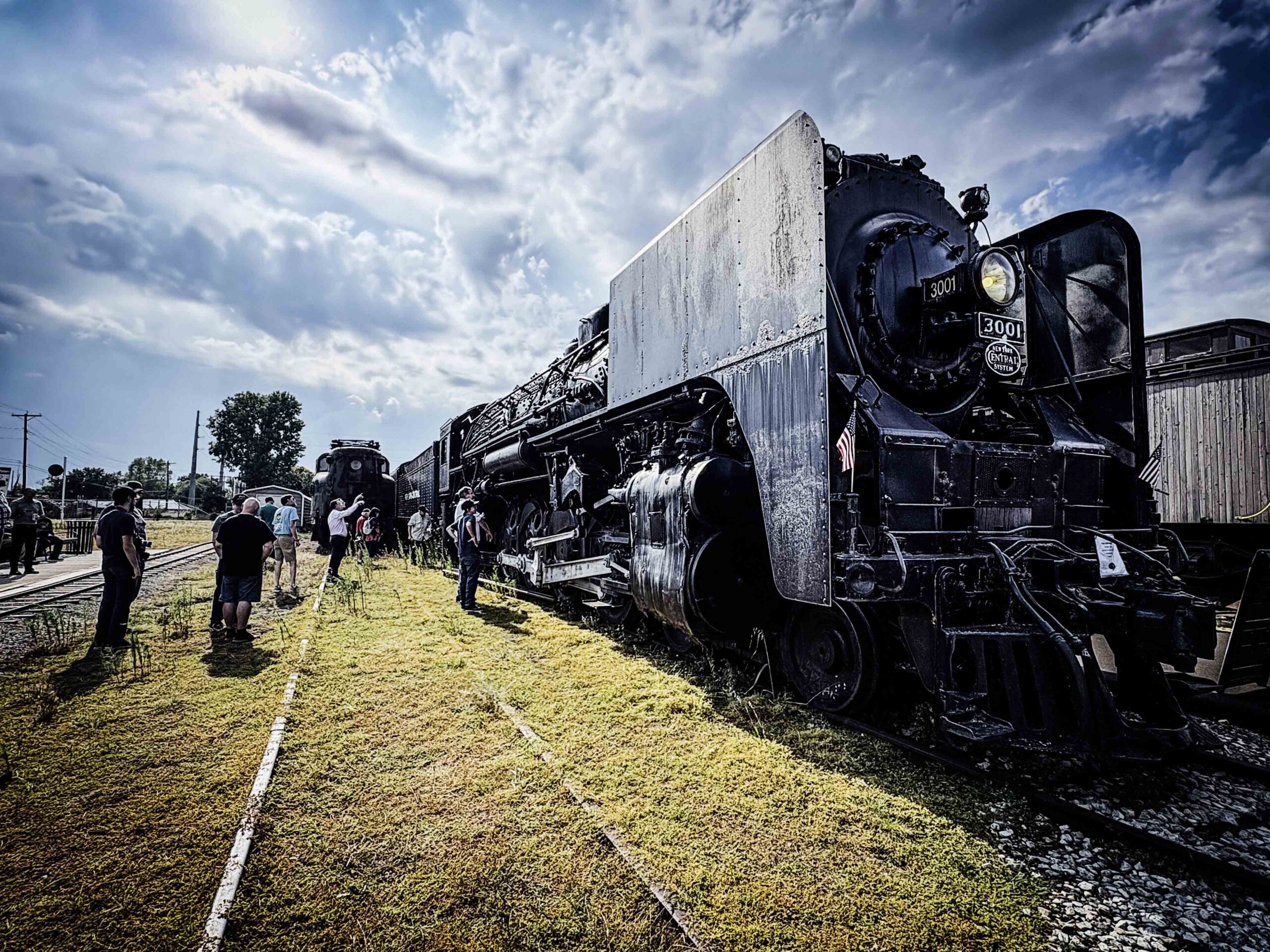
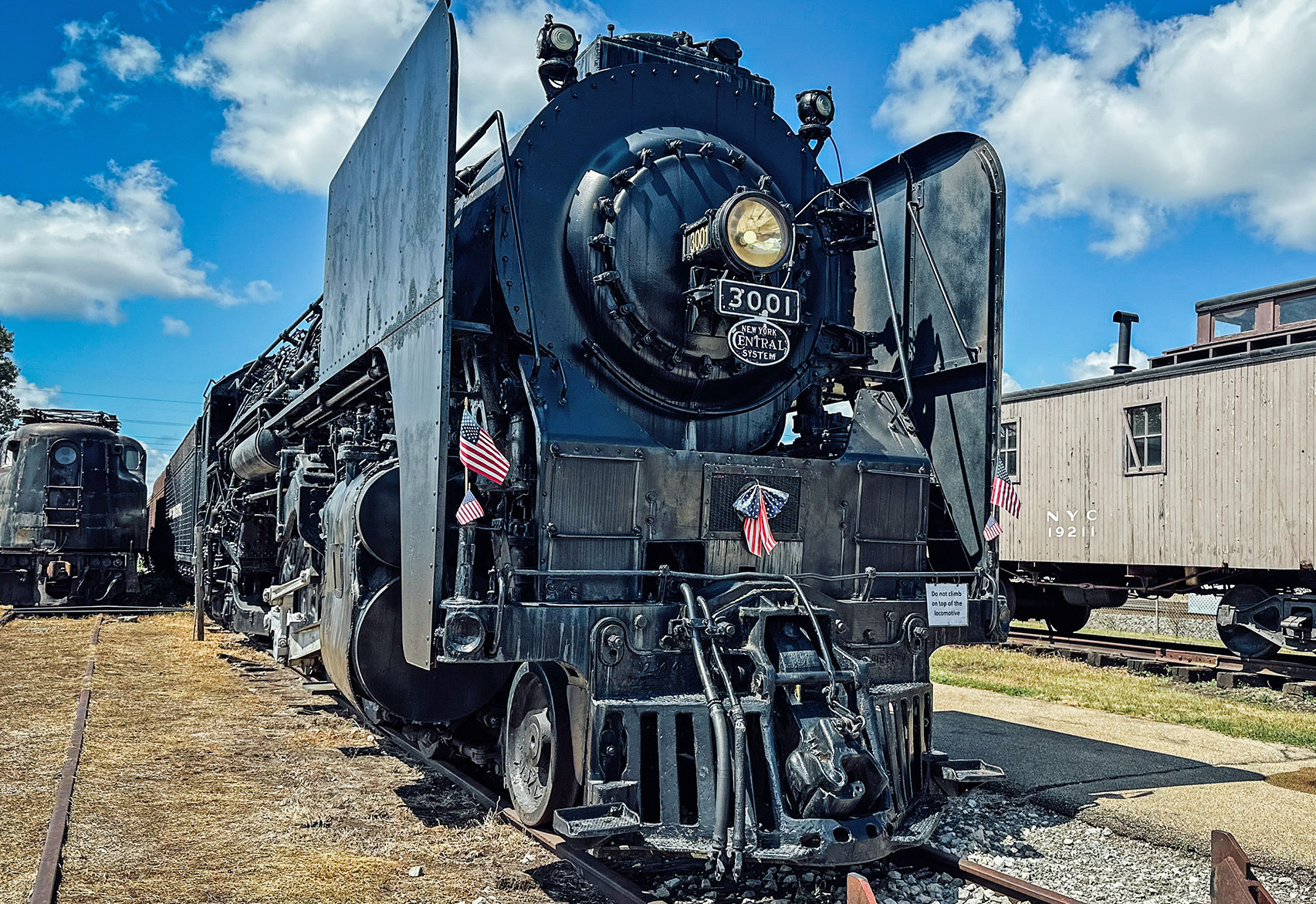
NEW HAVEN, Ind. — The Fort Wayne Railroad will celebrate the successful relocation of New York Central steam locomotive No. 3001 with a free public open house on Saturday, September 26.
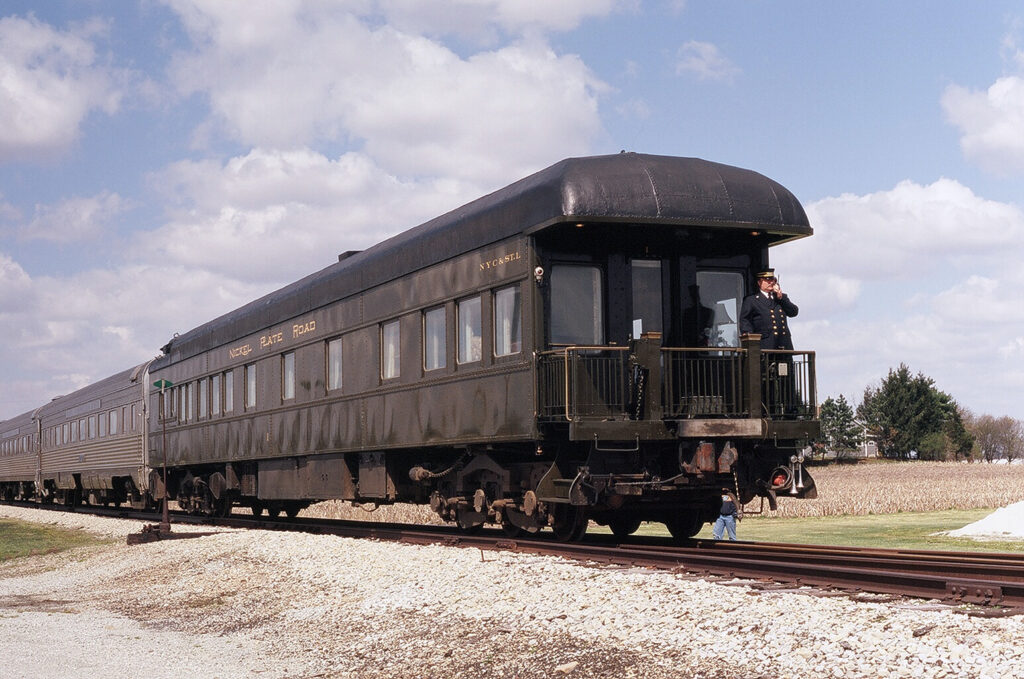
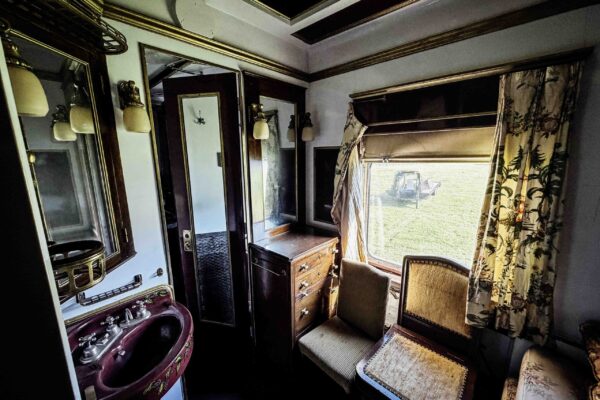
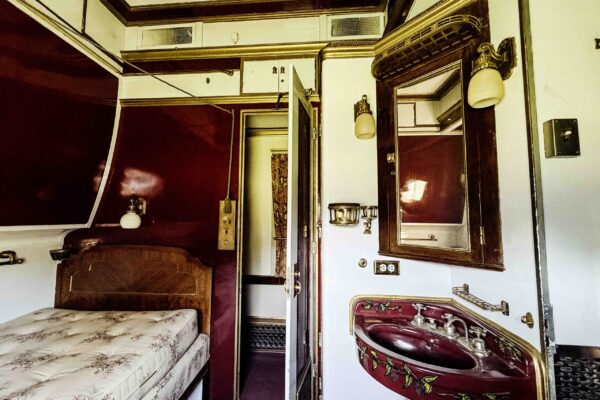
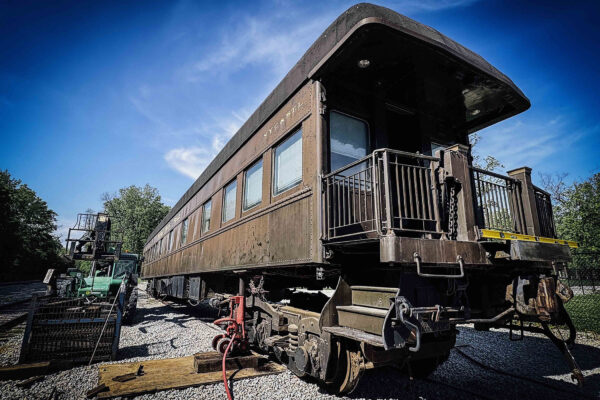
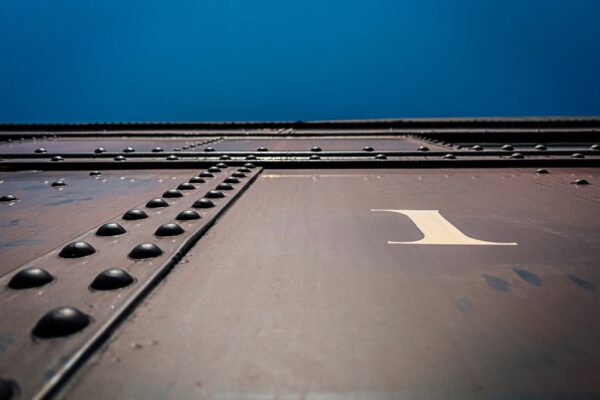
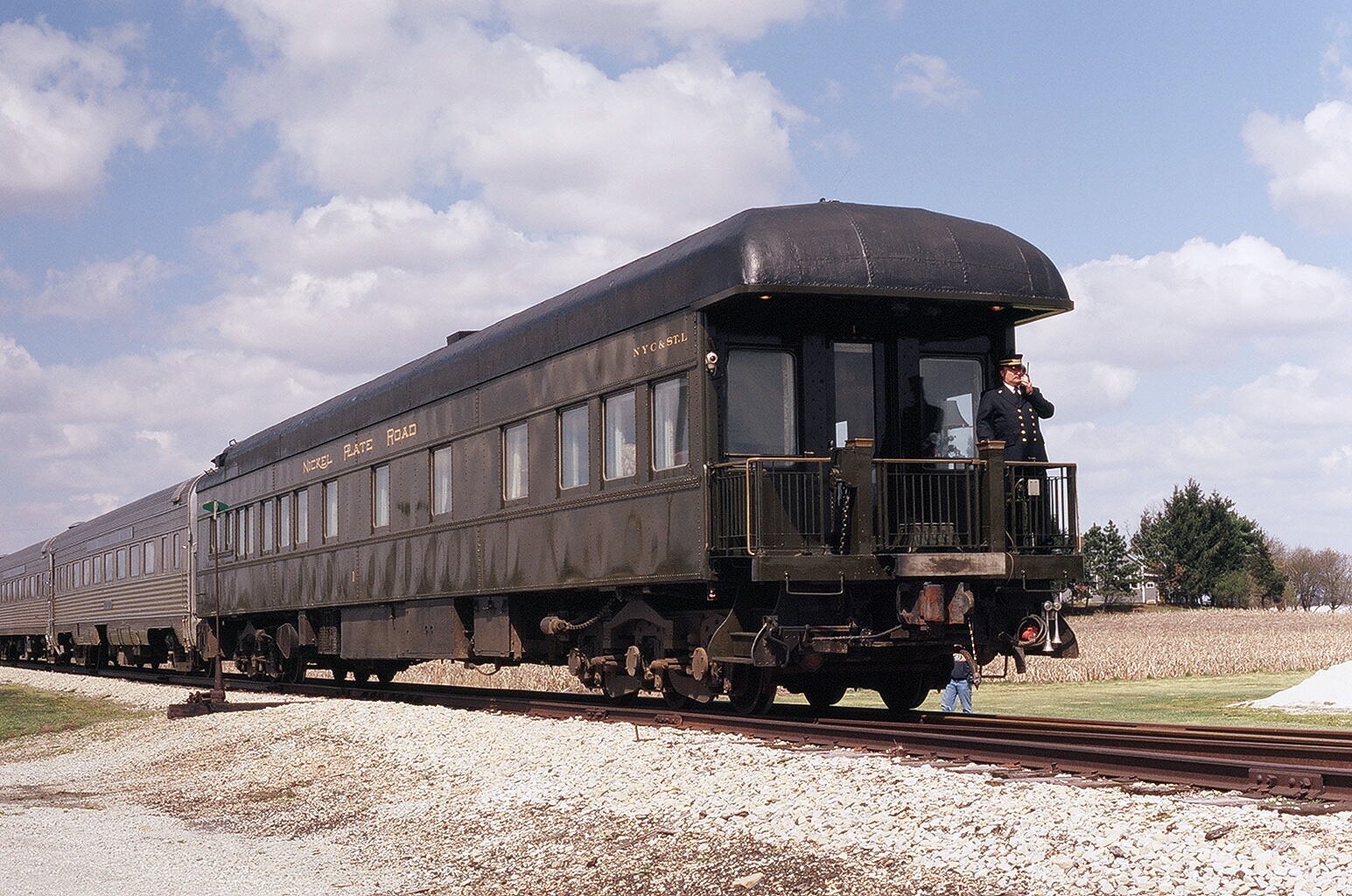
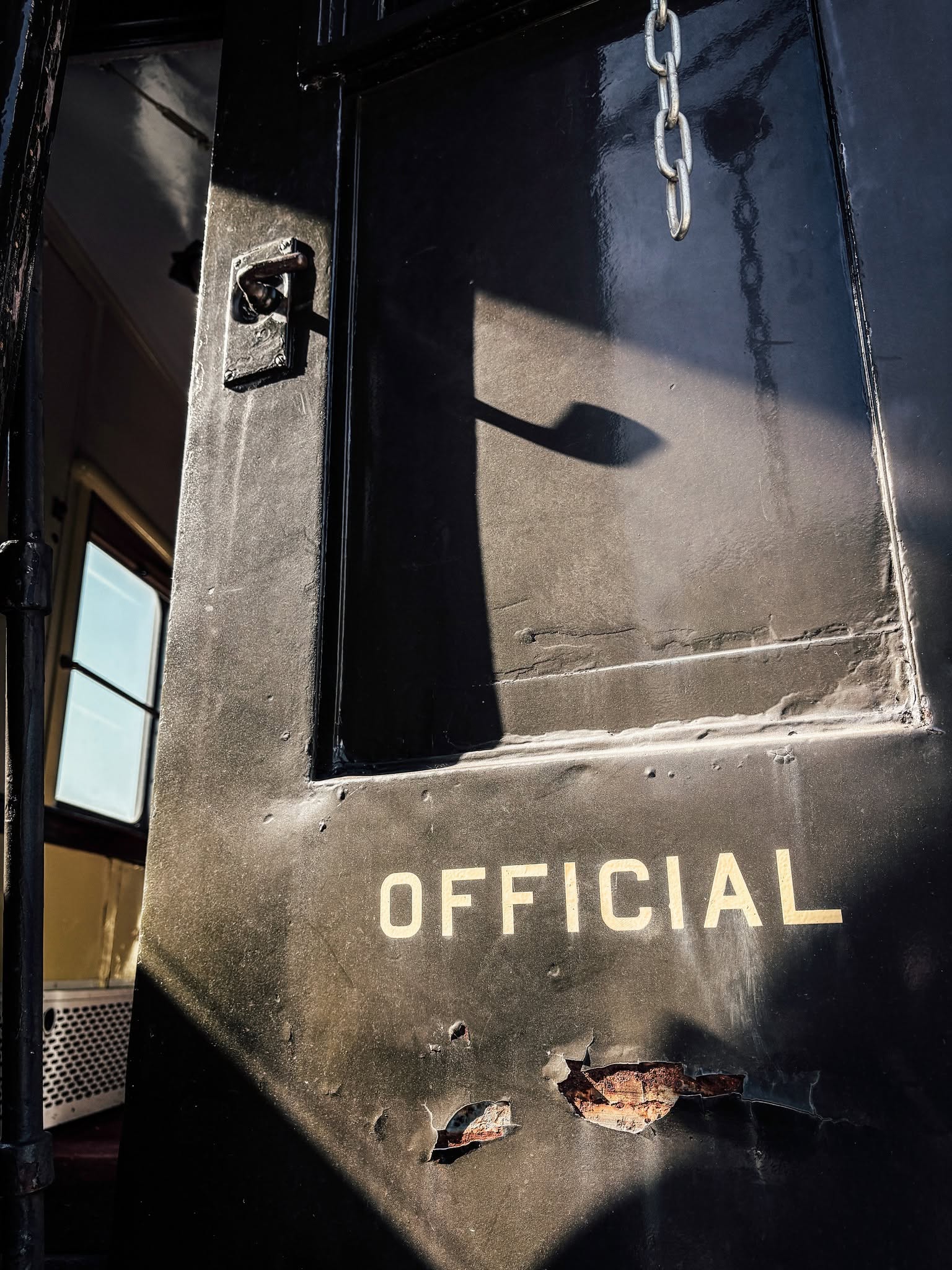
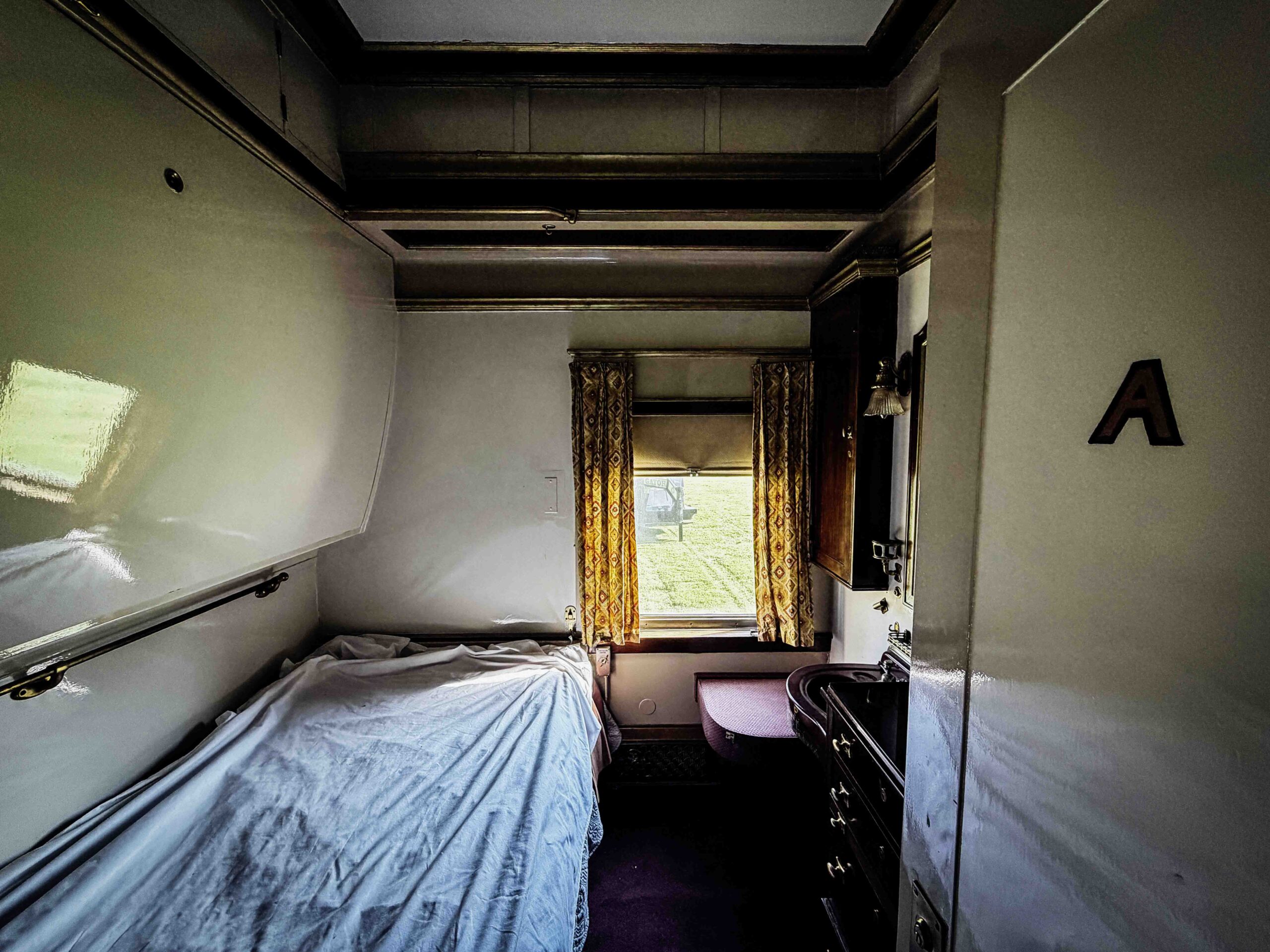
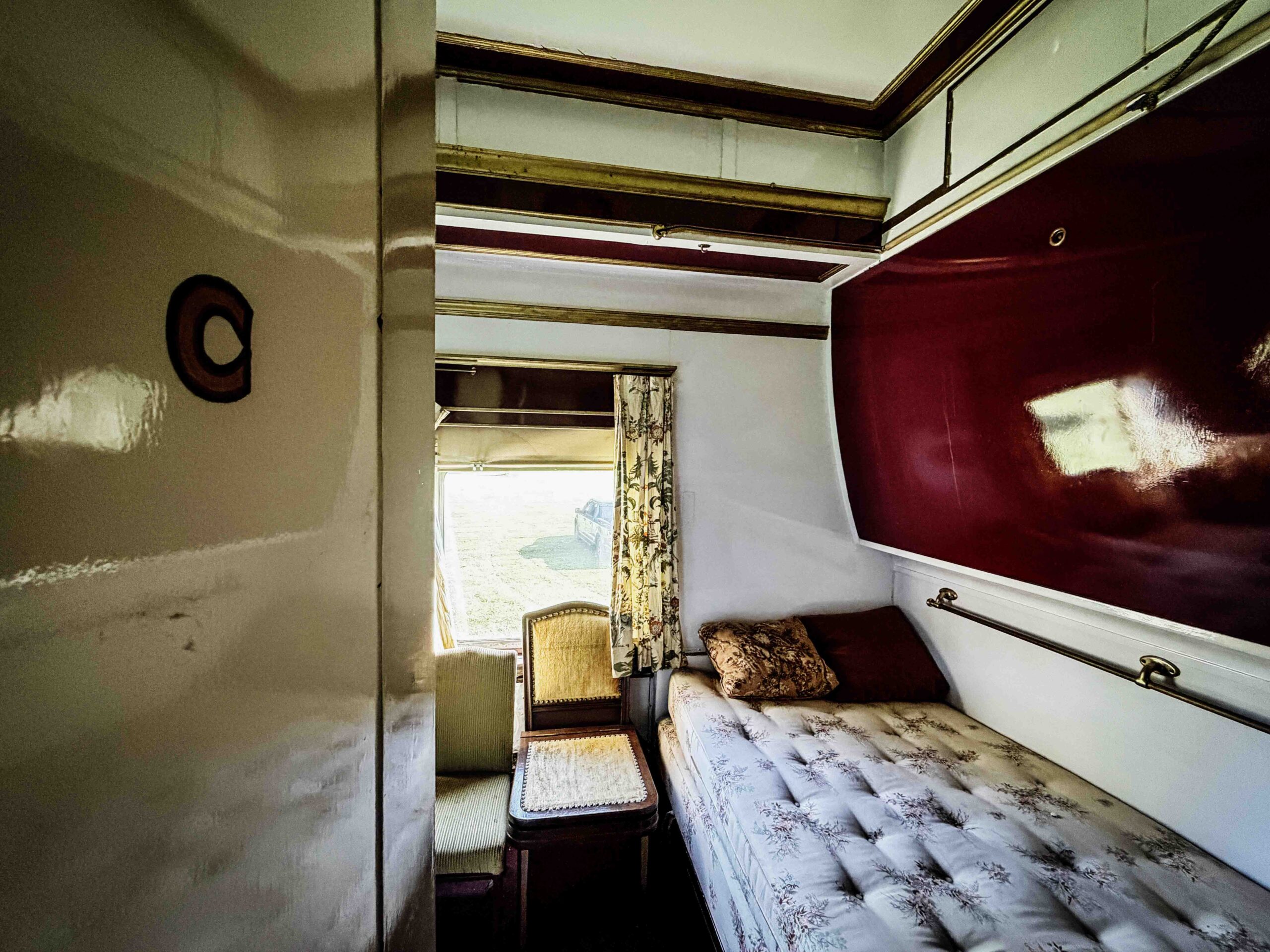
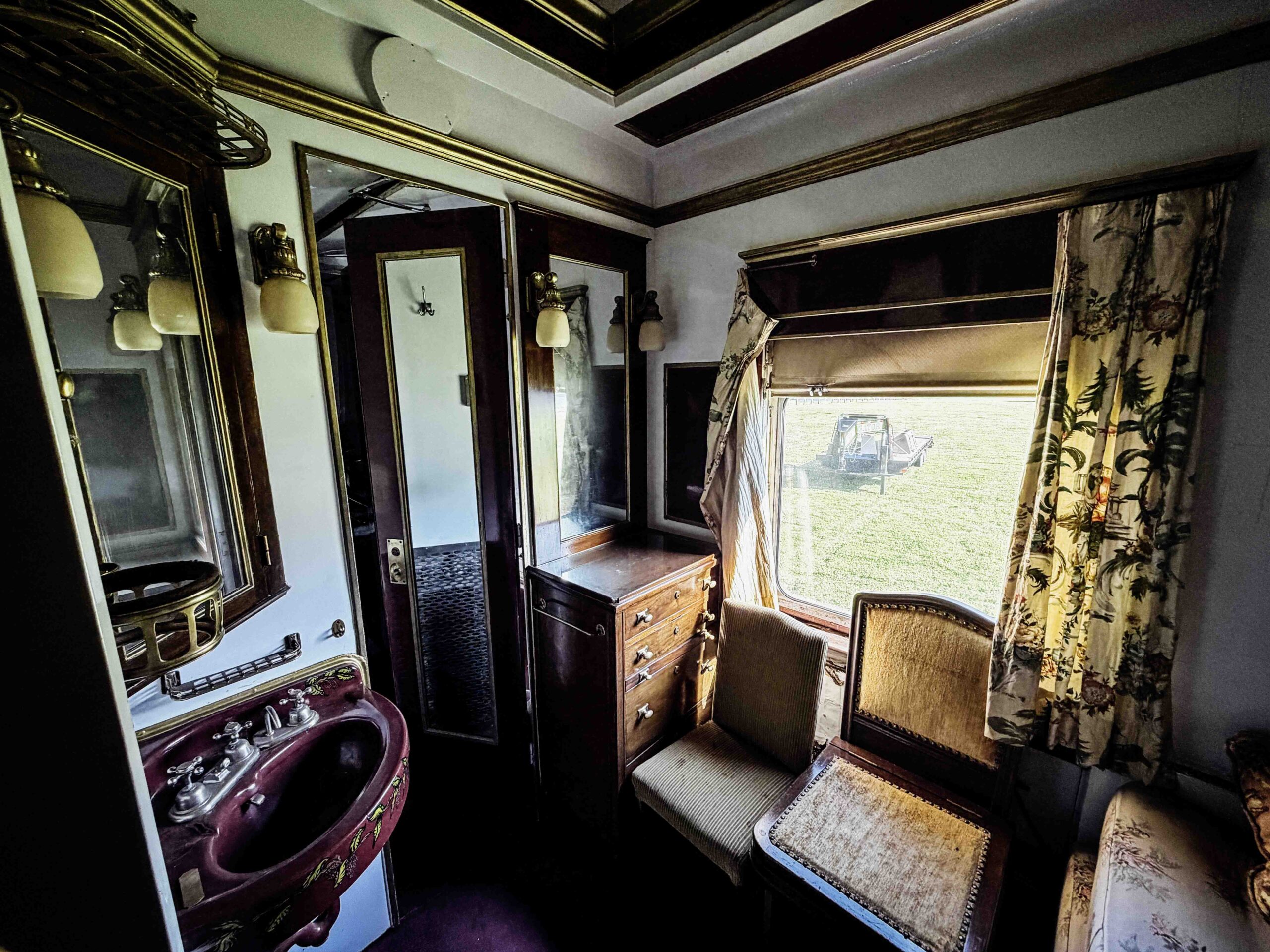
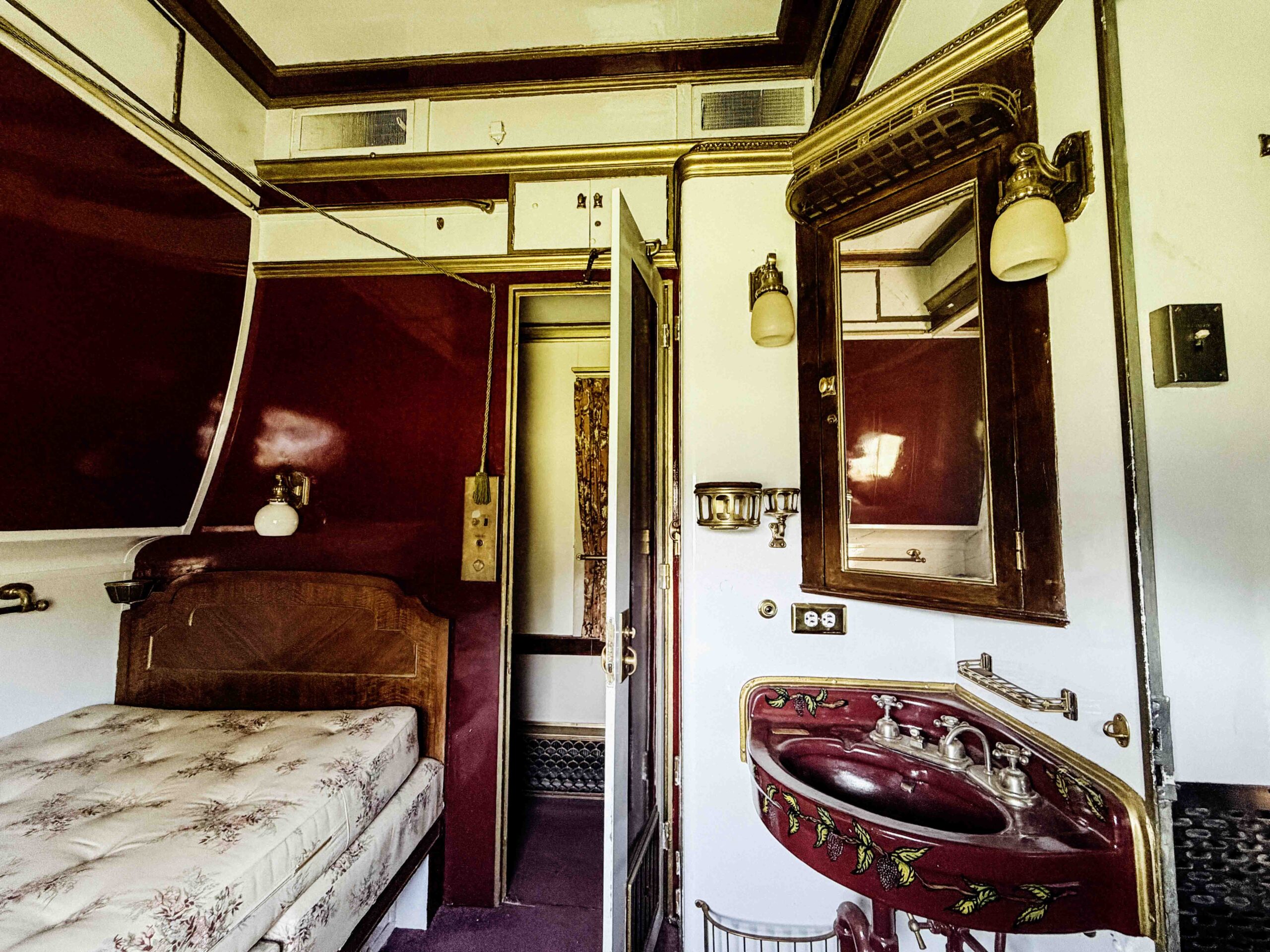
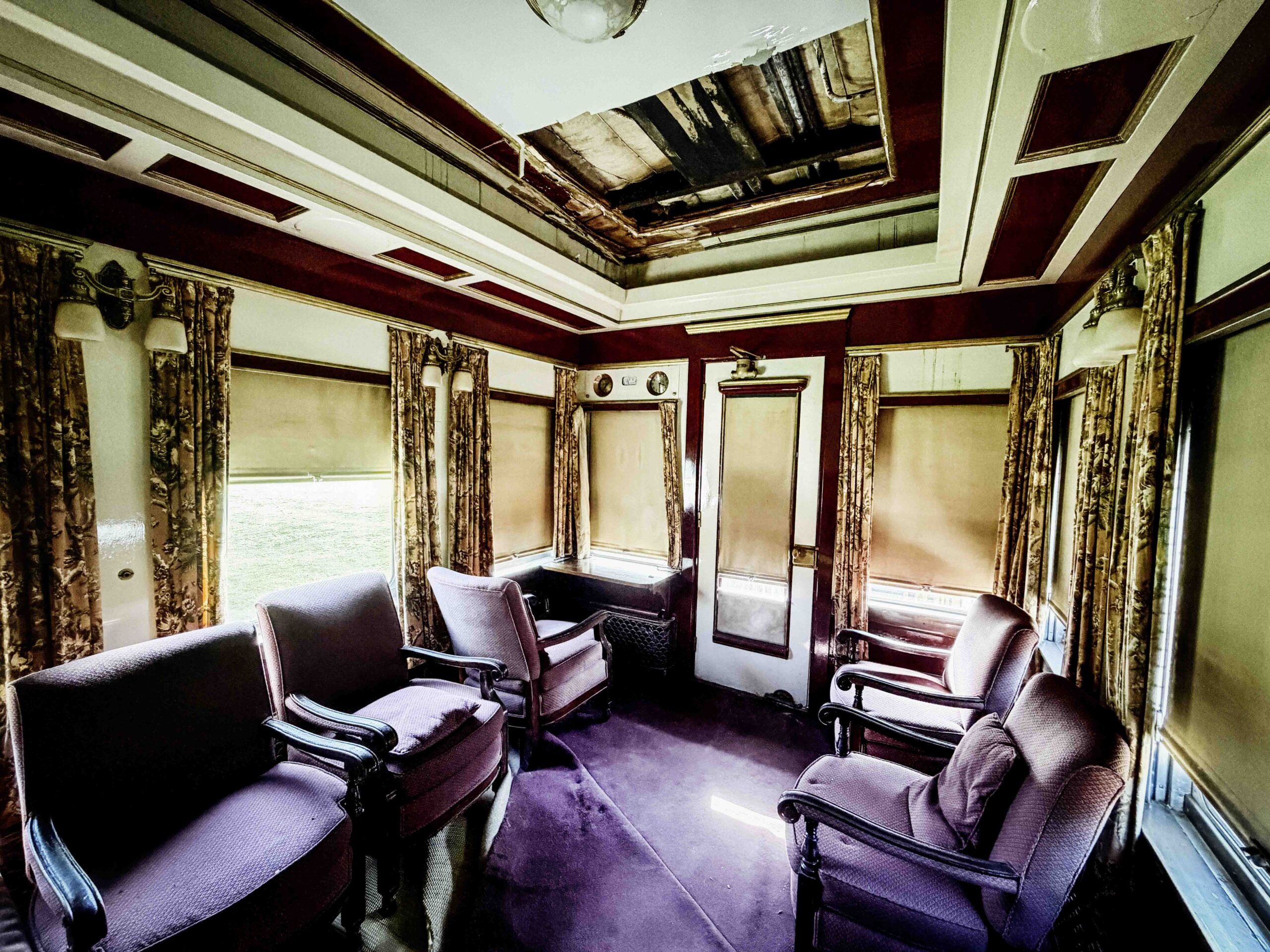
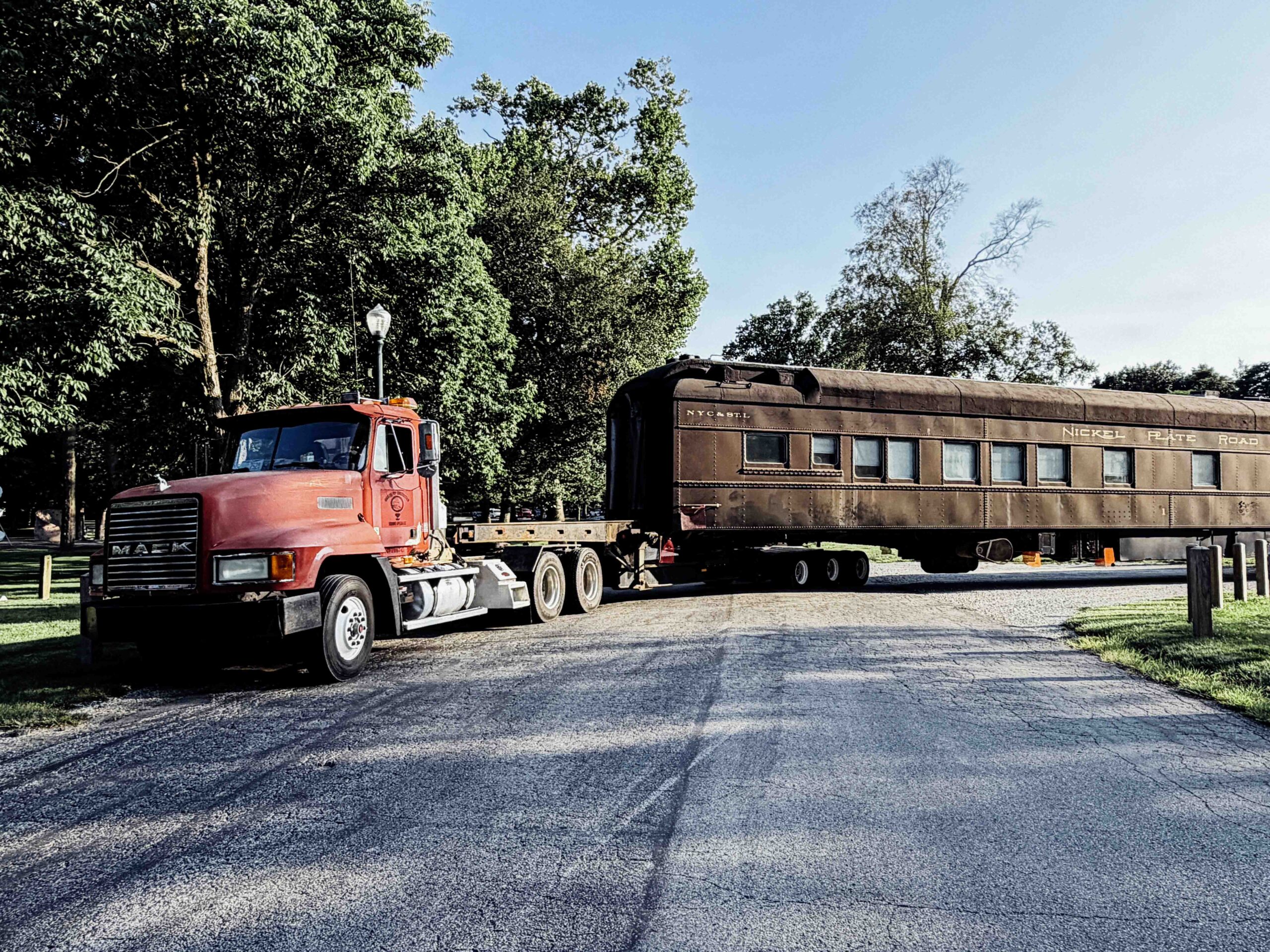
The organization’s restoration shop, located at 15808 Edgerton Road in New Haven, will be open from 10 a.m. to 3 p.m. Visitors can see the organization’s newest arrivals: New York Central No. 3001, one of the last remaining steam locomotives from Indiana’s largest railroad, and Nickel Plate Road Pullman No. 1, the former private, personal headquarters of a railroad empire.
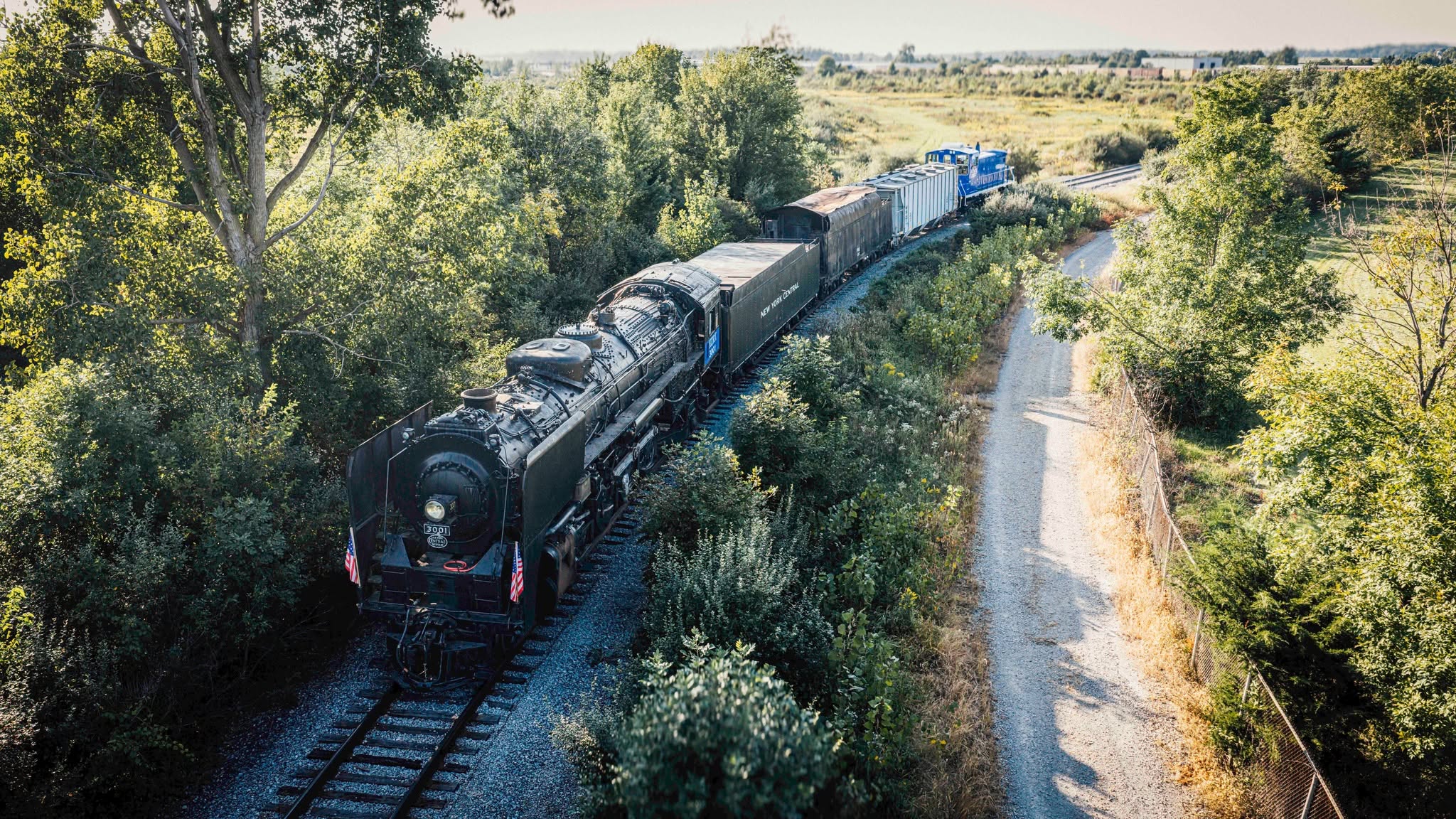
No. 3001 arrived safely at the Fort Wayne Railroad’s restoration facility on September 15 following a carefully coordinated move from the National New York Central Museum in Elkhart. Norfolk Southern transported the locomotive over its main line, marking the locomotive’s first mainline journey in more than 40 years and 69 years after it was retired. To date, the effort has been sponsored by Norfolk Southern, Kano Laboratories, Horizon Rail, and Midwest Rail, and the move was viewed by over a million people online.
The trip followed more than two years of preparation, planning, and fundraising by the Fort Wayne Railroad and its partners. The prep work ensured that the move went off smoothly, with several brief inspection stops made to examine components and bearing temperatures. No. 3001 will now enter the next phase of an estimated $4 million effort to return it to operation, and is poised to become a major tourist attraction once overhauled.
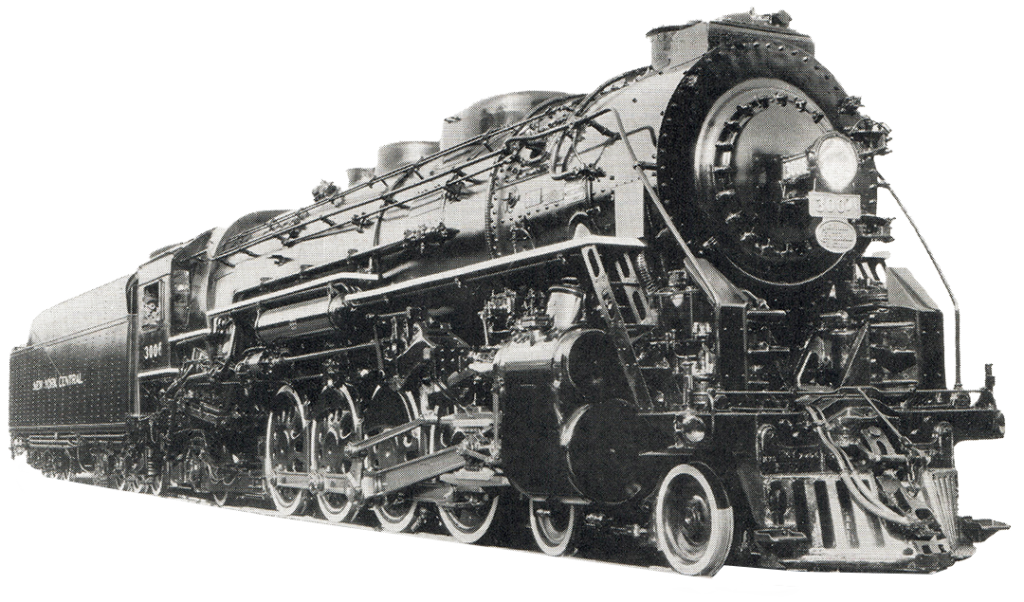
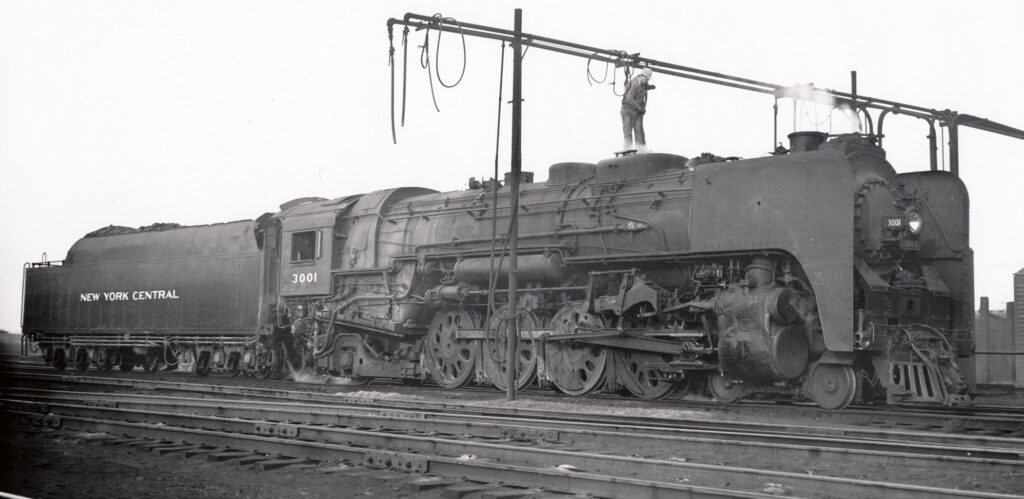
No. 3001 is the largest surviving New York Central steam locomotive and the only surviving member of the railroad’s L-3a “Mohawk” class. Once restored, it will become the world’s only operating New York Central steam locomotive and a centerpiece of the non-profit’s growing rail tourism and educational programs in Northeast Indiana.
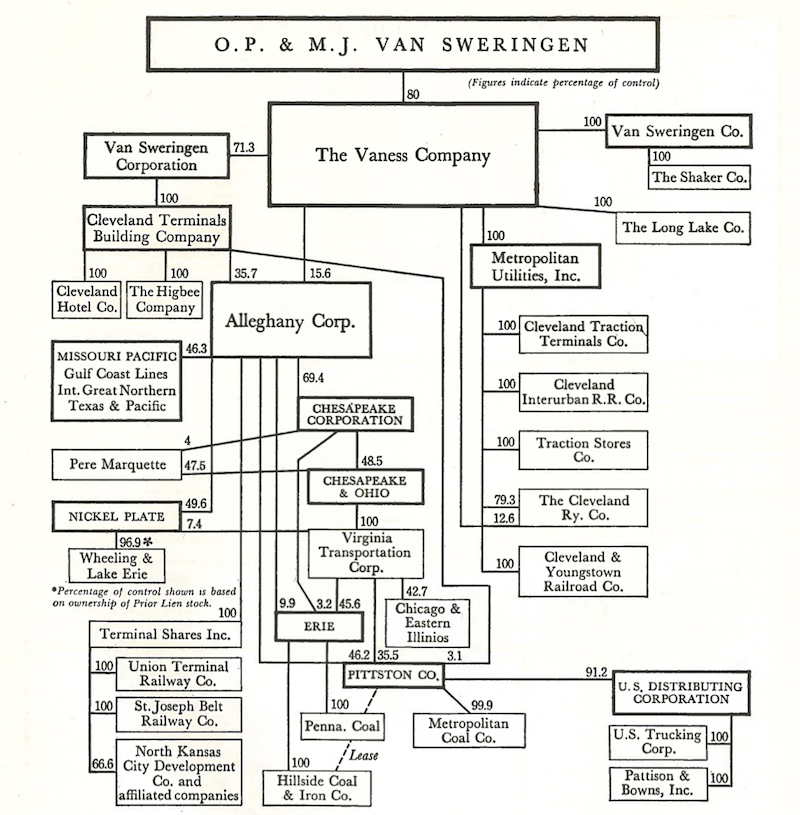
The open house will also welcome Nickel Plate Road Pullman No. 1, the former private railroad car of brothers Oris and Mantis Van Sweringen, whose railroad holdings included the Nickel Plate Road, Chesapeake & Ohio and Erie railroads, forming the backbone of today’s massive railroad industry in the Midwest.
On the 26th, guests can go behind the scenes inside the restoration shop, tour the private Pullman car and get an up-close look at railroad preservation in progress. Volunteers will be available to discuss restoration projects, Railroad Camp, train excursions and opportunities to help preserve and operate historic railroad equipment.
Admission is free, and all are welcome.
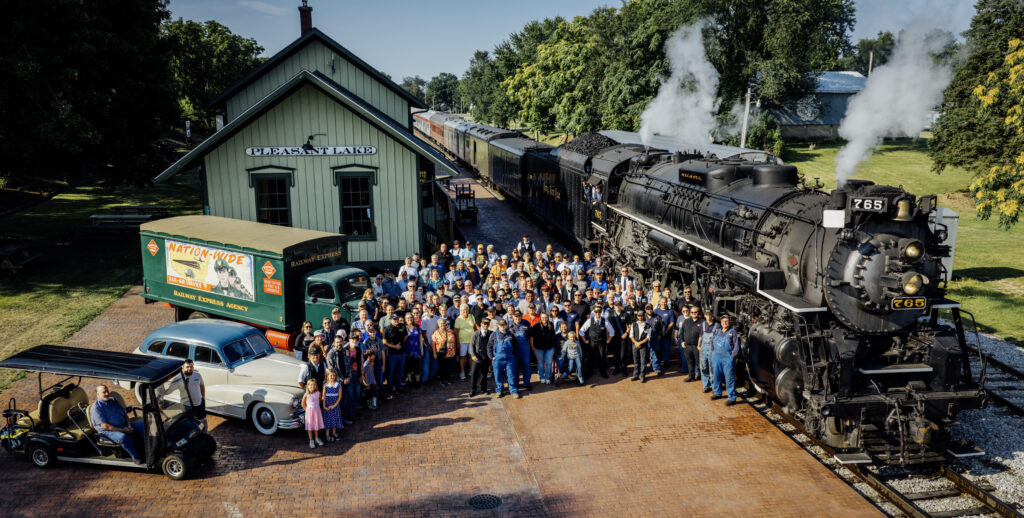
Nickel Plate Road locomotives Nos. 765 and 358, along with the Society’s operating passenger train, will not be displayed at the open house because they are completing their excursion season on the Indiana Rail Experience.
Date: Saturday, September 26
Time: 10 a.m.–3 p.m.
Location: 15808 Edgerton Road, New Haven, Indiana
Admission: Free
ABOUT THE FORT WAYNE RAILROAD
Founded in 1972, the Fort Wayne Railroad Historical Society preserves and operates historic railroad equipment as living cultural attractions. The organization is best known for its stewardship of Nickel Plate Road steam locomotive No. 765 and operates the Indiana Rail Experience in partnership with the Indiana Northeastern Railroad, where its programs have welcomed over 80,000 visitors and over $5 million in economic impact since 2022.
Old Habits. Die Hard. Here’s to eighty-two years of moving hearts, minds, people, and occasionally, still freight.
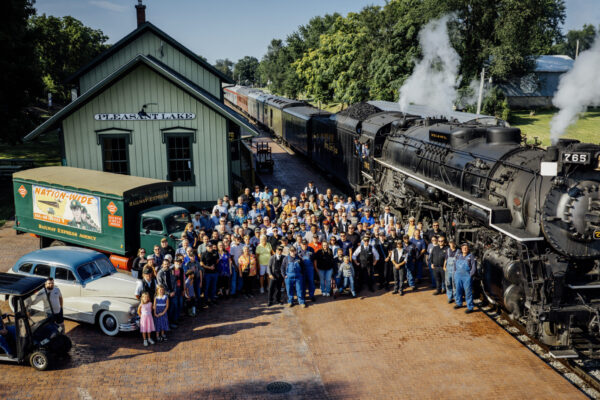
On September 7th, 2026, Nickel Plate Road steam locomotive No. 765 galloped out of Pleasant Lake, Indiana, with an 85-car revenue freight train, bound for Reading, Michigan, in a throwback to the engine’s halcyon days as a freight and passenger engine for the New York, Chicago and St. Louis Railroad. The 3,200+ trailing tons included our restored Nickel Plate Road SD9 No. 358 to bring the consist home, and the train’s already assigned vintage EMD power from the Indiana Northeastern Railroad.
765 took the opportunity to recall its once-signature role in stride, with 358 chiming in only occasionally during the 2-mile, 1.2% grade into Reading to keep track speed. Today, September 8th, is the 82nd anniversary of the 765’s construction, and here is proof that it hasn’t lost a step.
September 4th–5th celebration will mark the historic locomotive’s relocation to Fort Wayne and a new era for Elkhart’s railroad museum district
ELKHART, Ind. — The National New York Central Railroad Museum and the Fort Wayne Railroad Historical Society invite the public to gather September 4th and 5th, 2026, for a special farewell to New York Central steam locomotive No. 3001 — one of the railroad’s celebrated and sole surviving engines, known to generations of railroaders and museum visitors simply as “the Mohawk.”
The two-day event at the National New York Central Railroad Museum will give visitors a final opportunity to see and photograph the celebrated locomotive in its longtime home before it relocates from Elkhart to Fort Wayne. There, No. 3001 will enter the next phase of a multiyear effort that will return it to operation not only as the world’s only operating New York Central steam locomotive, but as a centerpiece for tourism, recreation, education, and trade skill development.
The coming relocation is a critical phase that will allow the locomotive to be safeguarded, thoroughly disassembled, inspected, and repaired. The full project is estimated to cost $4.3 million and is expected to require extensive work on the boiler, firebox, running gear, tender, appliances, and other systems. Norfolk Southern and the volunteers and members of the Fort Wayne Railroad are supporting the movement. Donations can be made to support the restoration at americanloco.org.
The farewell celebration will include brief remarks by representatives of the National New York Central Railroad Museum and the Fort Wayne Railroad at 10:30 a.m. September 4th, special opportunities to photograph No. 3001 and commemorative souvenir items. Visitors are encouraged to celebrate the locomotive’s history, capture lasting memories, and wish the Mohawk well before its departure. An exact date has not been announced for the locomotive’s journey, and preparations for the move are underway.
PREPARING A LANDMARK
Moving a locomotive of No. 3001’s size and age requires extensive mechanical, logistical, and infrastructure work. The locomotive has spent more than 70 years outdoors and has not operated under steam since the 1950s.
During initial work sessions, crews inspected all the locomotive’s axle roller bearings and found no evidence of water intrusion, rust, or other significant mechanical concerns and crews also removed the locomotive’s main and side rods and polished its crank pins and bearing brasses. The work allowed No. 3001 to roll a short distance for the first time in more than two decades.
Work in and around the museum yard has included uncovering and repairing track, rearranging equipment, and assembling the outbound consist. During disassembly, workers discovered bearing brasses stamped Jan. 2, 1957. The components were installed during the final months of Mohawk service on the New York Central; No. 3001 was retired the following month.
PRESERVING REMNANTS OF INDIANA’S LARGEST RAILROAD SYSTEM
Built by the American Locomotive Company in 1940, No. 3001 is a class L-3a 4-8-2 “Mohawk.” It was one of 25 L-3a locomotives designed to handle fast passenger trains and heavy freight service. The New York Central owned 600 locomotives of the 4-8-2 wheel arrangement — more than any other railroad — and called them “Mohawks” after New York’s Mohawk River. These versatile locomotives became closely associated with the railroad’s operations throughout the Great Lakes region.
No. 3001 is one of only two surviving mainline New York Central steam locomotives and the largest surviving steam locomotive from the railroad. Its story also reflects the New York Central’s profound influence on Indiana. Before its 1968 merger with the Pennsylvania Railroad created Penn Central, the New York Central operated Indiana’s most extensive railroad system. At its height, more than 1,600 miles of track within the state connected Hoosier communities with Chicago, New York, and other major commercial centers.
The railroad maintained major routes, yards, shops, and other facilities in Elkhart, Fort Wayne, and Indianapolis. Its facilities included the expansive Beech Grove Shops, once the railroad’s largest locomotive and passenger-car repair complex west of New York State.
Elkhart was a vital point on the railroad’s Water Level Route between New York and Chicago. Its railroad complex included major locomotive facilities and Robert R. Young Yard, now Norfolk Southern’s Elkhart Yard and one of the largest freight-classification yards east of the Mississippi River.
The New York Central also operated some of America’s most celebrated passenger trains, including the 20th Century Limited, Empire State Express and Mercury. Its trains and facilities carried generations of passengers, employed thousands of Hoosiers, and helped shape communities across Indiana.
PRESERVING THE MOHAWK
No. 3001 was retired by the New York Central in 1957 and subsequently sold to the Texas & Pacific Railway for public display in Dallas. It was later acquired by the Museum of the American Railroad.
Seeking to return the locomotive to New York Central territory, the Lakeshore Railroad Historical Foundation brought No. 3001 to Elkhart during the 1980s. It was placed on display at the National New York Central Railroad Museum in 1988 and has remained one of the museum’s most prominent artifacts.
In 2023, the City of Elkhart and the Museum of the American Railroad agreed to transfer ownership of the locomotive to the Fort Wayne Railroad. The acquisition and restoration initiative was publicly announced in October 2024 as part of a partnership involving the City of Elkhart, the museum and the Society.
The resulting American Locomotive Project envisions No. 3001 eventually operating over former New York Central tracks as part of the Indiana Rail Experience, where the Fort Wayne Railroad presently operates its heritage railroad. Plans call for the locomotive to pull restored New York Central passenger cars and connect historic stations once owned by the New York Central, creating an immersive interpretation of the railroad’s celebrated passenger era.
The Fort Wayne Railroad brings more than five decades of preservation experience to the project. The organization is best known for restoring and operating Nickel Plate Road steam locomotive No. 765, which has carried passengers and attracted visitors across the Midwest and eastern United States, and routinely operates just 1.5 hours outside Elkhart in the same territory envisioned for the Mohawk.
A NEW CHAPTER FOR ELKHART’S RAILROAD DISTRICT
No. 3001’s departure comes as the National New York Central Railroad Museum and its surrounding neighborhood begin transformations of their own.
The museum and the Fort Wayne Railroad have been working together on a long-term strategy for the museum’s outdoor collection. That process is intended to improve the care and interpretation of the equipment that remains on the campus and help position the museum as an anchor for redevelopment in Elkhart’s historic Benham neighborhood.
The effort follows a 2023 University of Notre Dame Dean’s Charrette that identified the museum as a potential catalyst for neighborhood revitalization and called for its evolution from a largely static outdoor collection into a more engaging public destination.
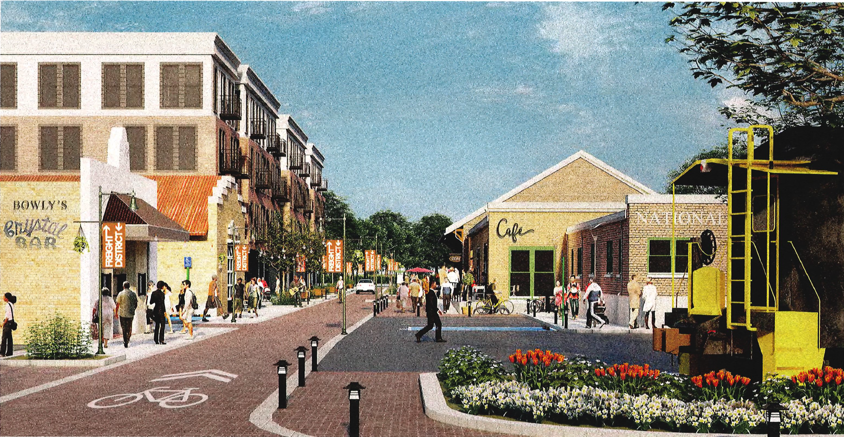
In July 2026, Elkhart received a $1.5 million Regional Economic Acceleration and Development Initiative grant supporting redevelopment near the museum and the southern edge of downtown. The Freight Street Initiative is expected to include approximately 100 new housing units, new buildings, buried utility lines, and streetscape improvements along Main and Freight streets. A later phase is planned to create a new public gathering space.
Together, the museum strategy, neighborhood investment, and restoration of No. 3001 represent complementary efforts to carry Elkhart’s railroad heritage into the future.
No. 3001 may be leaving its longtime display site, but the move will help preserve an important artifact while creating new opportunities to interpret the New York Central’s legacy in both Elkhart and Northeast Indiana.
ABOUT THE NATIONAL NEW YORK CENTRAL RAILROAD MUSEUM
Located in Elkhart, Indiana, the National New York Central Railroad Museum preserves and interprets the history and legacy of the New York Central System through historic equipment, exhibits, and educational programming.
ABOUT THE FORT WAYNE RAILROAD
Founded in 1972, the Fort Wayne Railroad Historical Society preserves and operates historic railroad equipment as living cultural attractions. The organization is best known for its stewardship of Nickel Plate Road steam locomotive No. 765 and operates the Indiana Rail Experience in partnership with the Indiana Northeastern Railroad, where its programs have welcomed over 80,000 visitors and over $5 million in economic impact since 2022.
Fort Wayne Railroad Historical Society Acquires Historic Railroad Business Car No. 1, Launches Fundraiser for 1920s-Era Restoration
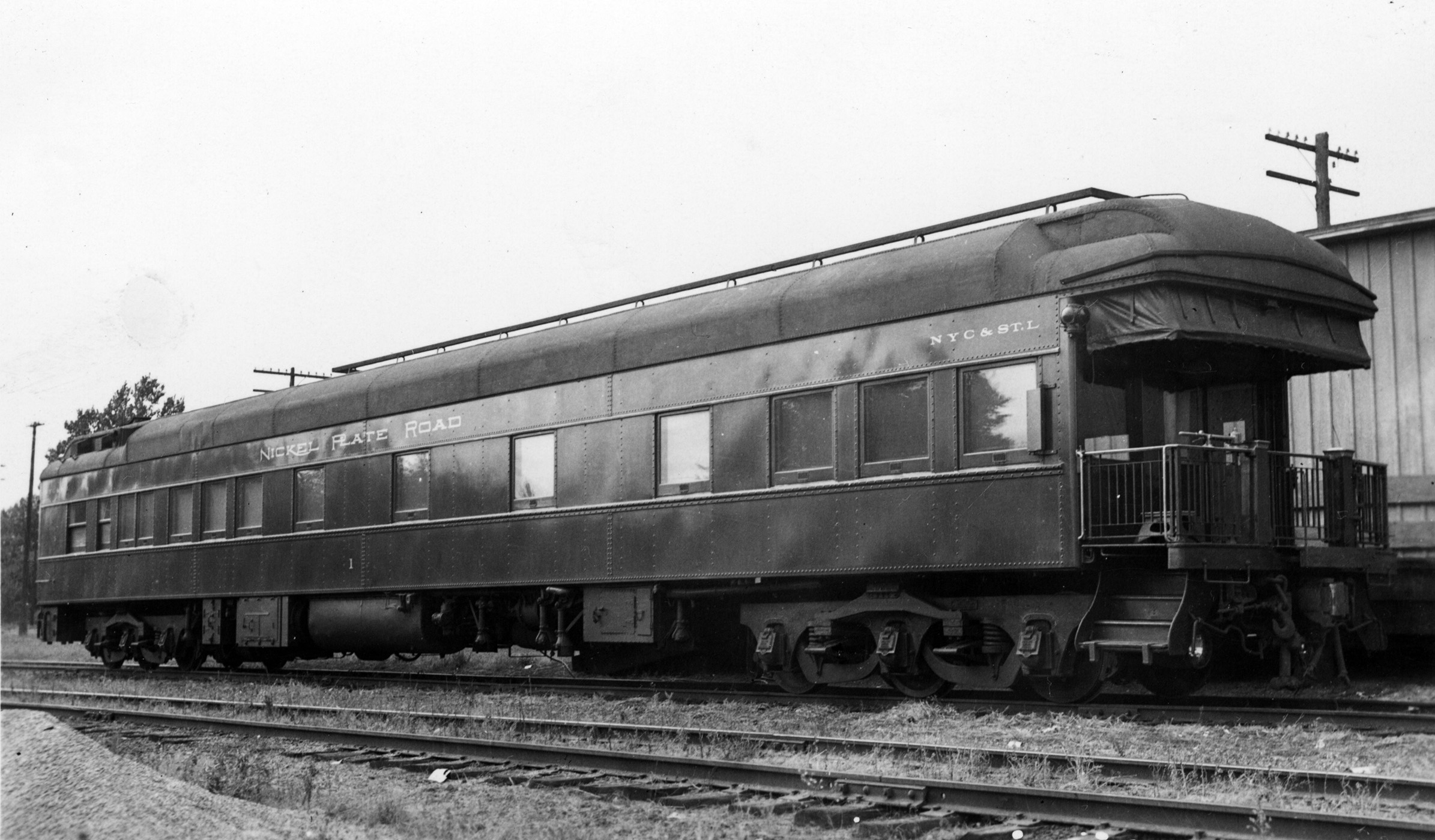
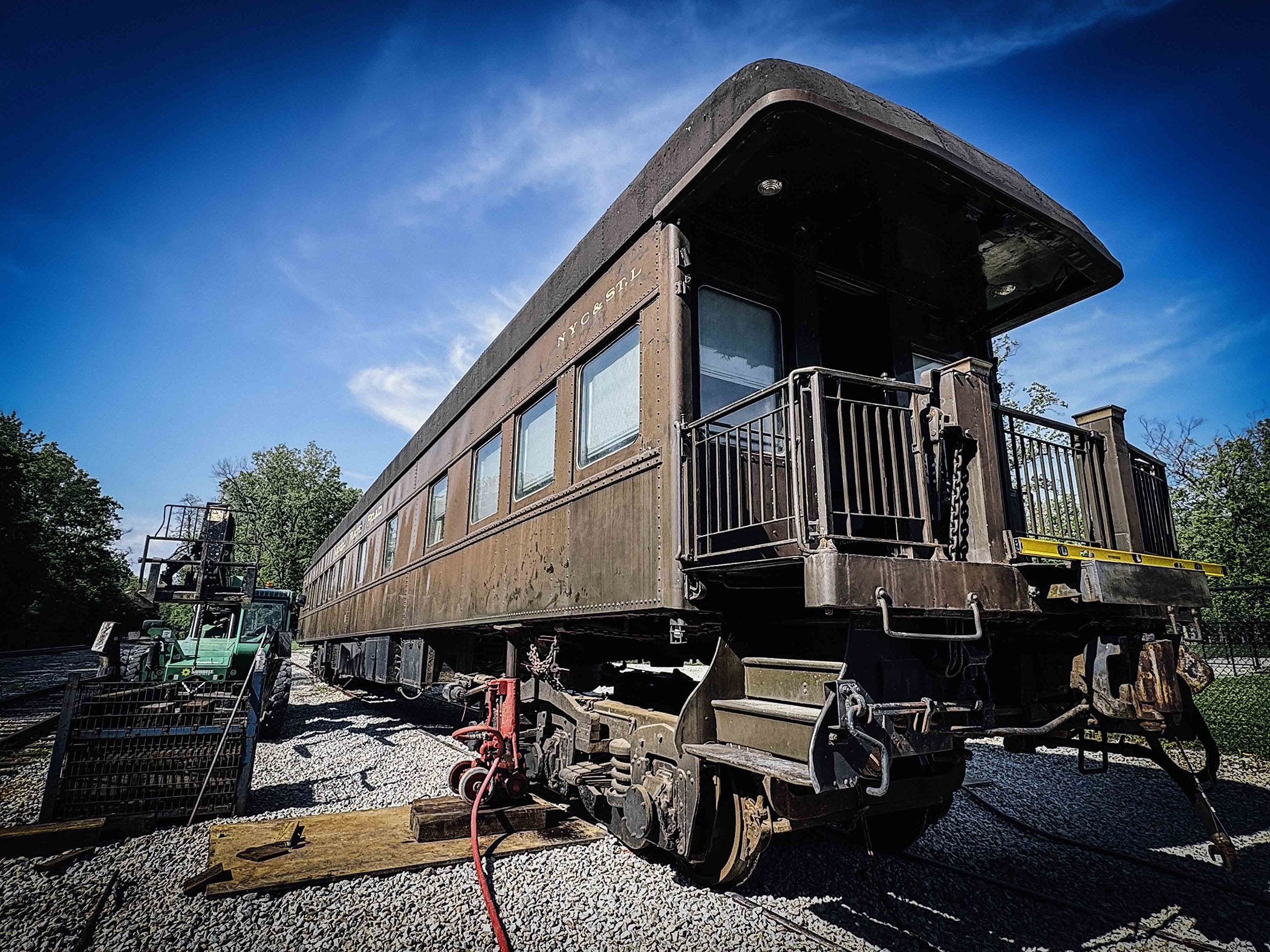
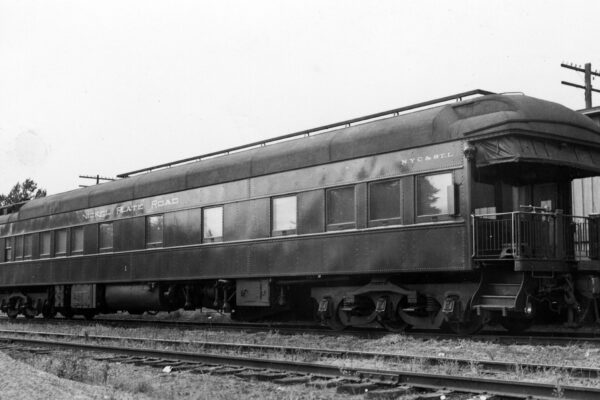
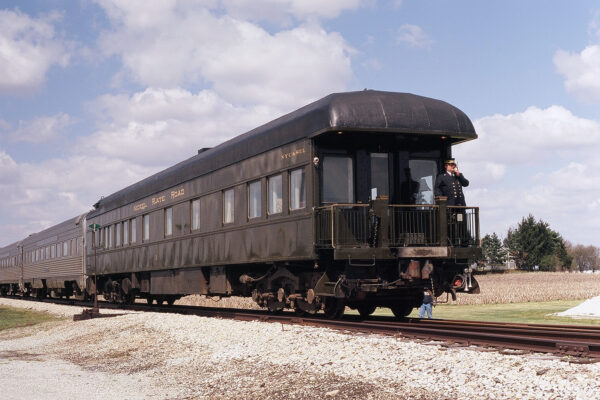
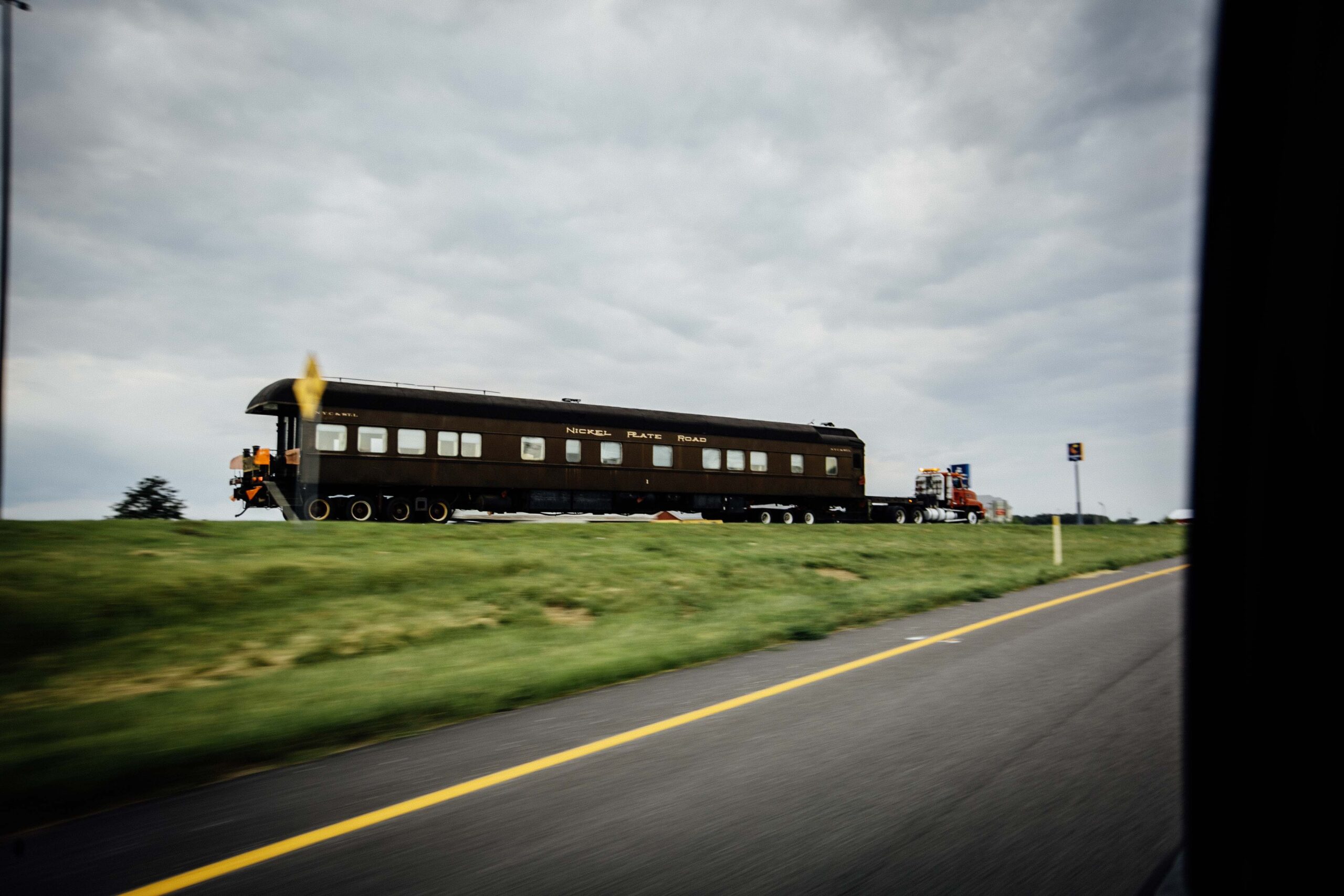
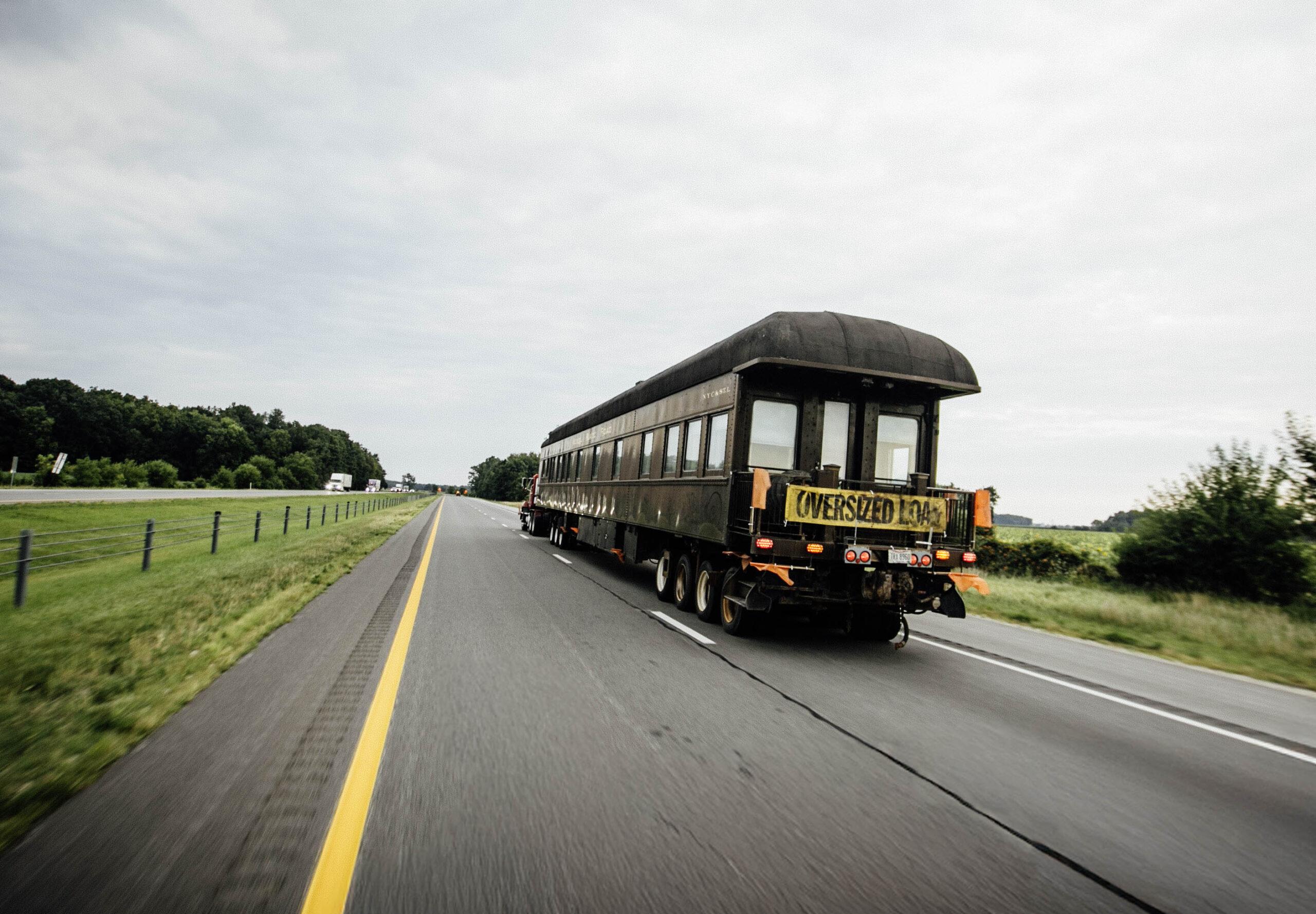
NORTHEAST INDIANA — The Fort Wayne Railroad Historical Society has announced the acquisition of Nickel Plate Road Business Car No. 1 — a remarkably intact Pullman-built executive car that once operated at the center of one of the most influential railroad systems in American history.
Constructed in February 1929 by the Pullman Car Works, the car was built for Oris and Mantis Van Sweringen — the architects of a railroad empire that spanned the Midwest and East Coast, shaping the movement of freight, industry, and capital across the nation. The car later operated as Chesapeake & Ohio No. 1 and Norfolk & Western Railway No. 1, tracing a direct line through the consolidation and evolution of American railroading in the mid-20th century.
A comprehensive overhaul is planned to address deterioration and modernize the car’s critical systems, with restoration costs expected to begin at $300,000. Once complete, Business Car No. 1 will enter service alongside Nickel Plate Road Business Car No. 7, the Kitchi Gammi Club, which the organization acquired in 2025, operating behind restored Nickel Plate steam and diesel locomotives. When preserved, historic railroad equipment is rarely reunited with the same locomotives and companion cars it was built to travel with. Together, this remarkable collection will recreate an authentic Nickel Plate Road train, offering passengers a living experience that few preservation organizations can provide.
Initial relocation costs and seed money to begin the work have been granted by a private donor and the Olive B. Cole Foundation, Inc. Click here to make a gift or contribution online or by mail at NKP 1, Post Office Box 11017, Fort Wayne, Indiana, 46855.
“Opportunities like this are exceptionally rare, and this is one we have pursued for over 10 years,” said Kelly Lynch, Executive Director of the Fort Wayne Railroad. “This car sits at the intersection of multiple major railroads and a defining era of passenger rail travel and locomotive development. Alongside our other Pullman car, it opens a fantastic way for people to experience the craftsmanship and culture of American railroading in motion. We are grateful to Powell Felix for his recent guardianship of the car, and to Nickel Plate Heritage Railroad for providing it a safe harbor after the closure of the Indiana Transportation Museum.”
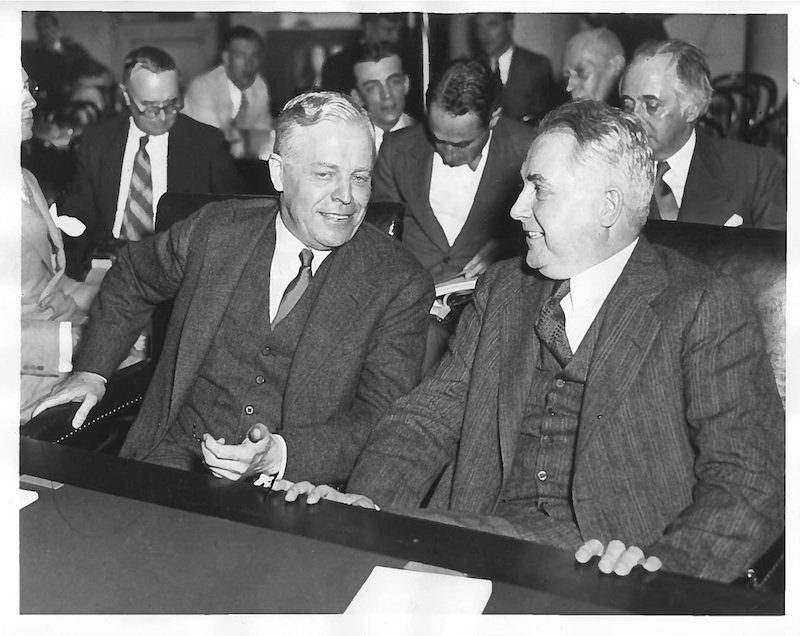
M.J. and O.P. and Van Sweringen in 1933.
From modest beginnings as office boys, the Van Sweringen brothers rose to command a vast network of railroads and real estate and at one point controlled assets valued in the billions, yet remained secluded, deliberate, and intensely focused on the work itself. Notoriously private, they avoided publicity at nearly every turn. They gave no speeches, granted no interviews, and remained largely absent from the social circles their wealth afforded. Contemporary accounts describe them traveling the rails in their private car, accompanied by secretaries and stenographers, conducting business on the move.
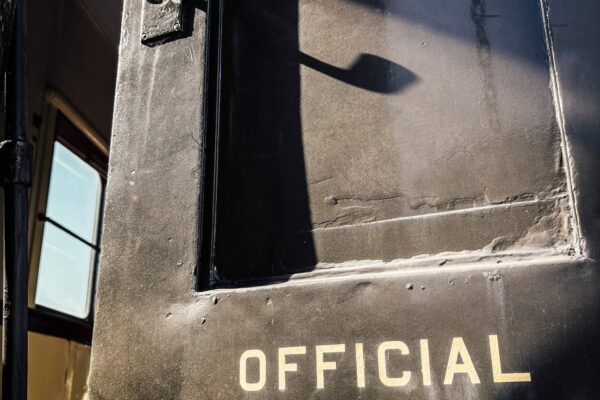
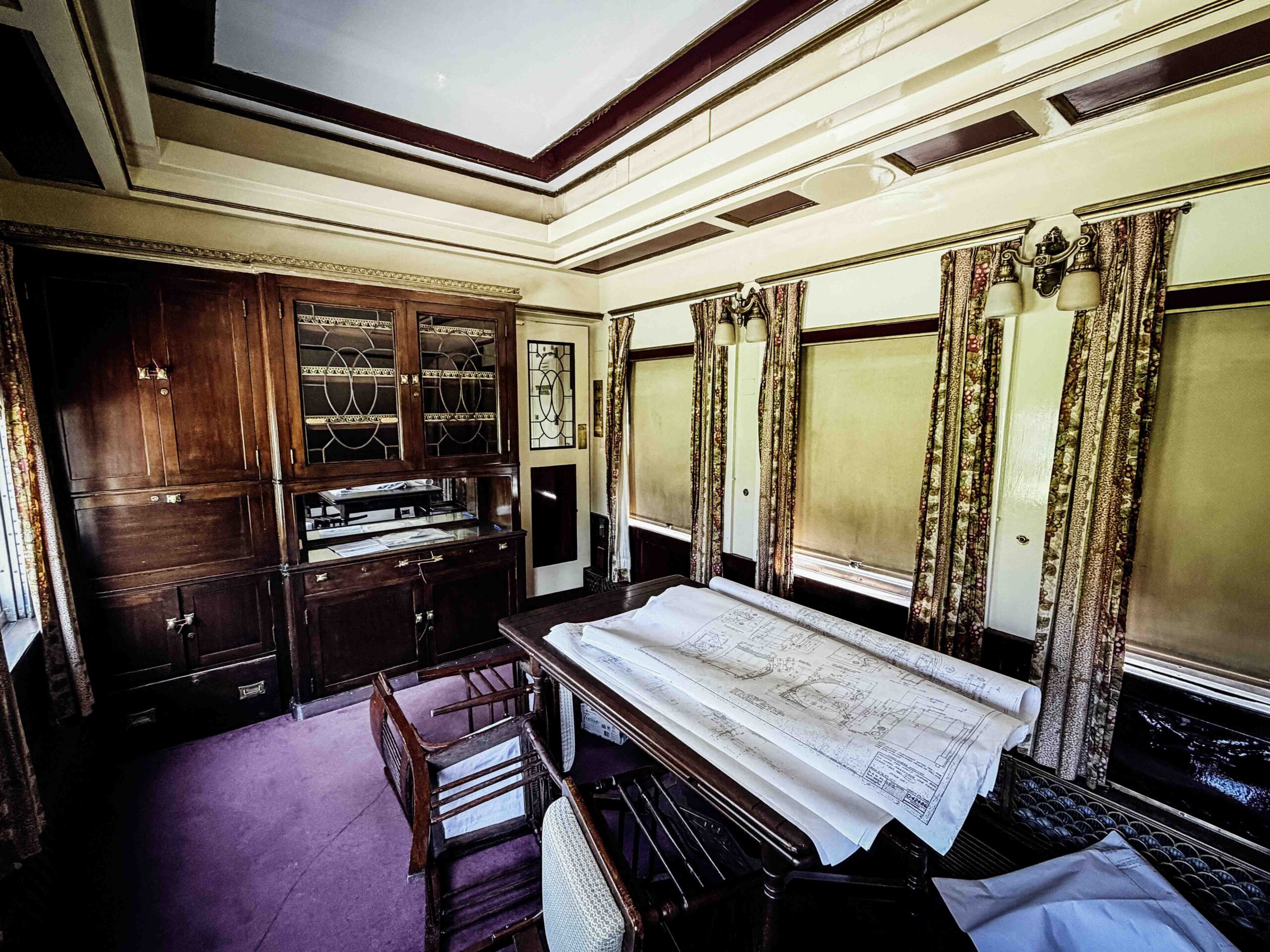
Business Car No. 1 served as a mobile command post where executives conducted inspections, negotiated strategy, and governed a railroad network stretching thousands of miles. If the Van Sweringen empire had a headquarters beyond Terminal Tower in Cleveland, it was aboard this car.
Behind the scenes, the Van Sweringen brothers brought a disciplined, system-wide approach to railroading. Through an internal Advisory Mechanical Committee, they worked to standardize locomotive design, mechanical practices, and operating efficiencies across the railroads under their control, aligning equipment and performance across what had once been independent systems.
The Van Sweringen Empire
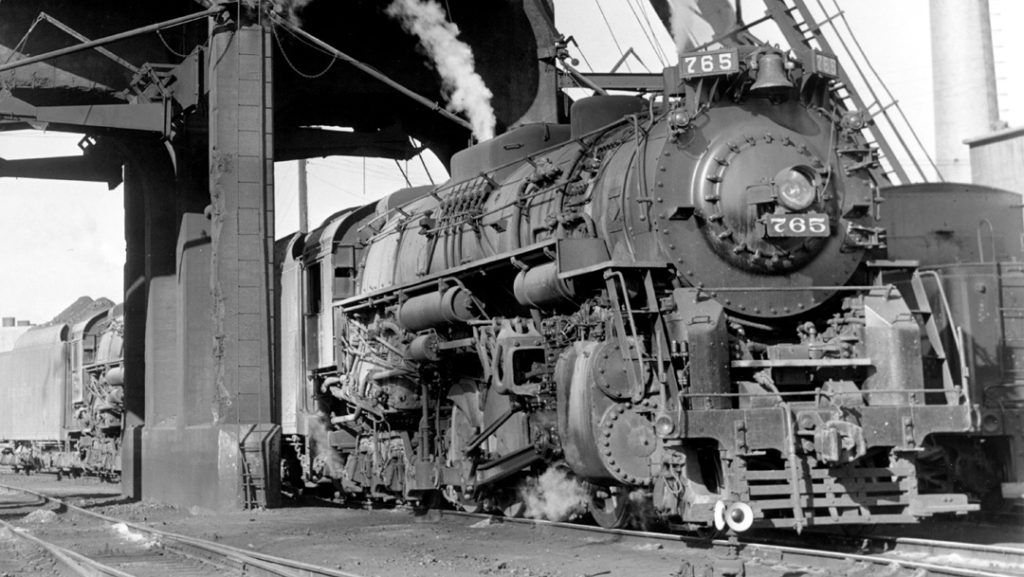
Out of that effort came one of the most successful steam locomotive designs of the 20th century: the Berkshire. Developed through this coordinated approach to engineering and operations, the Berkshire-type embodied the balance of speed, power, and efficiency that defined Van Sweringen-era railroading. That legacy remains in motion today through the operation of Nickel Plate Road No. 765, a Berkshire-type locomotive built in 1944 and later acquired and restored by the non-profit in the 1970s, applying many of the same principles of performance, discipline, and mechanical stewardship first shaped under the Van Sweringen system.
Following the death of Oris Van Sweringen in 1936, the car continued in executive service under successive railroad leadership, carrying forward into the era of consolidation that reshaped the American rail industry.
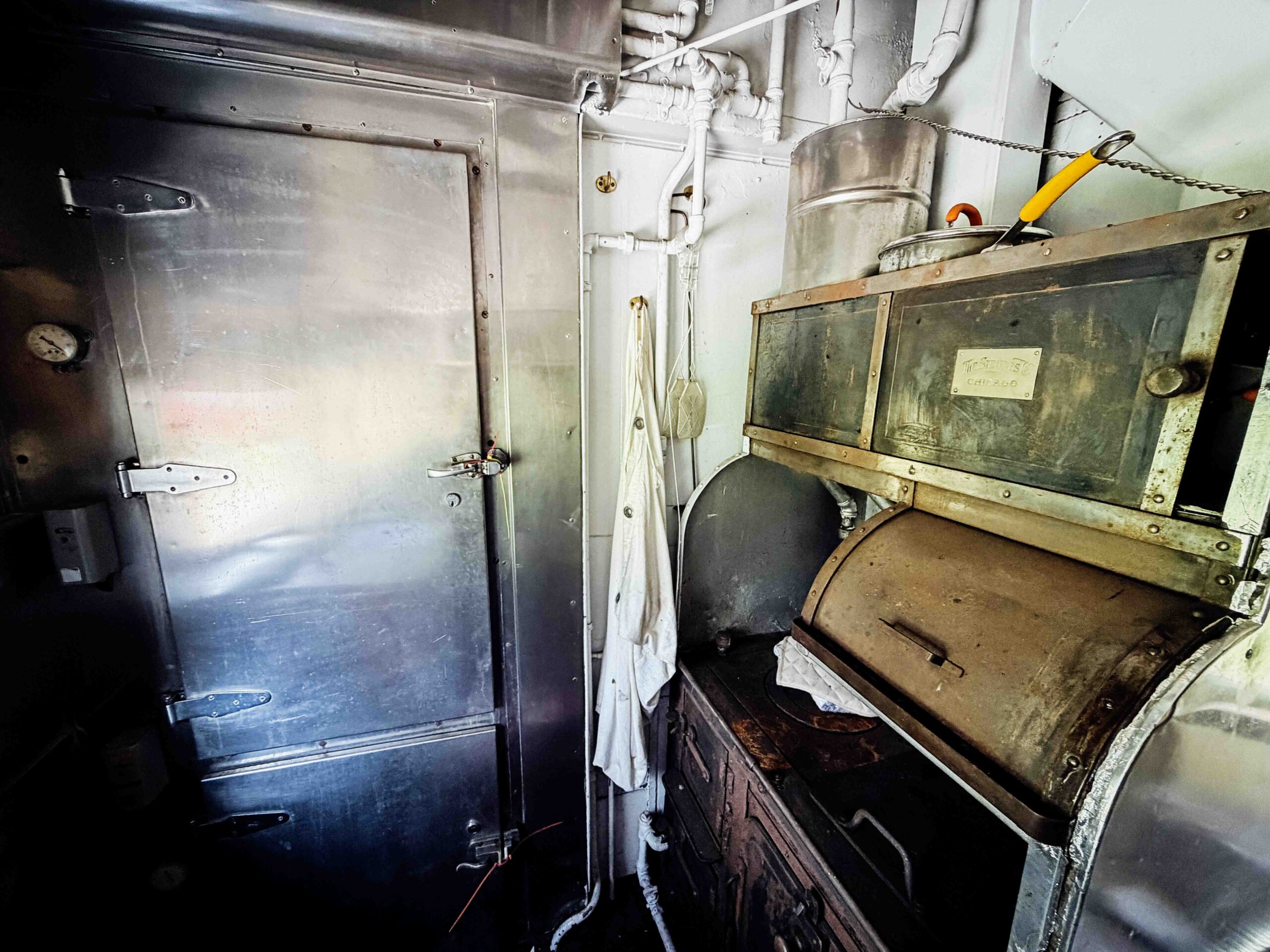
In 1971, the car was acquired from the Norfolk & Western Railway by J. Henry Kegley, a Bristol, Virginia, businessman, at a time when historic railroad equipment was routinely scrapped or dispersed. He maintained the car on a siding at his Tenneva Foods facility in a quiet yet decisive act of preservation, ensuring its survival. Many of the car’s systems today reflect Kegley’s work, with appliances and components dating to that period of caretaking.
Following Kegley’s passing, the car was transferred from his estate in 1999, continuing its preservation. In the decades that followed, the car remained in the care of dedicated private owners, David and Eleanor Wilcox and Steve and Mary DeVoe. During this time, its use was donated to the Indiana Transportation Museum for the enjoyment and education of thousands of passengers through museum train trips, many special dinners, and special events.
Most recently, the car has been owned by Powell Felix, President of Indiana Boxcar Corporation. Through a special arrangement with Felix, the car has now joined the Fort Wayne Railroad’s operating fleet, beginning its next chapter in preservation and public interpretation.
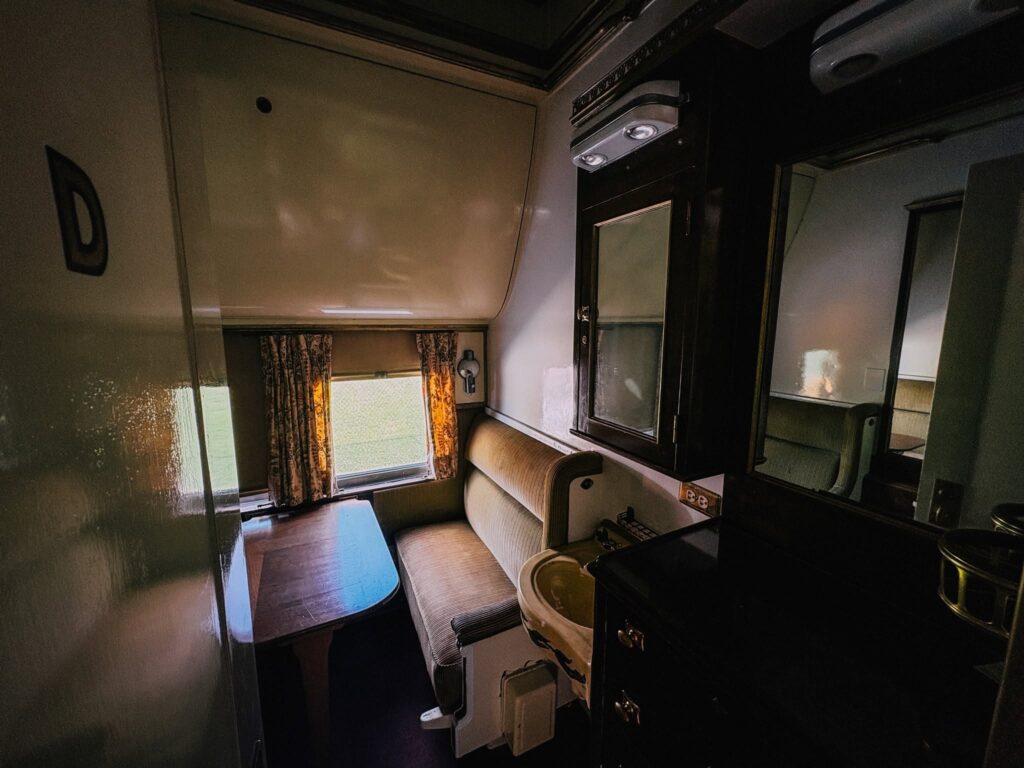
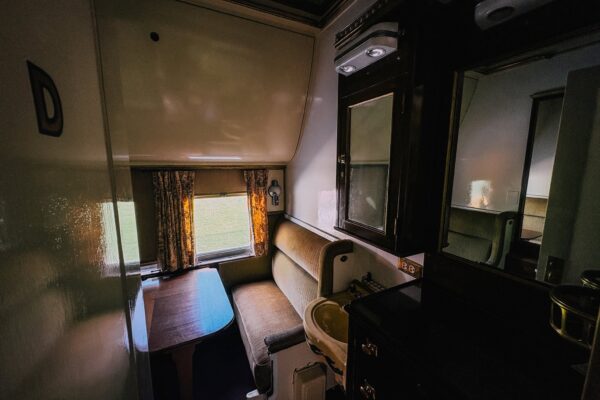
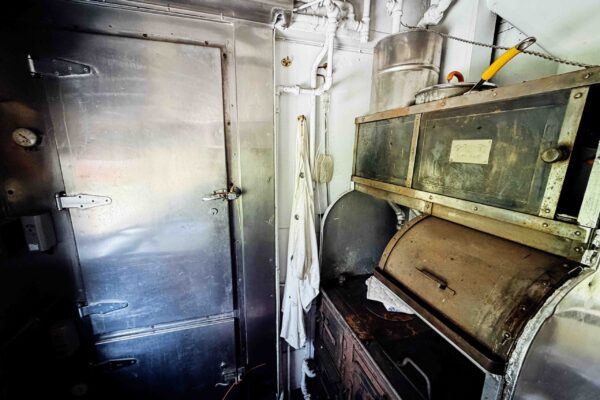
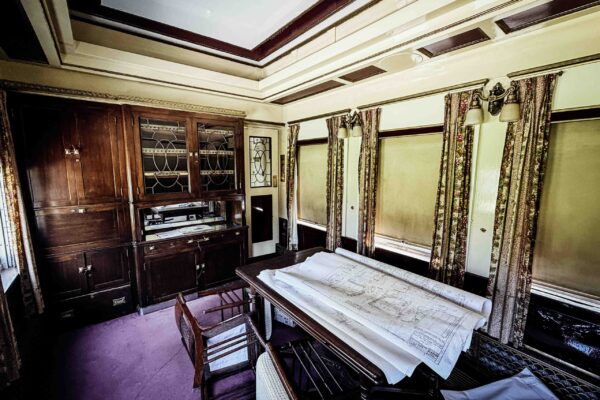
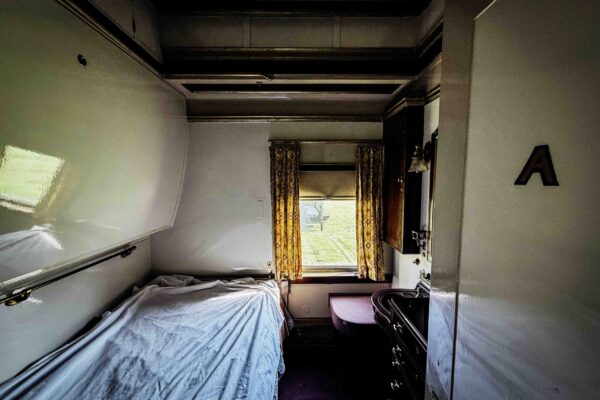
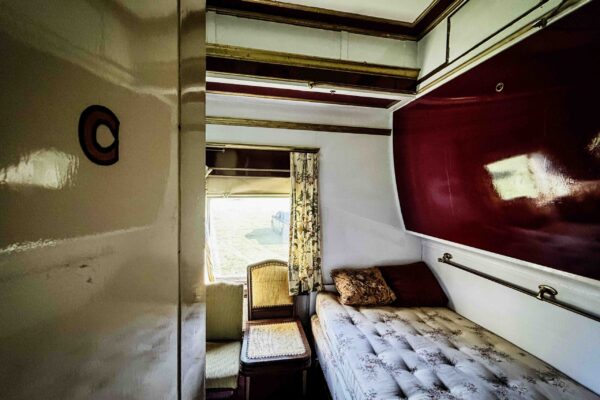
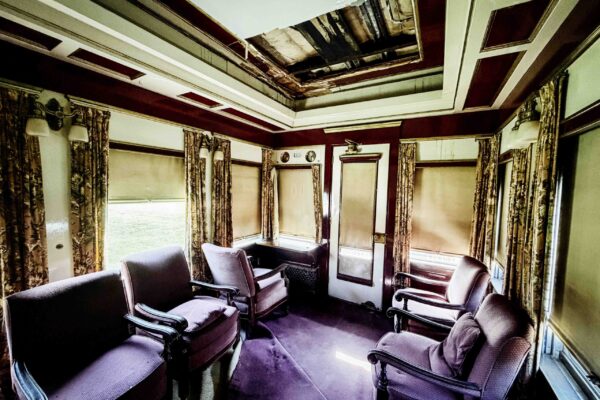
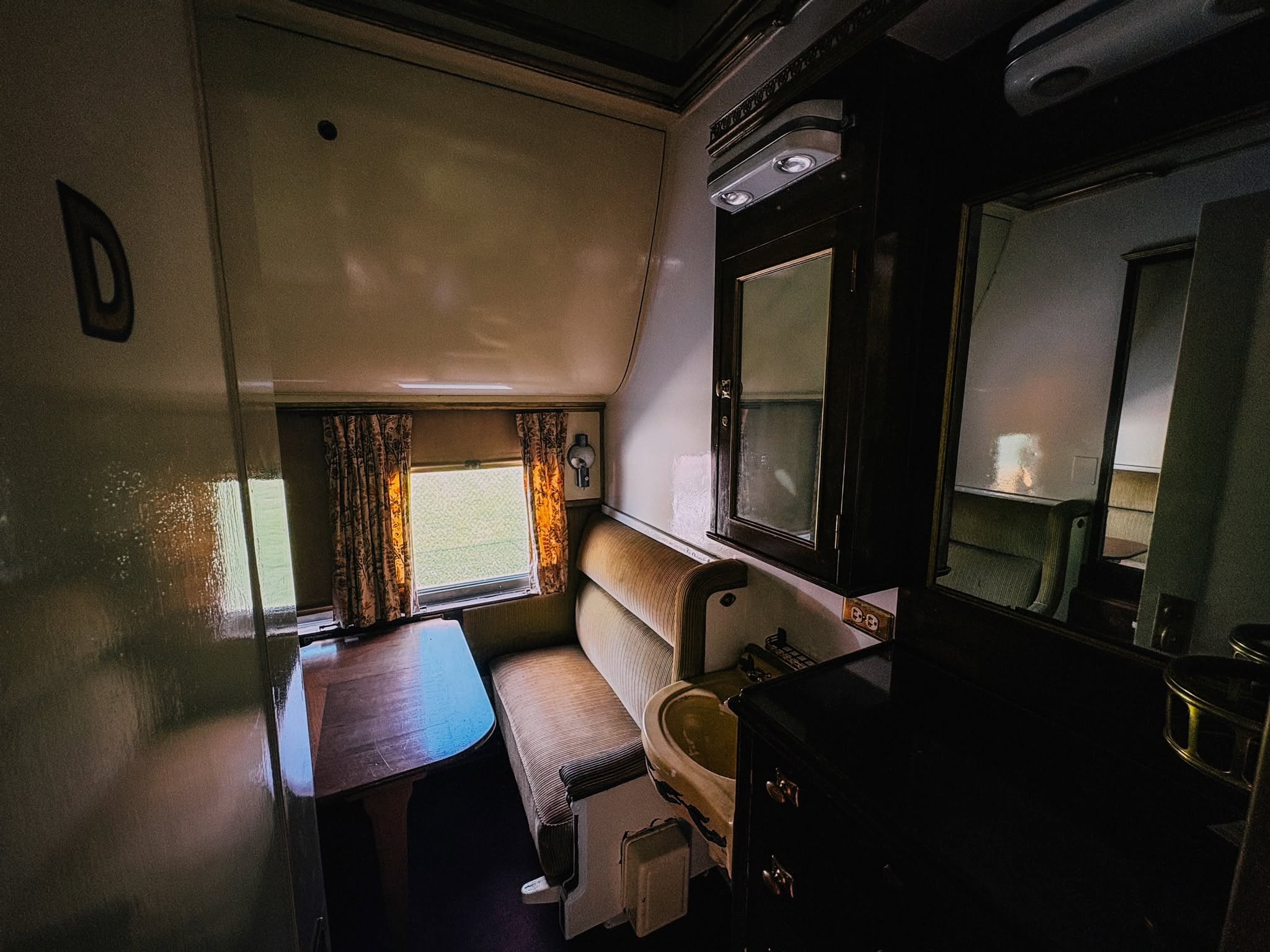
Designed to accommodate up to 16 guests in its original configuration, the all-steel car includes private quarters for staff, a full kitchen, a dining room, and a lounge. Inside, polished wood interiors and period details reflect the environment in which railroad leaders operated — a space where business, hospitality, and mobility were seamlessly combined.
While the car remains remarkably intact and retains its original fixtures, furnishings, and much of its historic mechanical fabric, its mechanical, electrical, and HVAC systems date to the 1970s, and years of moisture intrusion have taken a toll on portions of the lounge and private suites, where ceiling and window seal repairs are now necessary.
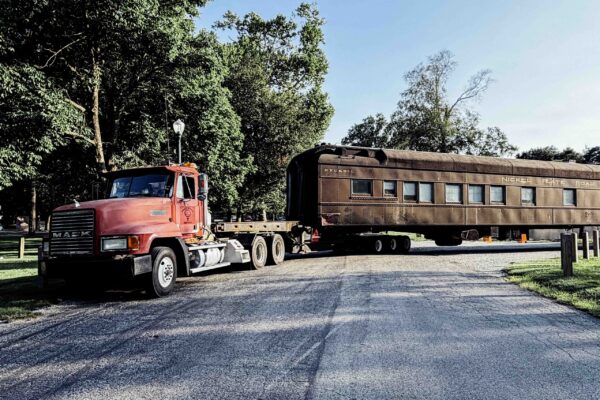
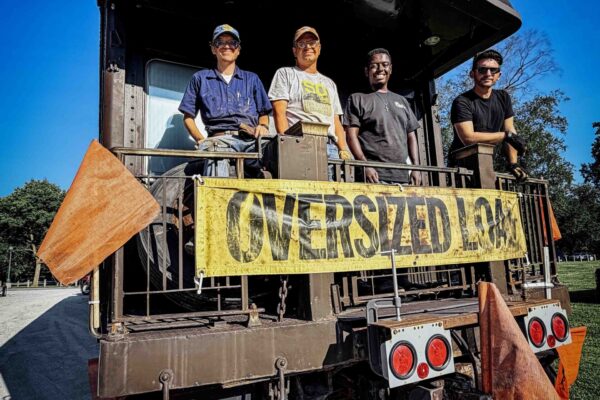
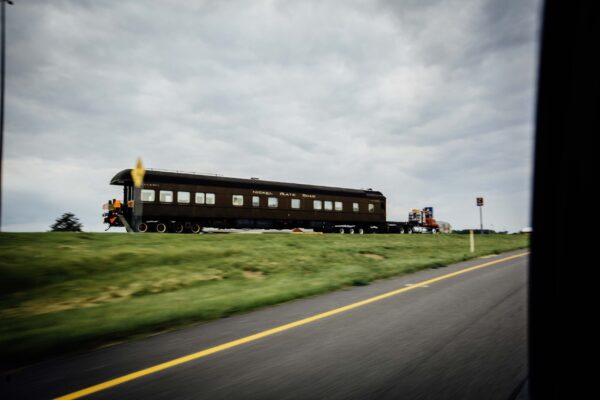
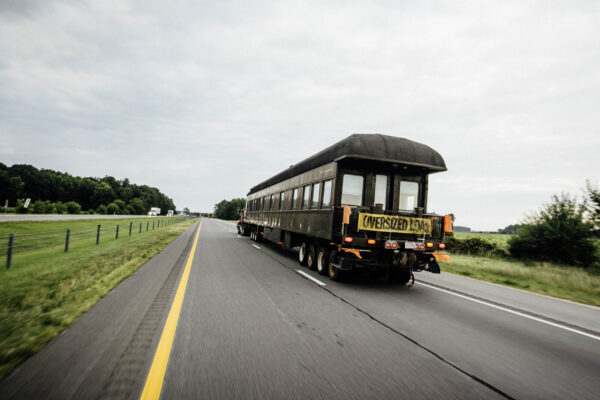
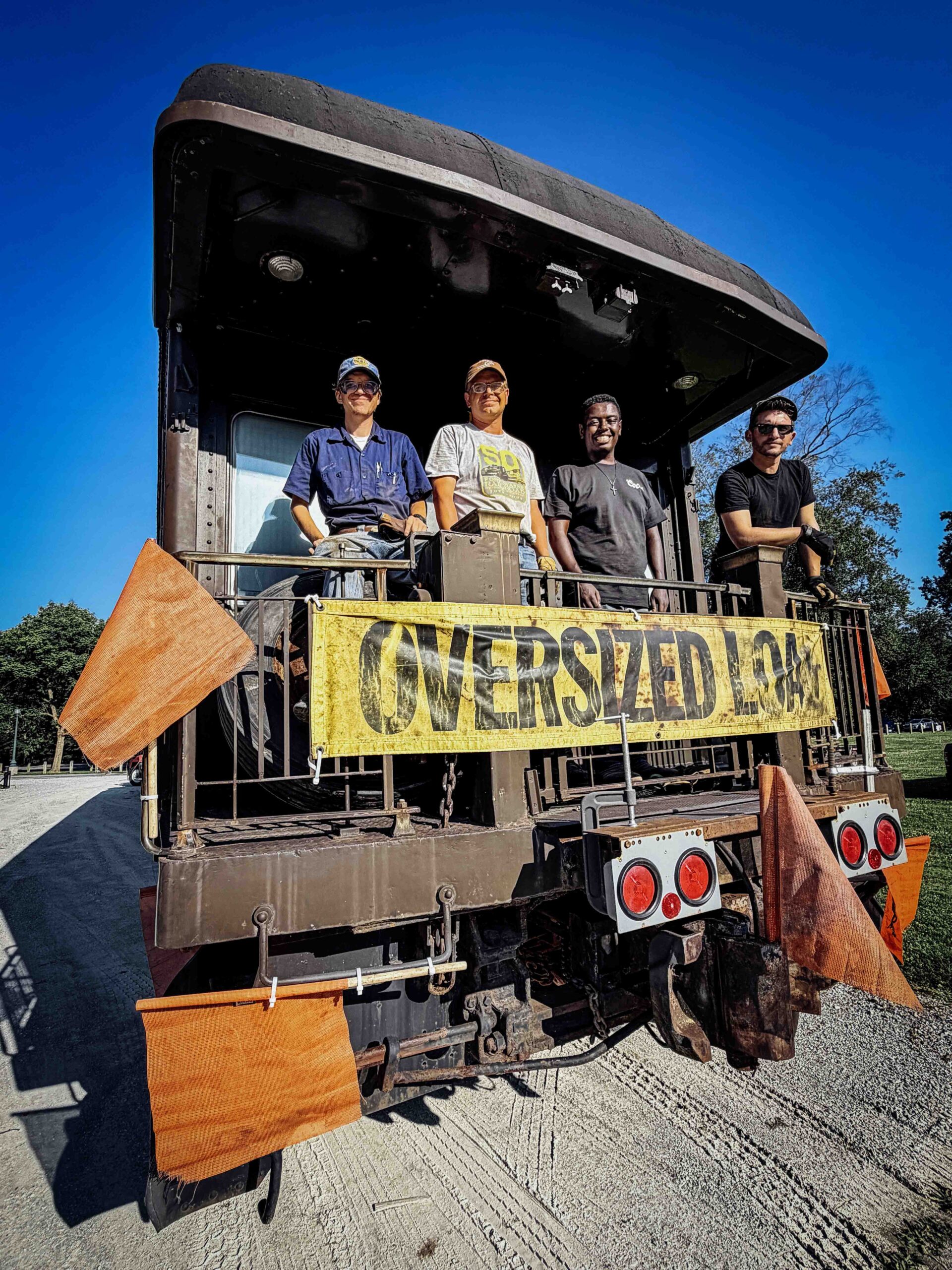
A comprehensive overhaul is planned to modernize critical systems and address deterioration. The car has recently been trucked over 109-miles to the Fort Wayne Railroad’s restoration shop in New Haven, Indiana.
The acquisition supports the Fort Wayne Railroad’s long-term vision to reconstruct an authentic passenger experience evocative of the Golden Age of Railroading, showcasing an immersive, operating environment that connects visitors directly to the transportation culture that once powered American commerce. The car will carry the markers on future trips on the Indiana Rail Experience, and travel behind the same Nickel Plate Road locomotives that it would have traveled behind in its original service life.
Only five Nickel Plate Road business cars are known to survive, with others located in Lima, Ohio; New Bremen, Ohio; and Los Angeles, California. With this acquisition, the Fort Wayne Railroad now stewards one of the most significant collections of Nickel Plate executive equipment in existence, reinforcing its leadership in preserving and interpreting Midwestern railroad history.
Arrival completes second phase of campus development and creates a new space for education and community events
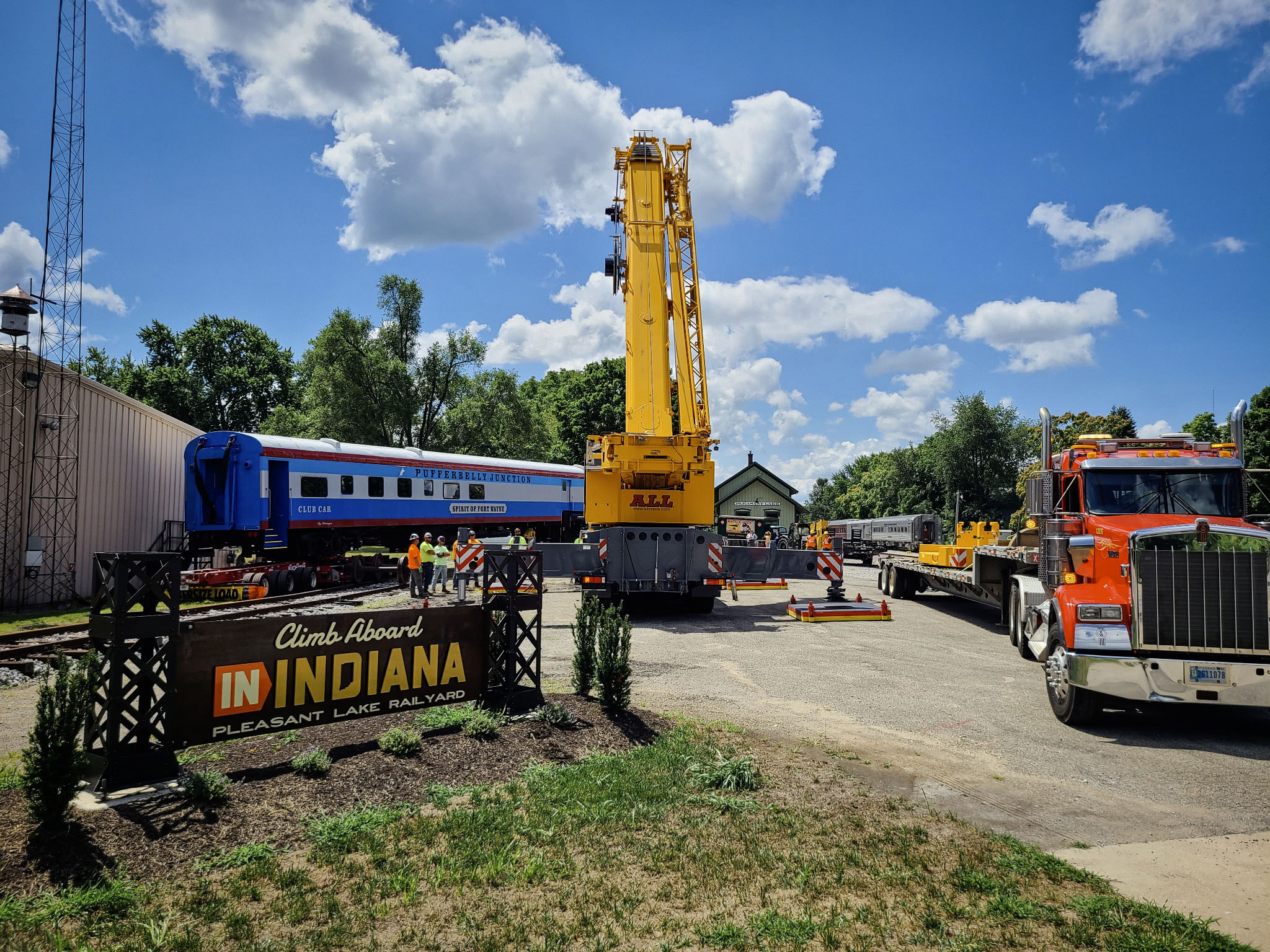
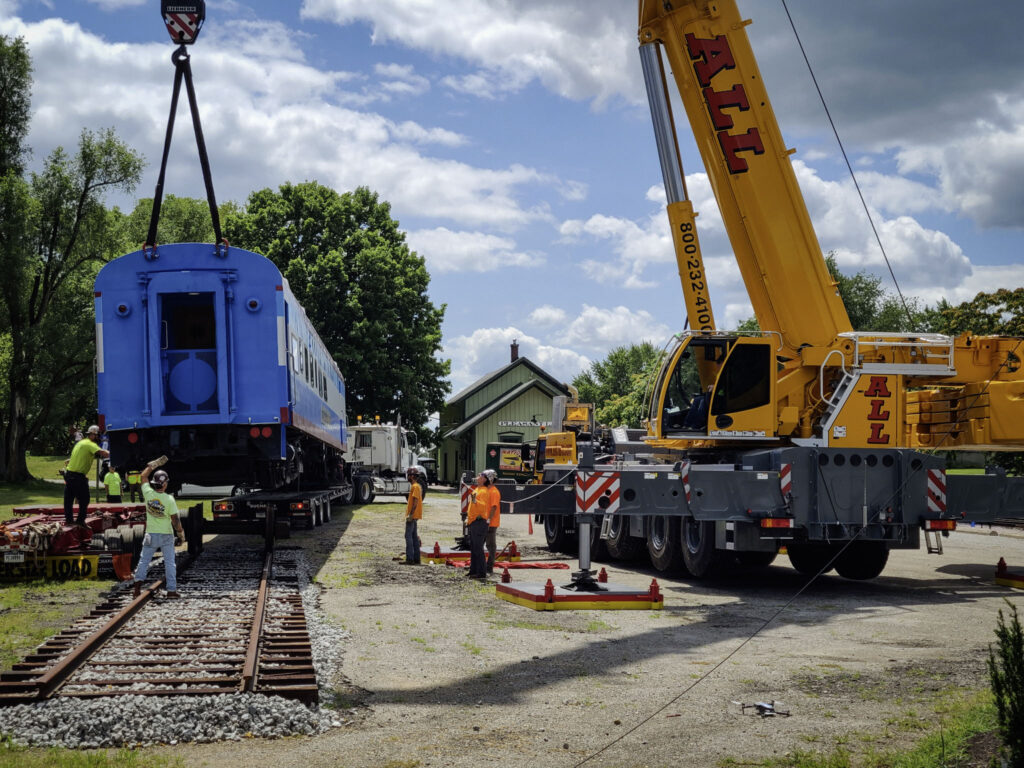
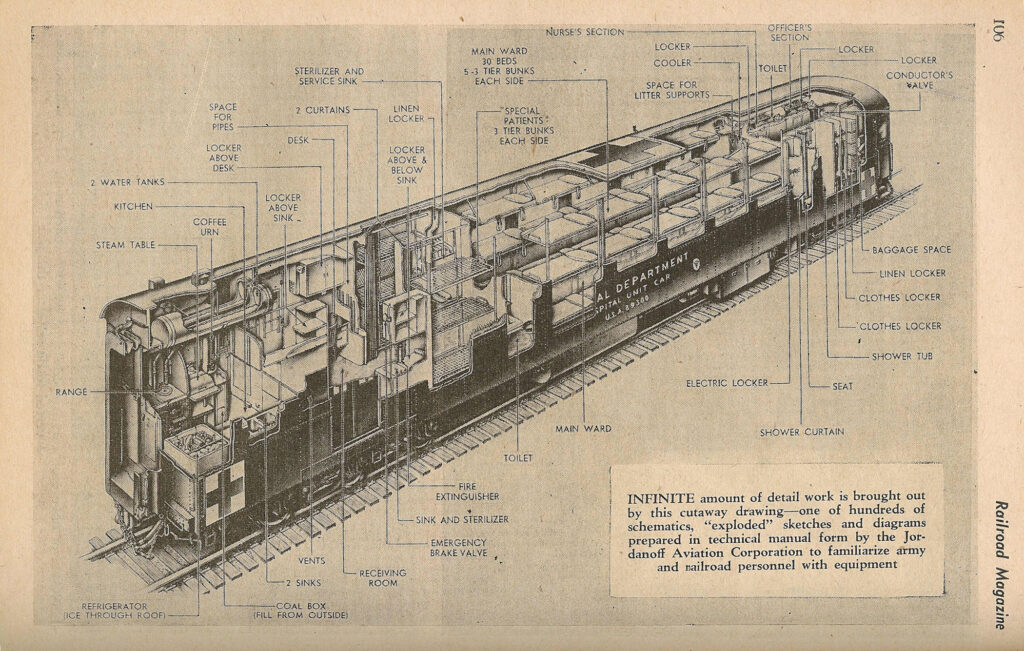
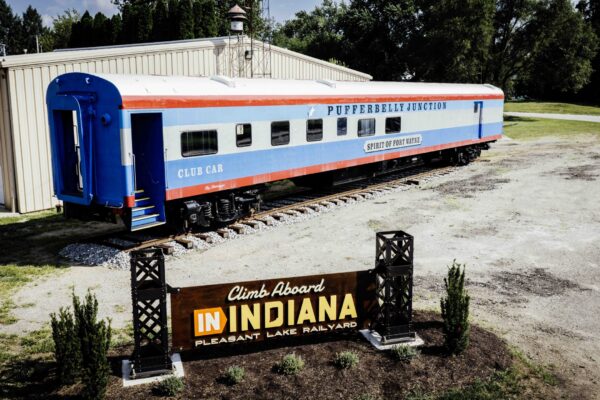
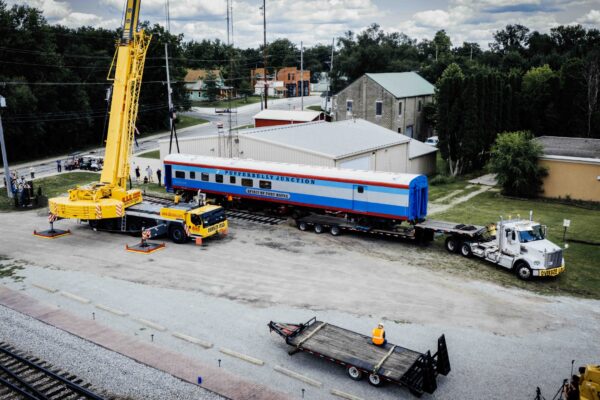
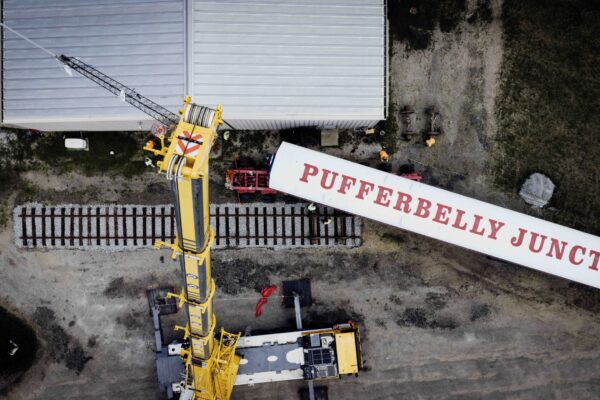
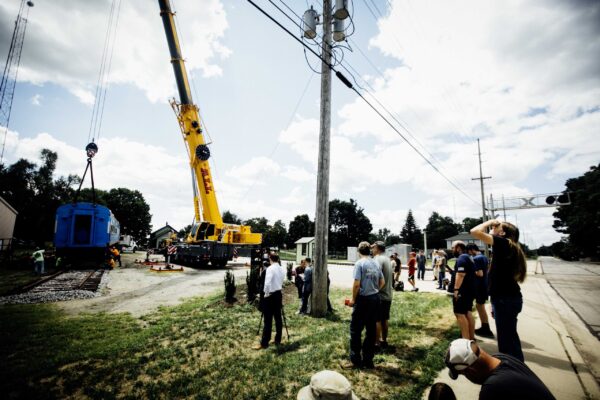
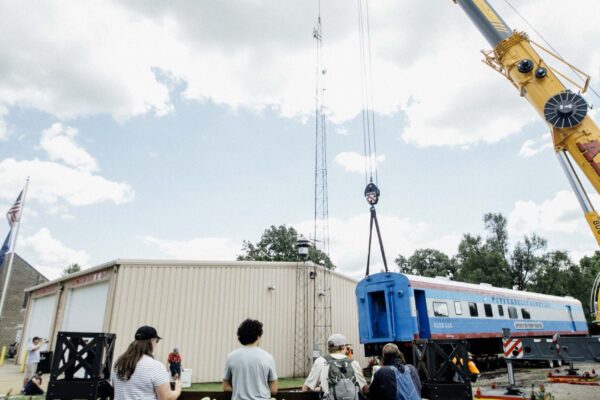
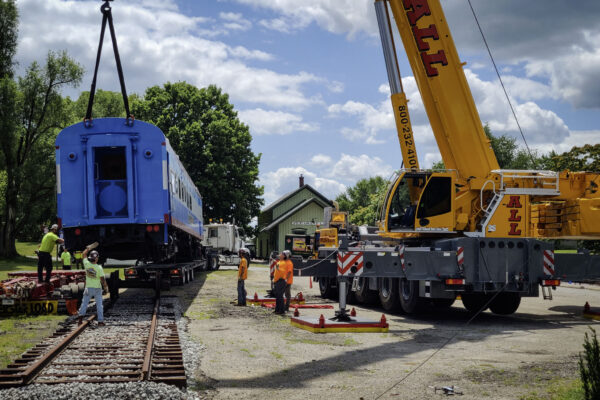
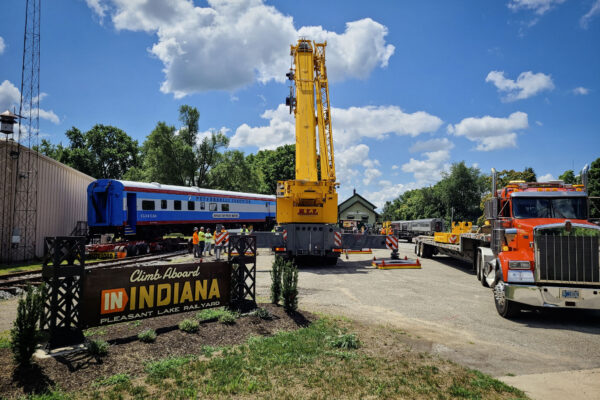
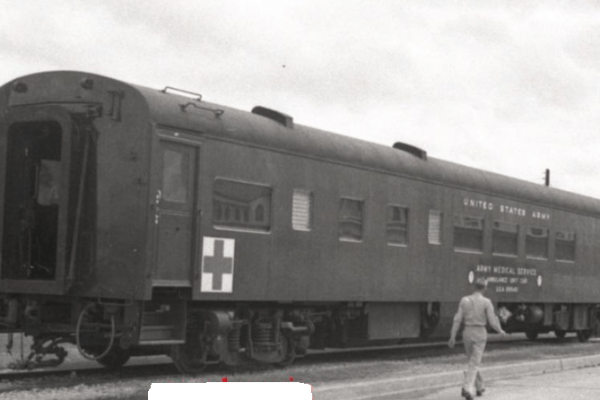
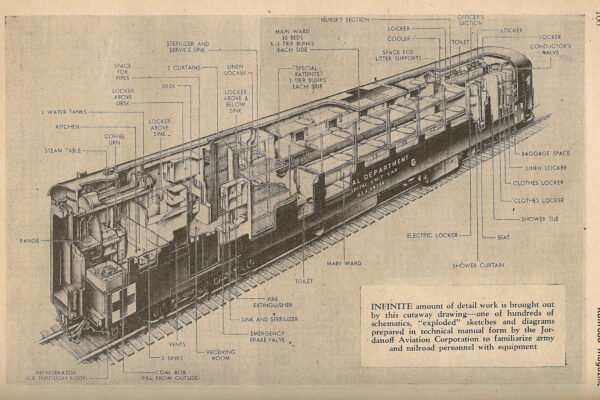
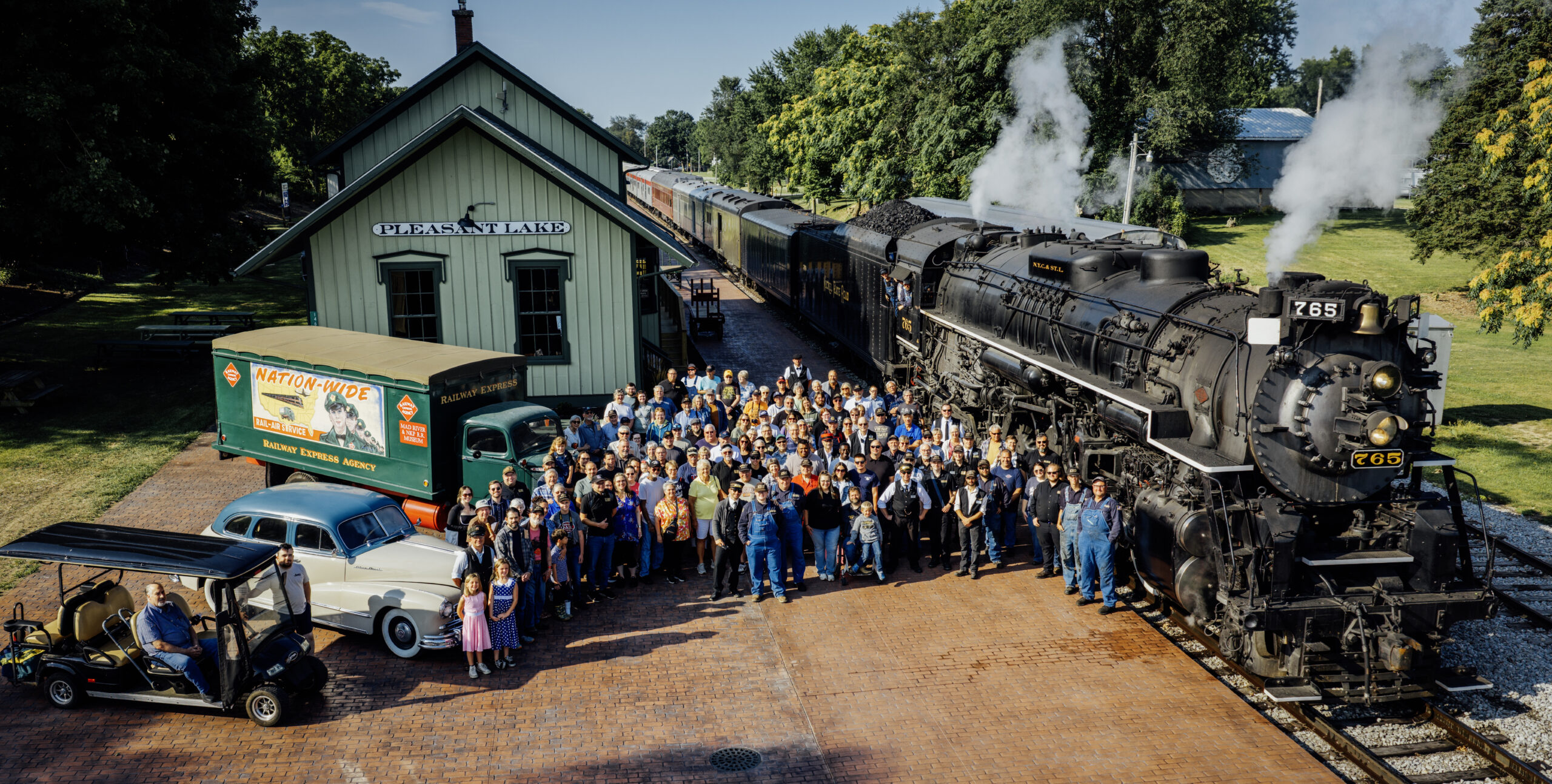
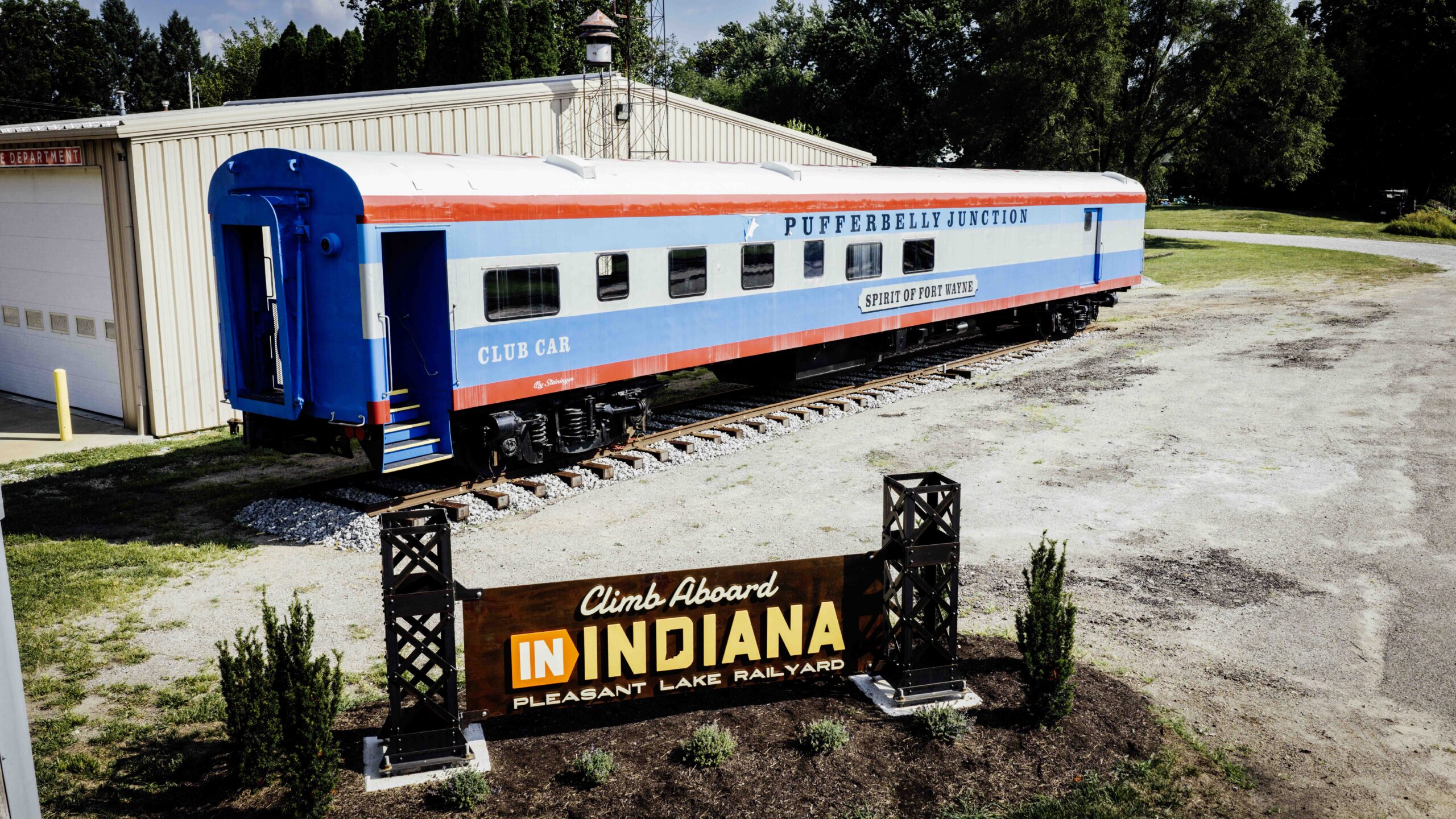
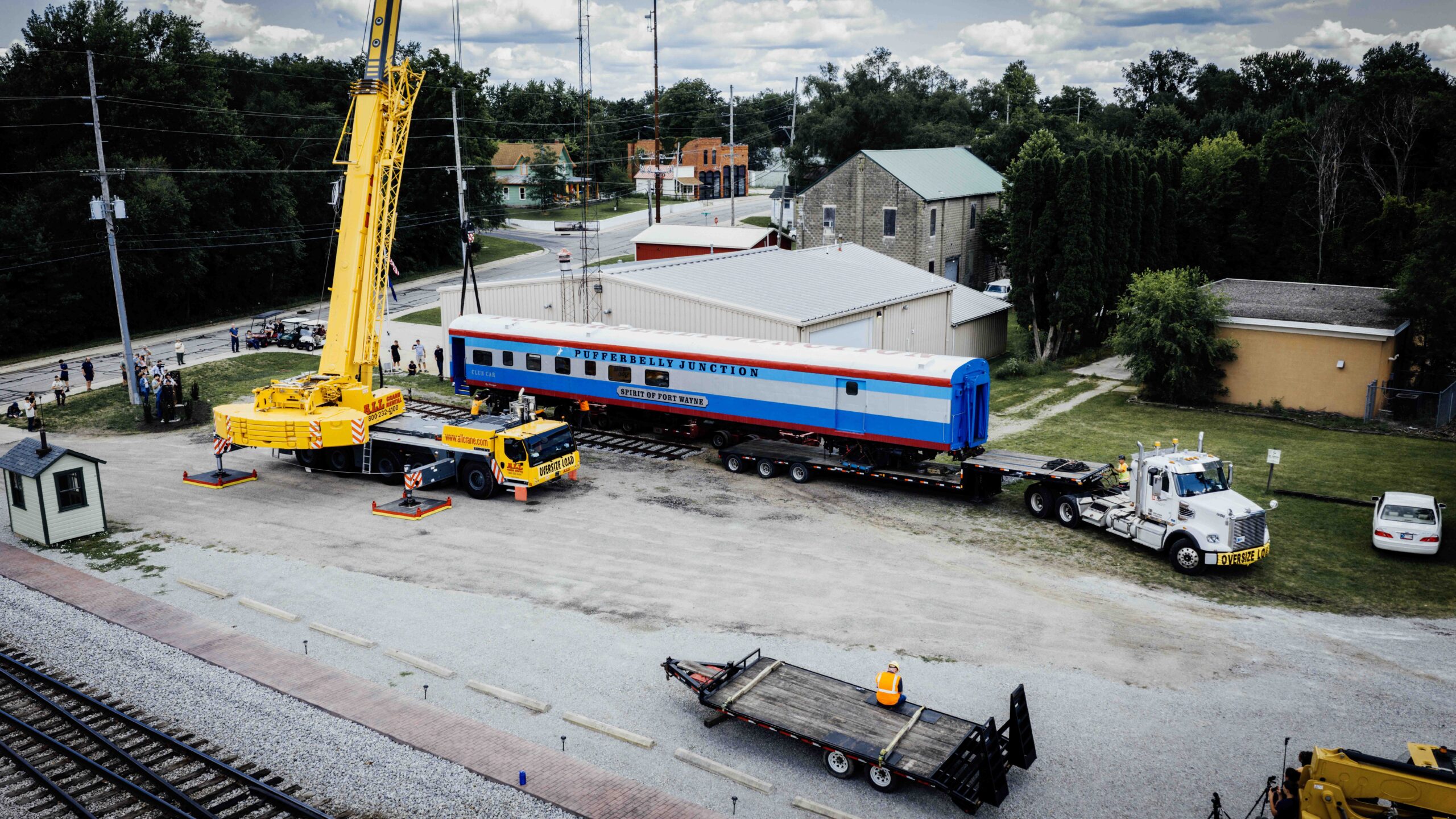
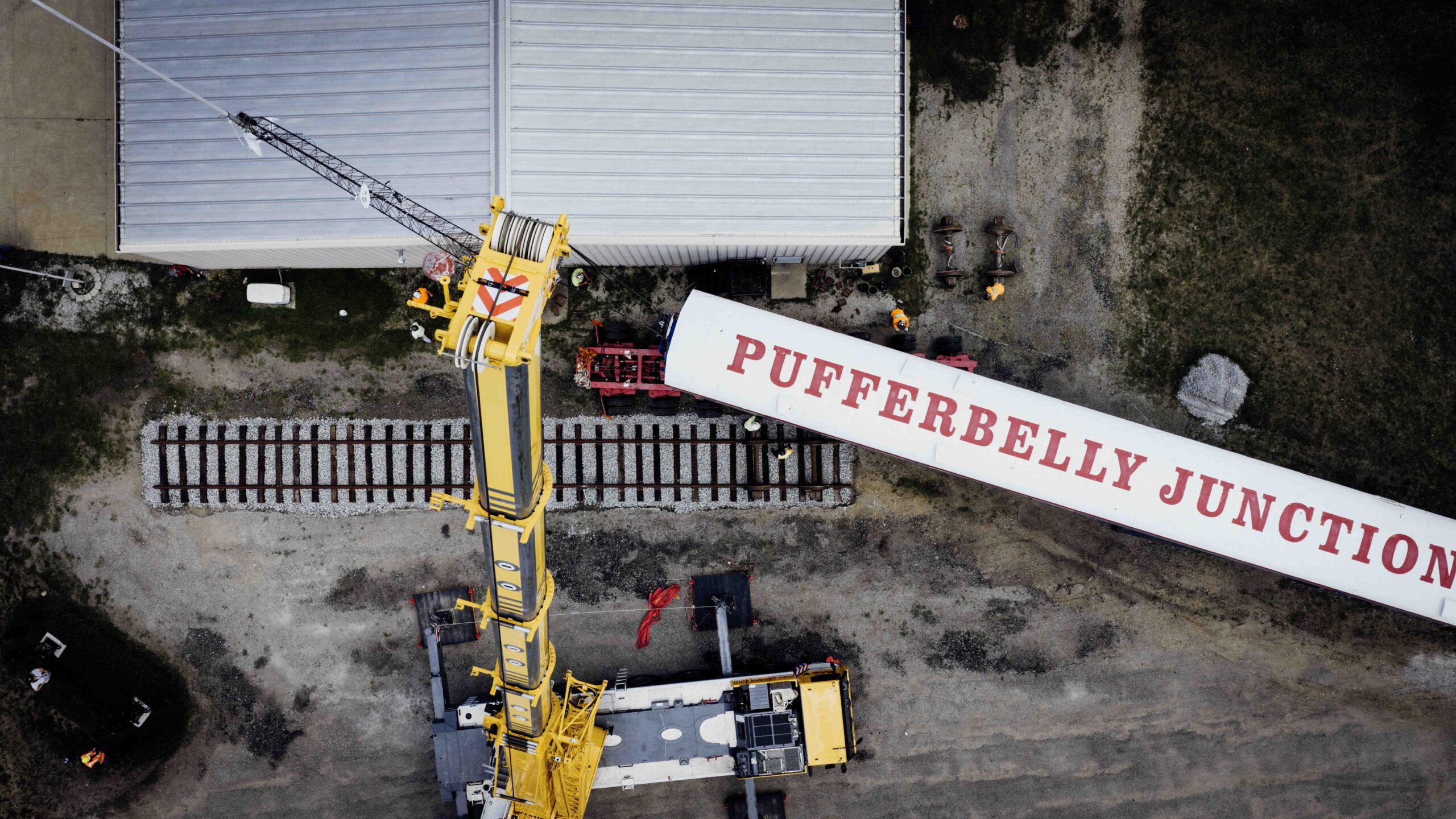
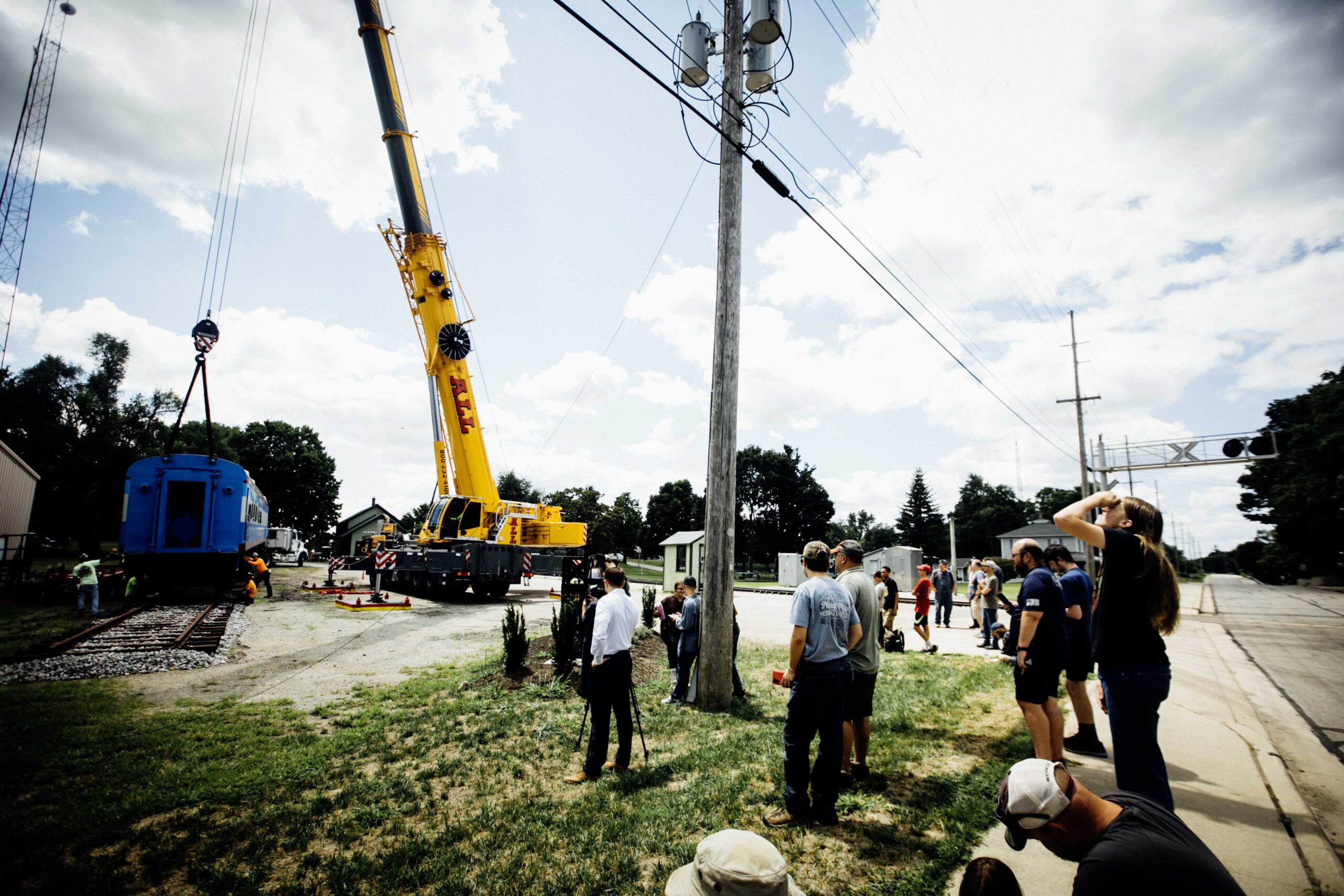
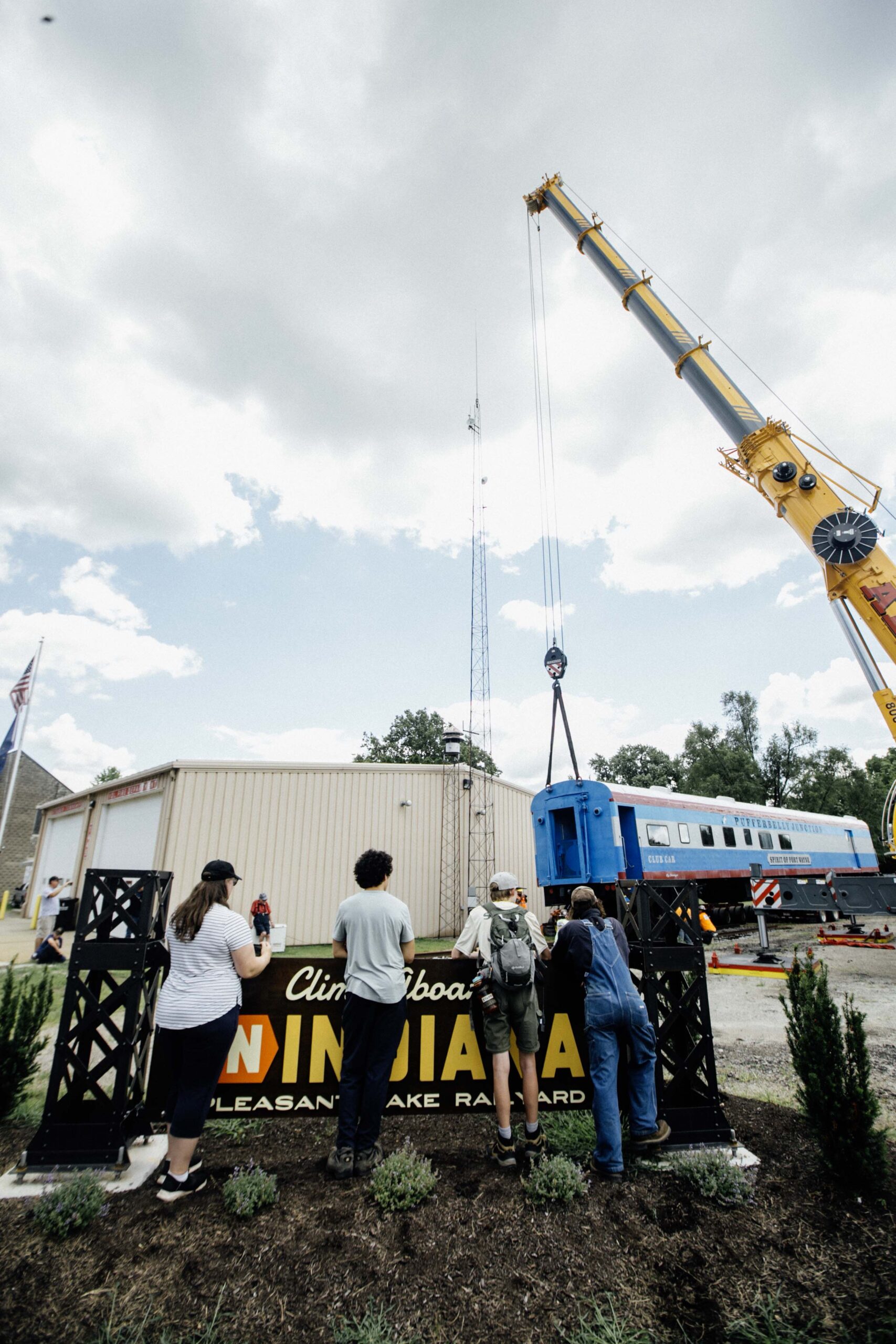
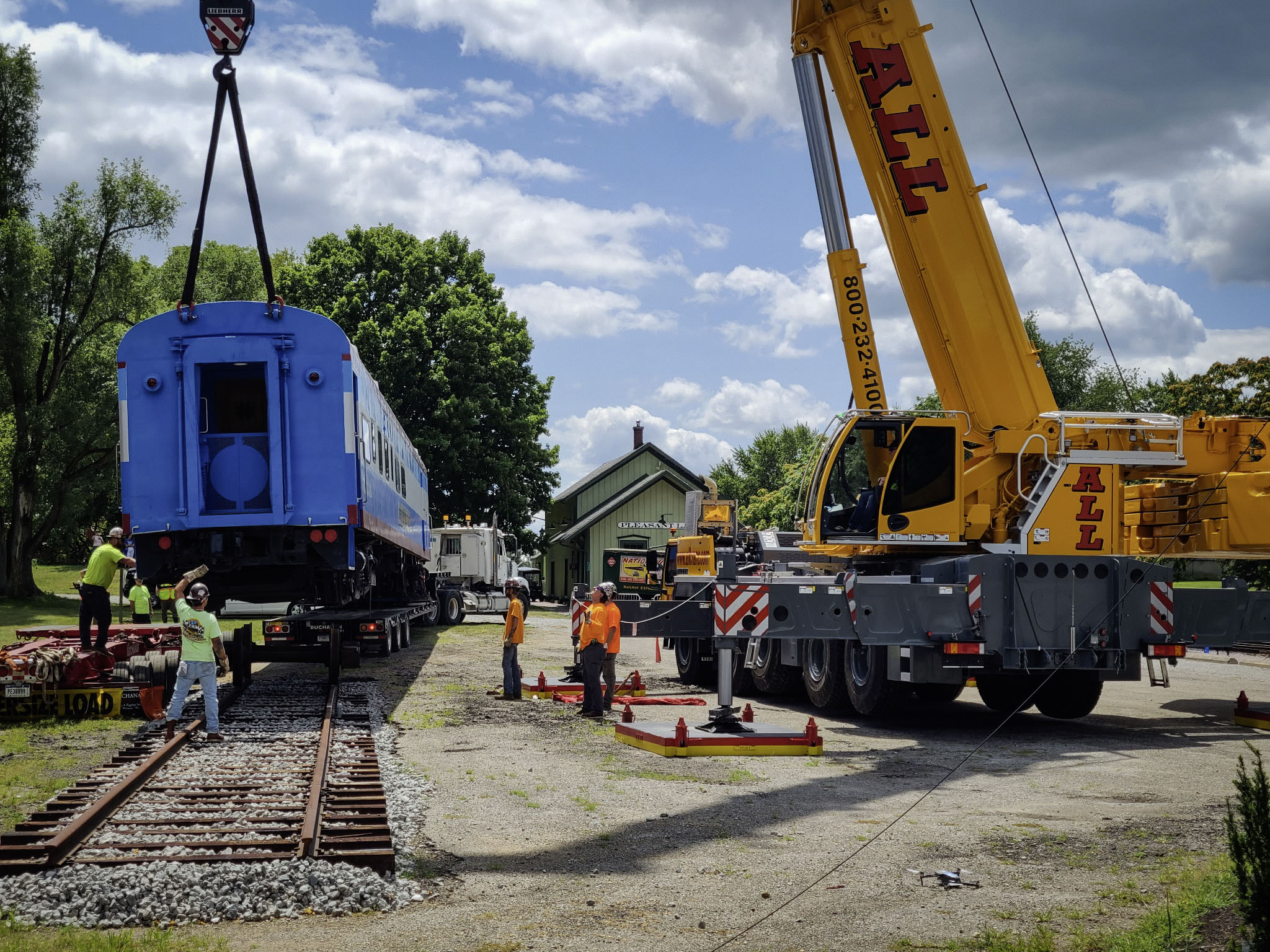
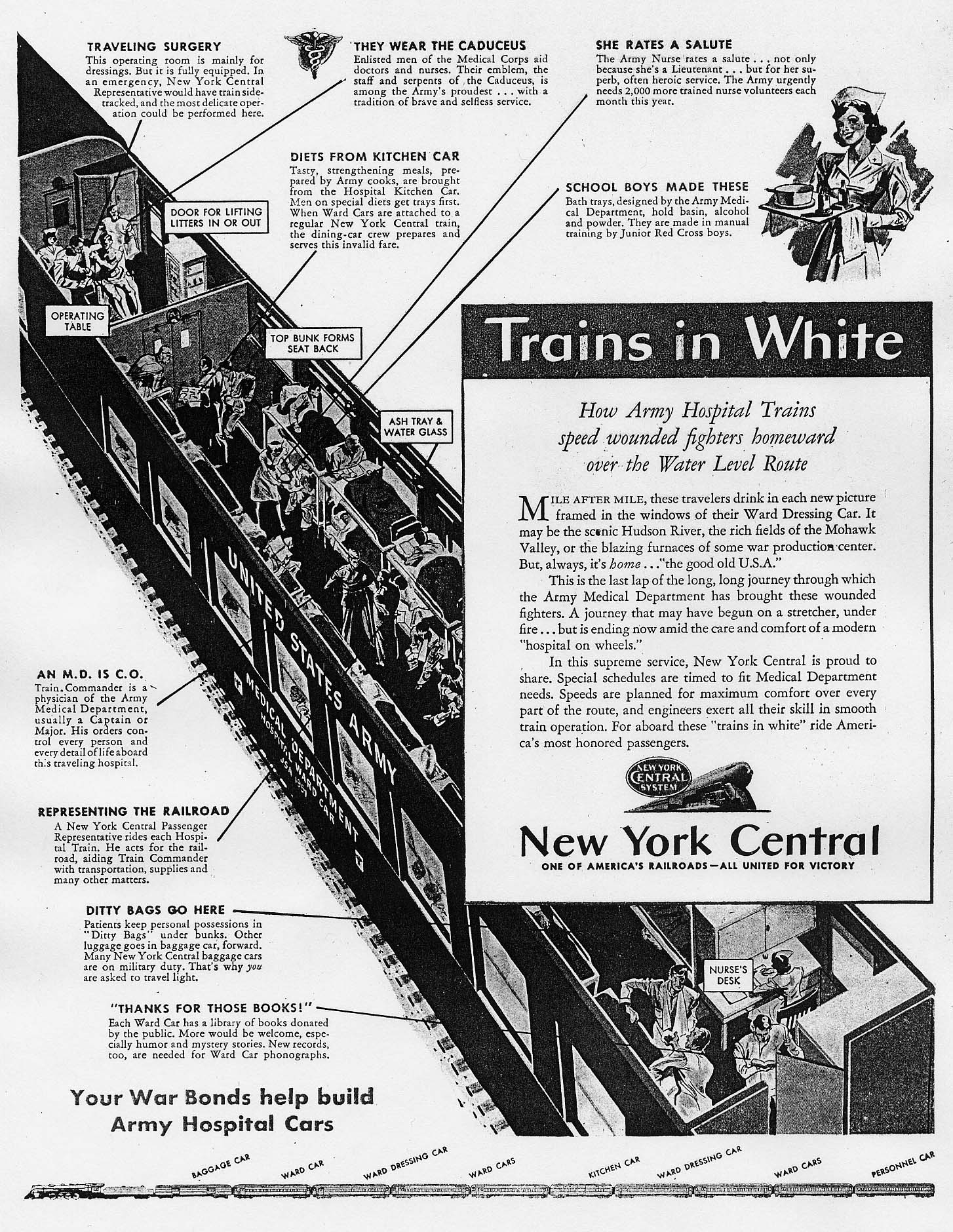
PLEASANT LAKE, Indiana. — A vintage passenger car built for military medical service during the Korean War arrived at the Pleasant Lake Railyard on Wednesday, July 29, marking the completion of the second phase of the Fort Wayne Railroad Historical Society’s campus development.
The car traveled from Fort Wayne’s downtown riverfront, where it had been incorporated into Pufferbelly Ice Cream, to its new home at the growing railroad destination in Steuben County. It will serve as a classroom, meeting room, and event space in partnership with nearby Camp Chief Little Turtle.
A NEW COMMUNITY ASSET
With support from local philanthropist Don Steininger, the once-dilapidated display car was renovated into a lounge car. It was originally envisioned as part of a downtown Fort Wayne railroad attraction before being adapted for use by the riverfront eatery.
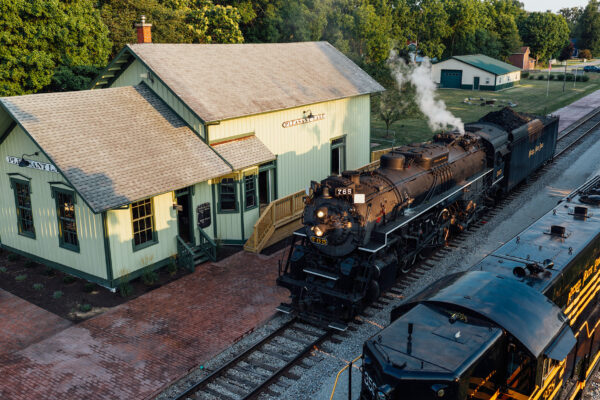
That larger railroad attraction ultimately found a new path forward at Pleasant Lake’s historic depot. Since shifting its focus to Steuben County, the Fort Wayne Railroad, a 501(c)(3) non-profit, and its partners have transformed the once-neglected property into a destination for passenger excursions, railroad education and community events. The attraction continues to serve Fort Wayne and the wider Northeast Indiana and Tri-State region while welcoming visitors from all 50 states and several countries.
In a fitting connection, the car traveled from Fort Wayne Outfitters’ own historic depot, which was once linked to Pleasant Lake by the same railroad corridor used by the heritage railroad today.
DEVELOPING THE PLEASANT LAKE RAILYARD
The car’s arrival complements newly finished site improvements, which also included a new stamped-concrete passenger platform, signage, security, and landscaping. This work was supported by a $250,000 grant awarded to the Fort Wayne Railroad by the Indiana Destination Development Corporation in 2024.
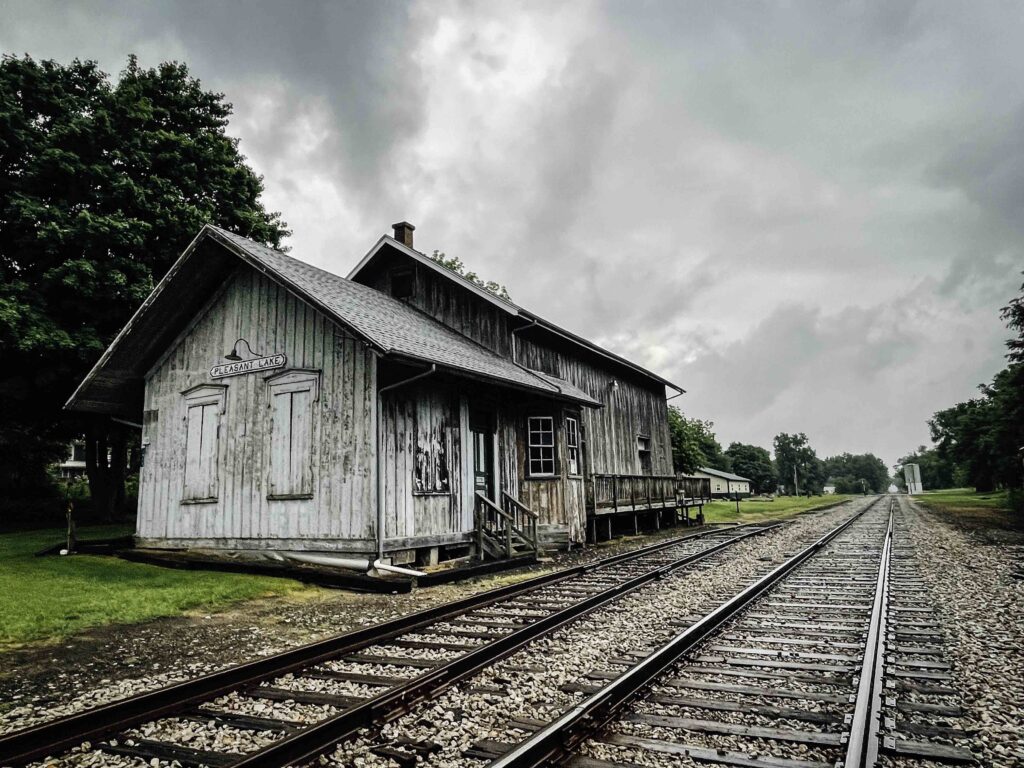
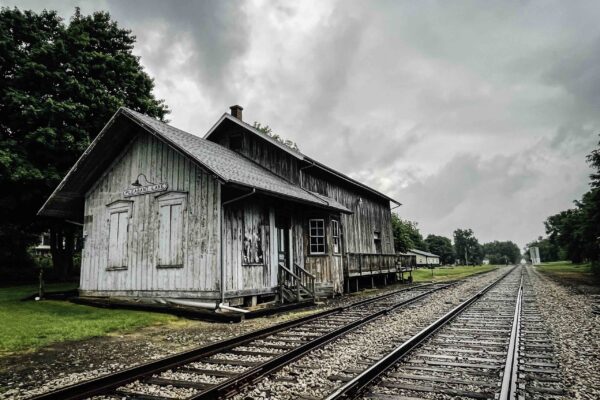
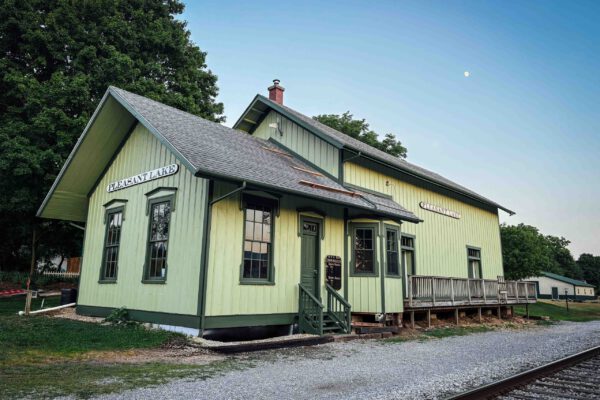
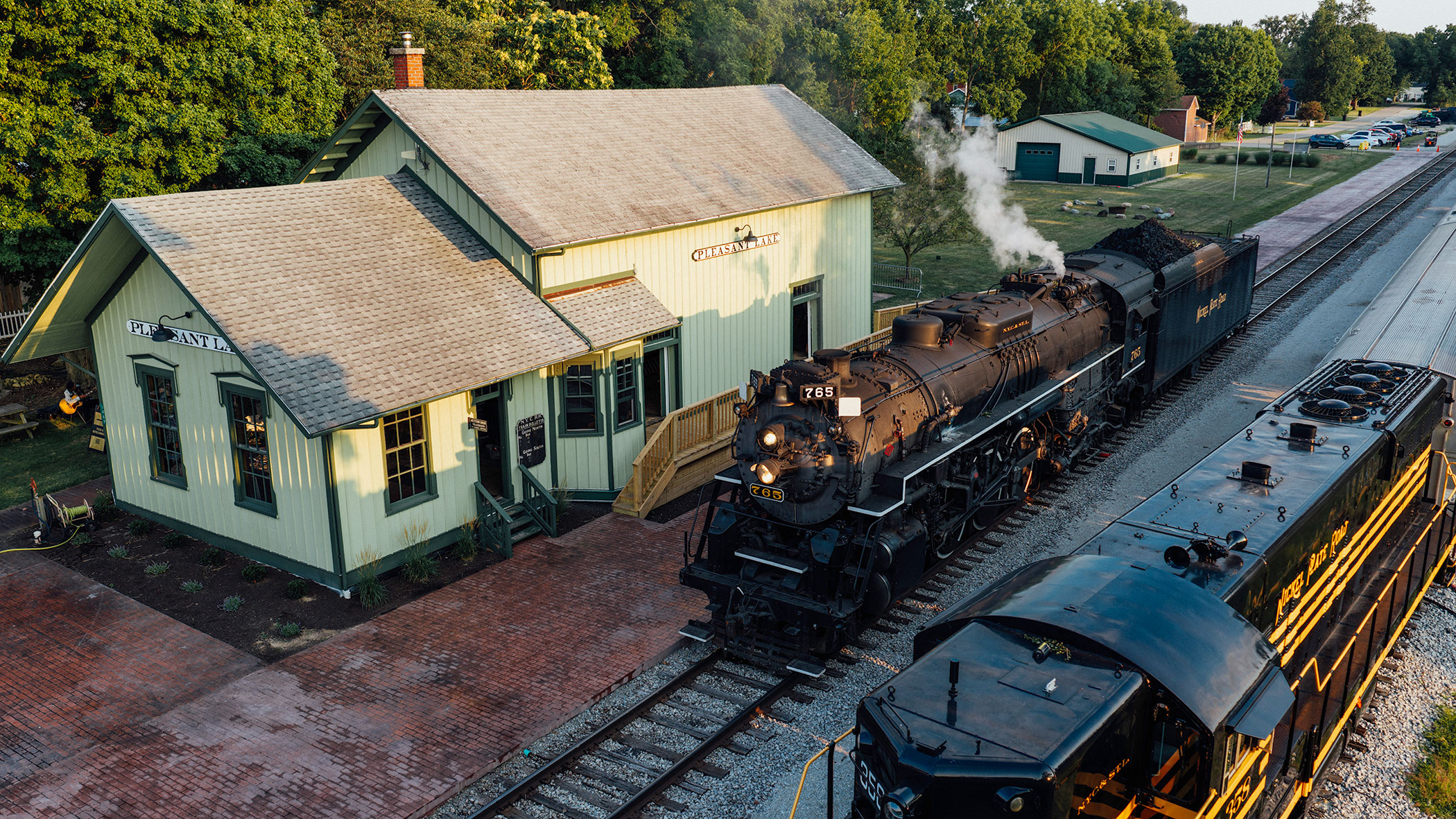
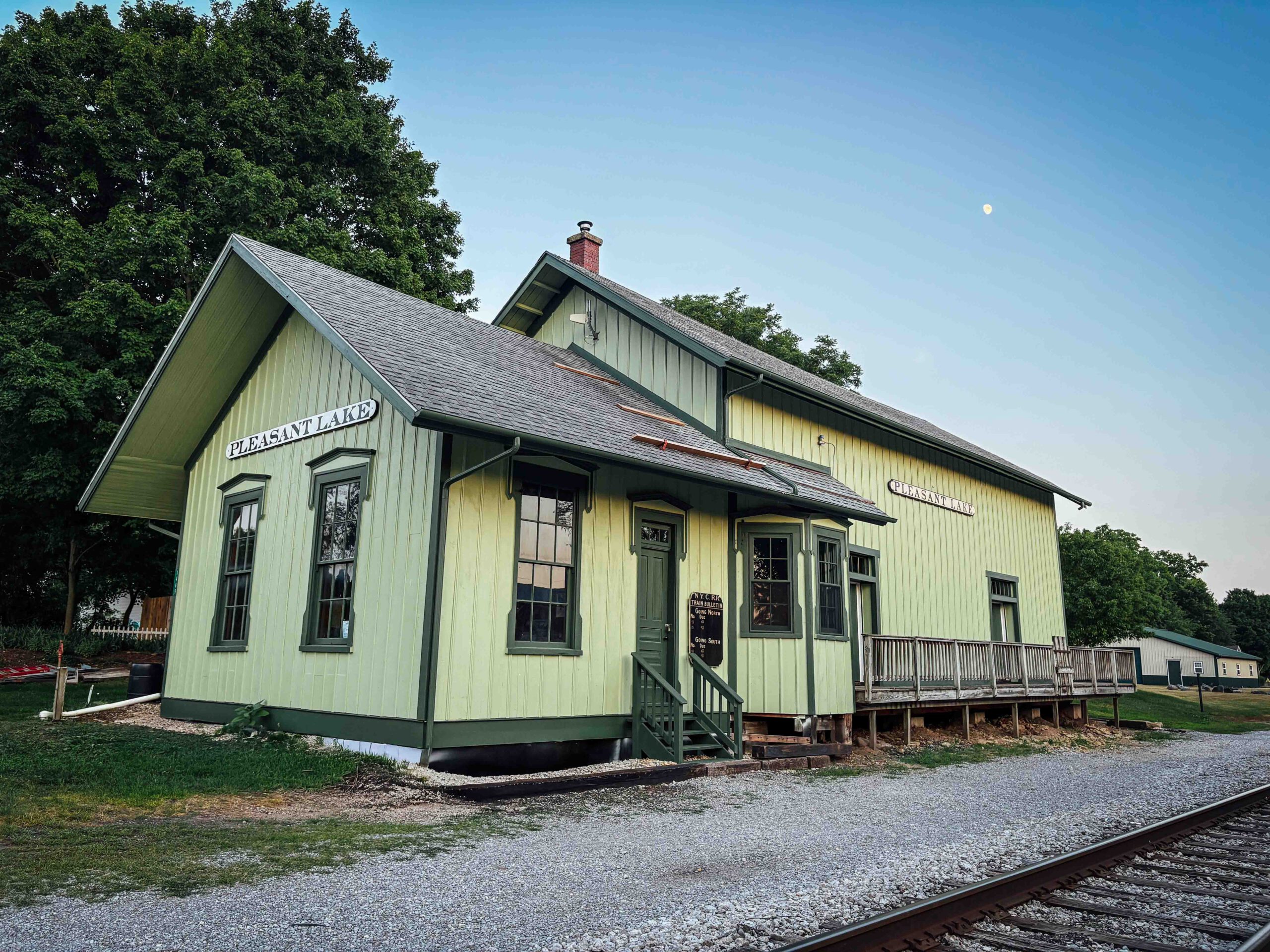
The milestone builds on the restoration of the historic Pleasant Lake depot. Completed in partnership with 3rd Street Construction, the project included extensive exterior and structural improvements to the 1882 building, including foundation and flooring repairs, restored woodwork, new windows and transoms, electrical and security upgrades, and the return of the depot’s original Pleasant Lake sign.
The final campus project currently planned is the restoration of the former New York Central depot’s historic passenger waiting room. That work will be supported by a $15,000 grant from the Steuben County Community Foundation.
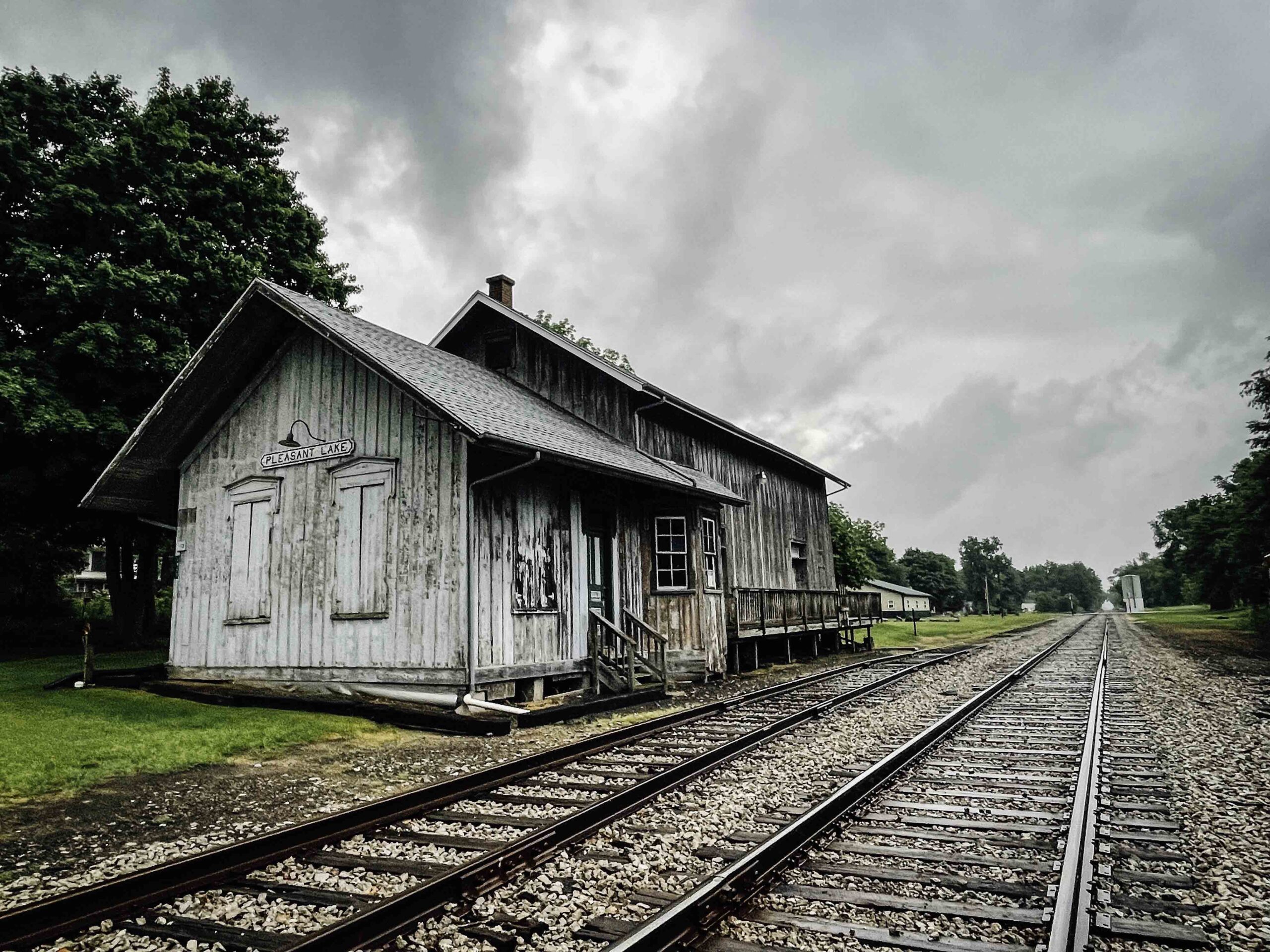
The historic depot before restoration.
MORE THAN $470,000 INVESTED IN PLEASANT LAKE
More than $470,000 has been raised to bring the Pleasant Lake campus to life. The project has been made possible by local volunteers, private donors and strategic partners, including Visit Indiana, Norfolk Southern, the Indiana Historical Society, the M.E. Raker Foundation, the Olive B. Cole Foundation, the Steuben County Tourism Bureau and Indiana Michigan Power.
This investment has helped transform a once-endangered historic site into an active center for tourism, education and community engagement.
The Fort Wayne Railroad also recognizes Steel Dynamics, and the volunteer community leaders and supporters behind Pufferbelly Junction — the organization behind the original Headwaters Junction concept — as well as Steininger Development for their support of the car’s rehabilitation and original placement along Fort Wayne’s downtown riverfront. Their early investment helped preserve and renovate the car, preparing it for its next chapter of public service. Plans call for the car to be repainted and incorporated more fully into the campus through additional landscaping.
FROM MILITARY SERVICE TO PUBLIC SERVICE
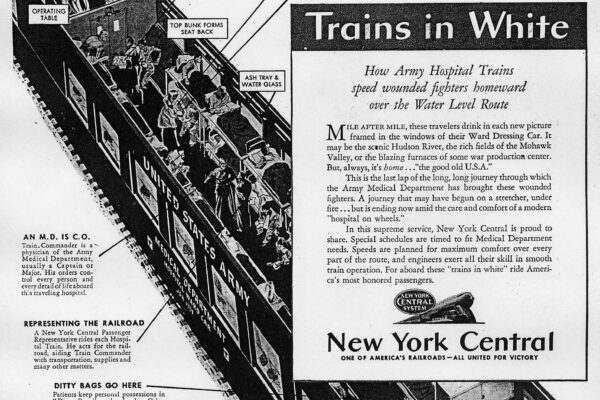
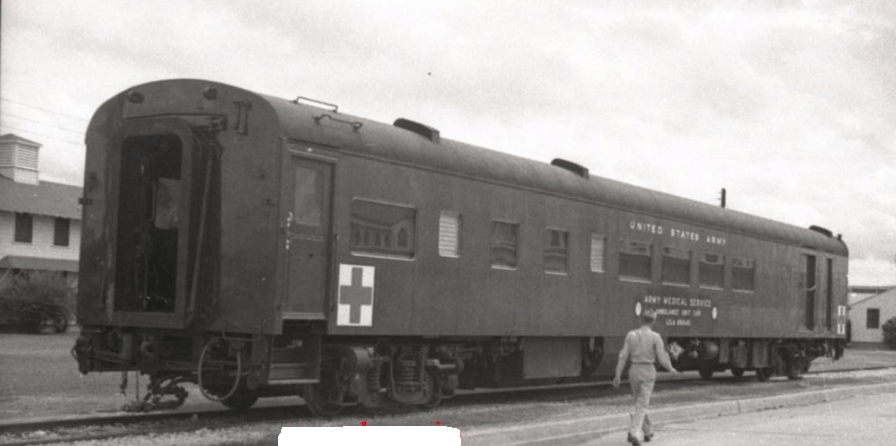
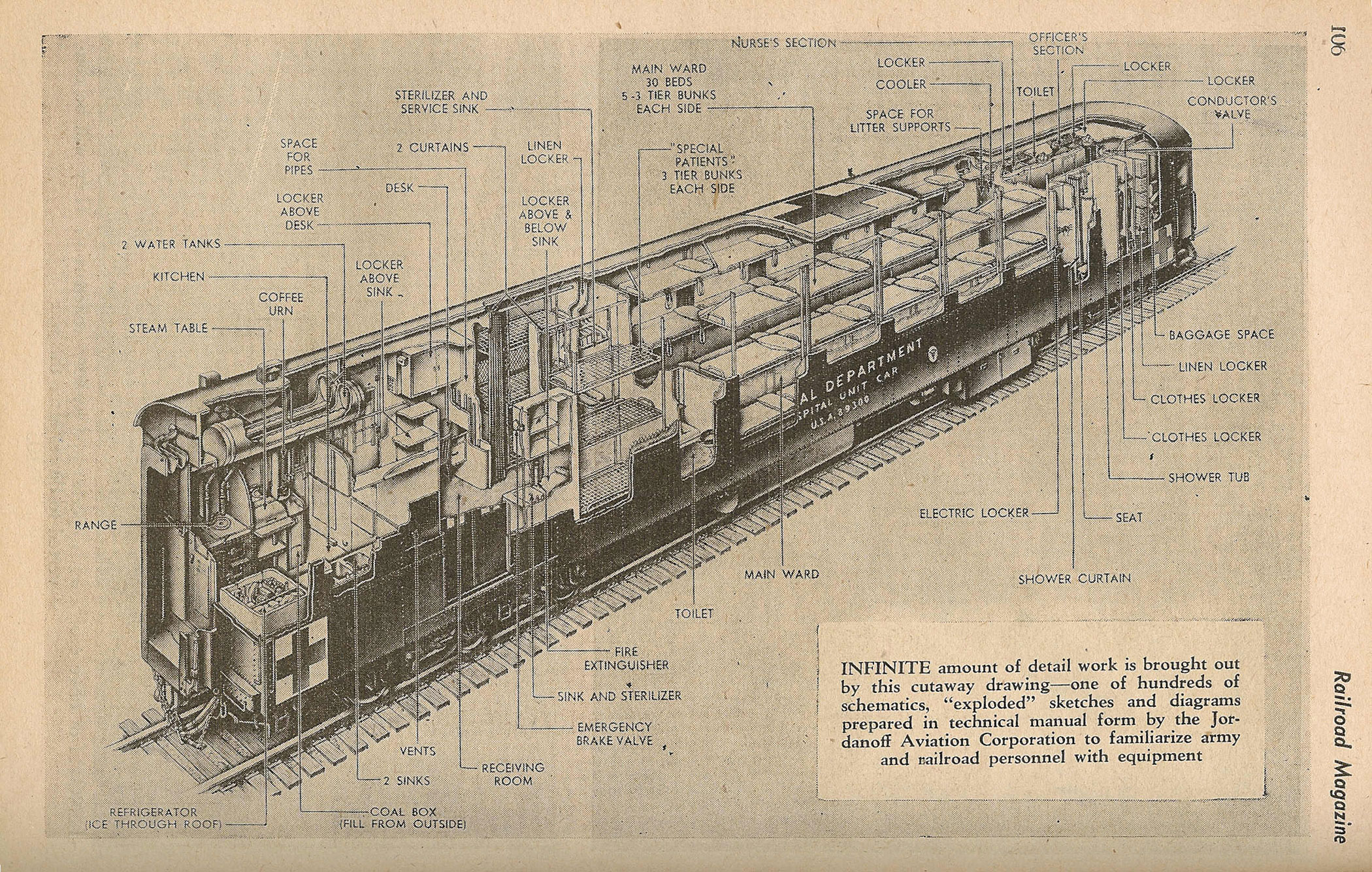
Originally constructed as Car No. 89552 for military medical service during the Korean War, the car found various uses throughout its life, including on the Minuteman Mobility Test Train, a 1960 U.S. Air Force project that evaluated deploying intercontinental ballistic missiles on railroad networks to reduce vulnerability to surprise attacks.
On Amtrak, the car was converted to head-end-power and renumbered No. 1614, where it was assigned to the railroad’s modern incarnation of the Broadway Limited, which operated through Fort Wayne, and later used on the Tennessee Bicentennial Train. It was acquired by the organization in the mid-2000s after storage by the Steam Railroading Institute in Owosso, Michigan. The group donated the car to Headwaters Junction around 2018.
Although it had successfully acquired a mile of railroad right-of-way from Norfolk Southern in Fort Wayne in 2019, delays involving floodwall relocation and other development provisions made Pleasant Lake a more immediate path toward establishing an operating regional attraction and the all-volunteer organization shifted its focus north, approximately 38 rail miles north of downtown.
Since that pivot, volunteers have restored the historic depot, rebuilt railroad infrastructure, improved the surrounding property, and assembled and renovated a complete vintage passenger train set. Through the Indiana Rail Experience, the Fort Wayne Railroad now operates excursions over more than 100 miles of the privately owned Indiana Northeastern Railroad in a special partnership.
A GROWING REGIONAL ATTRACTION
To date, the Indiana Rail Experience has operated on more than 140 days, welcomed approximately 80,000 visitors and generated an estimated $5 million in economic impact across the tri-state region, according to the Steuben County Tourism Bureau.
“The last few years have proven what we had always known: a rail tourist attraction would become a meaningful destination in Northeast Indiana,” said Kelly Lynch, executive director of the Fort Wayne Railroad. “Our partnership with the Indiana Northeastern and the surrounding communities has allowed this vision to flourish.”
Though reserved for static use, the hospital car will complement programs including fall color excursions, Christmas trains and Indiana Railroad Camp. Members of the 2026 Rail Camp class watched Wednesday as Fruchey Construction and Buchanan Hauling unloaded the car.
Listed on the National Register of Historic Places, the Pleasant Lake depot was constructed in 1882 for the Fort Wayne & Jackson Railroad and later became part of the New York Central system, one of several rail networks connecting Fort Wayne to the nation. Pleasant Lake was once a popular vacation destination for Fort Wayne residents, served by as many as six passenger trains a day on weekends.
Since 1972, the Fort Wayne Railroad has worked to restore and transform historic railroad equipment into operating attractions, including most notably Nickel Plate Road steam locomotive no. 765. For over 40 years, its dedicated volunteers have exhibited vintage rail attractions throughout the Midwest and Eastern United States.
In association with the Indiana Northeastern Railroad, the organization created the Indiana Rail Experience in 2022 and now routinely operates tourist trains between Indiana, Michigan, and Ohio. With growing attendance numbers and an economic impact of over 5 million dollars, the 100-mile-long route was named Indiana’s Best New Experience in 2023.
Its operations are made possible entirely through volunteers and funded by ticket sales, memberships, donations, grants, and sponsorships. For more information, visit fortwaynerailroad.org.
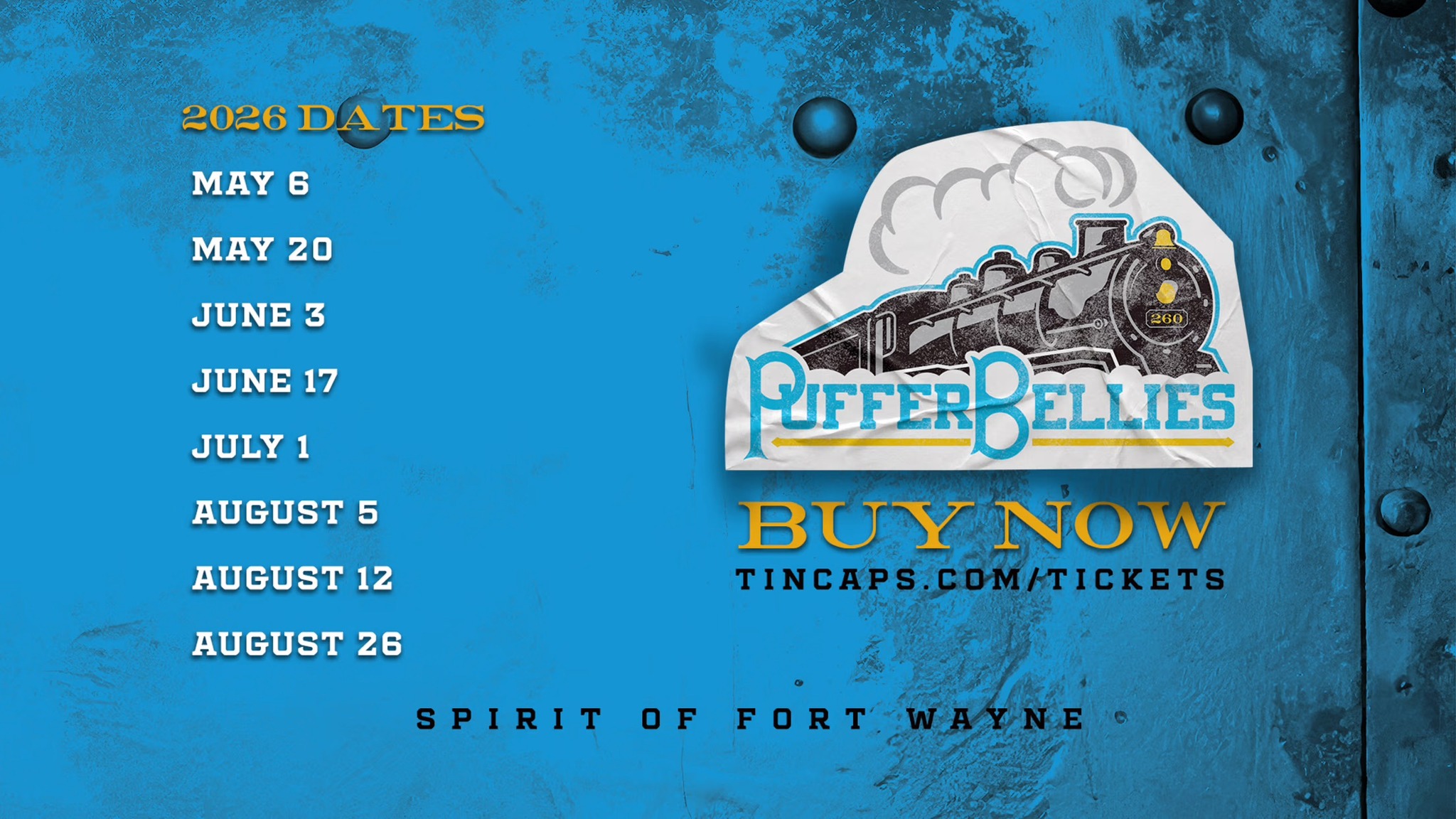
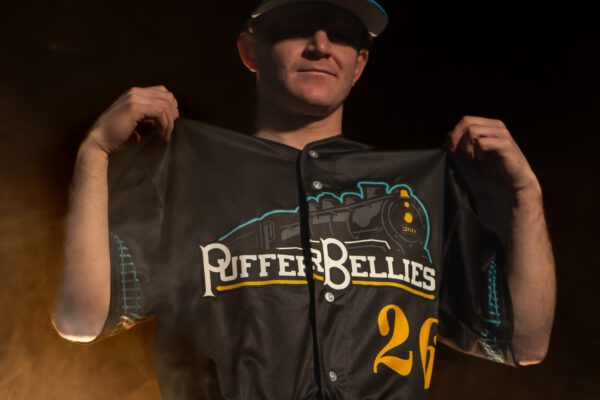
FORT WAYNE, Ind. – Paying homage to the area’s rich railroad history, the Fort Wayne TinCaps announced this evening the team will be playing as the “PufferBellies” every Wednesday night game, May through August, during the 2026 season.
The name “PufferBellies” refers to the nickname given to steam-powered locomotives, which would “puff” steam into the air produced by the giant boilers located in the “belly” of the massive engines.
One of the most famous “PufferBellies” is the 765 engine, maintained and preserved by the Fort Wayne Railroad Historic Society.
“One of the things that excites us the most about the PufferBellies identity is being able to partner with the Fort Wayne Railroad Historic Society,” stated Michael Limmer, TinCaps Vice President of Marketing. “Their work to preserve the Nickel Plate Road’s 765 – a S-2 class 2-8-4 “Berkshire” type steam locomotive, is inspiring.”
The 765 engine, which is serviced and stored in the Fort Wayne Railroad Historic Society’s restoration facility in New Haven when not operating on excursions, stands 15 ft 8 in tall and is over 100 feet long. The massive feat of engineering weighs in at 800,000 pounds with a top speed of over 80 miles per hour!
The 765 was built 1944 just across the state line in Lima, Ohio by the Lima Locomotive Works. In 1963 the 765 was donated to the City of Fort Wayne and displayed at Lawton Park to commemorate the elevation of the railroad through downtown. The 1970s saw the formation of the Fort Wayne Railroad Historic Society, created in part to get the 765 back into working order, which they did, having it able to run excursion routes in the 80s and 90s. Officially retired in 1993, the 765 was added to the National Register of Historic Places in 1996.
After more extensive work, the 765 was completely overhauled and returned to service in 2005, and has been going strong ever since – the admiration of young and old alike.
“Trains and baseball both have avid and dedicated fans,” said Fort Wayne Railroad Historic Society Executive Director, Kelly Lynch. “We know a train-based identity, like the PufferBellies, will be able to bring those fanbases together. We’re excited to partner with the TinCaps to educate fans at Parkview Field about this area’s rich railroad history.”
Fort Wayne has long been a center of industry – a centralized hub originally due to its location at the confluence of three rivers. However, as the country transitioned from canal transport to railroads, the area continued to be a throughway and artery for freight between major Midwest cities like Cleveland, Cincinnati, Detroit, and Chicago.
The most highly regarded railroad to run through Fort Wayne was the Nickel Plate Road, which originally spanned from Buffalo, New York to Chicago – connecting the East Coast with the heart of the Midwest. Mighty “stream” engines, the “PufferBellies”, serviced the line with giants like the 765 engine powering freight down the Nickel Plate Road. The railway would expand over its 83 years of service, eventually connecting Pittsburgh and St. Louis as well as other communities criss-crossing the Heartland.
Minor League Baseball is filled with train-themed identities, including the Hartford Yard Goats, Round Rock Express, and Scranton/Wilkes-Barre RailRiders, and Fort Wayne is no exception. The Fort Wayne Railroaders played in the Central League, fielding a team in 1901, 1903-1906, 1912, and 1914.
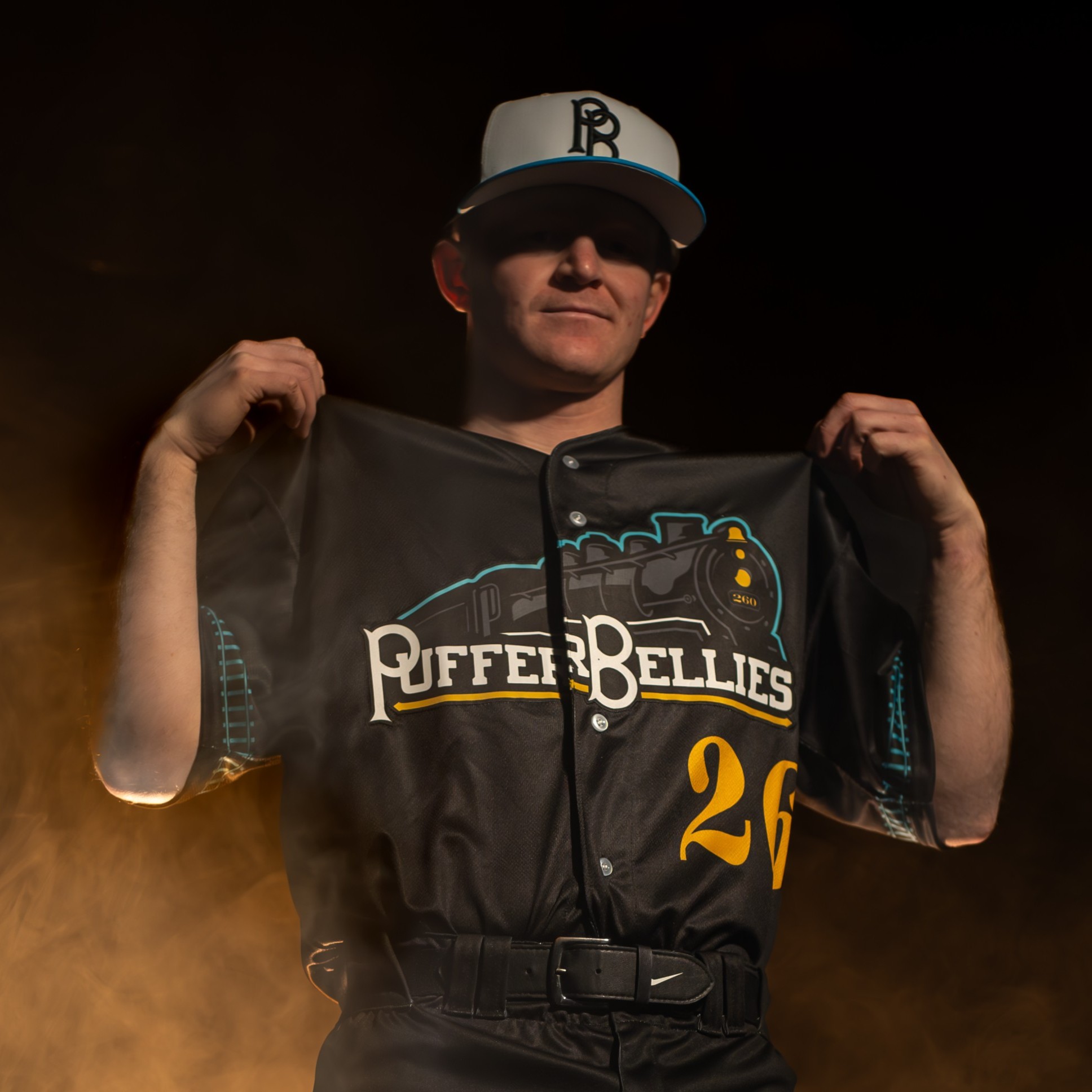
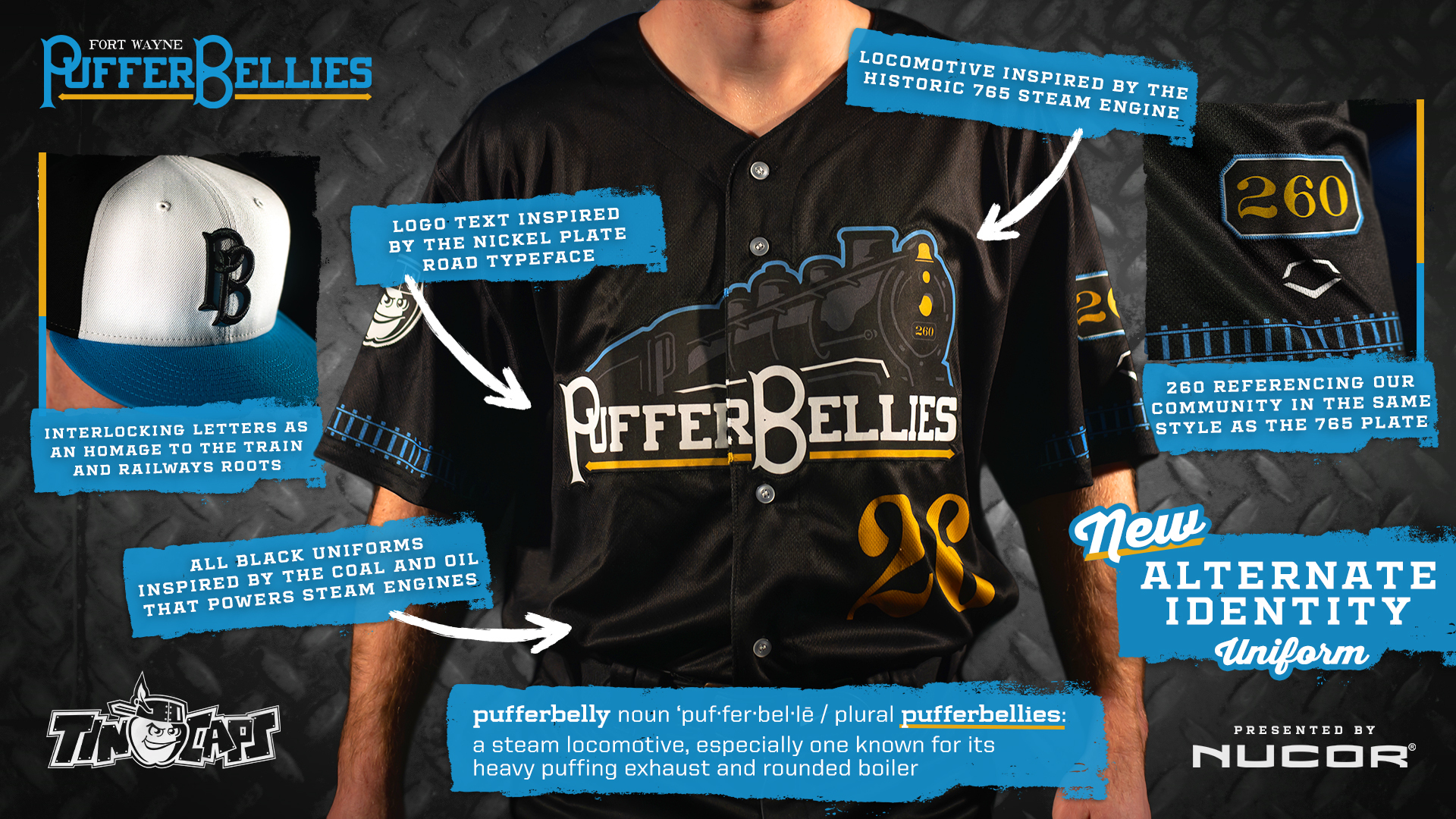
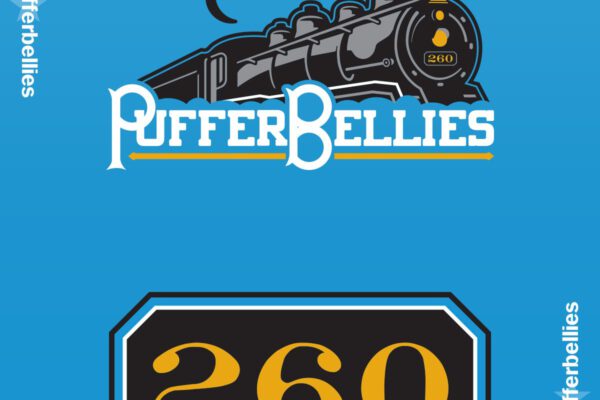
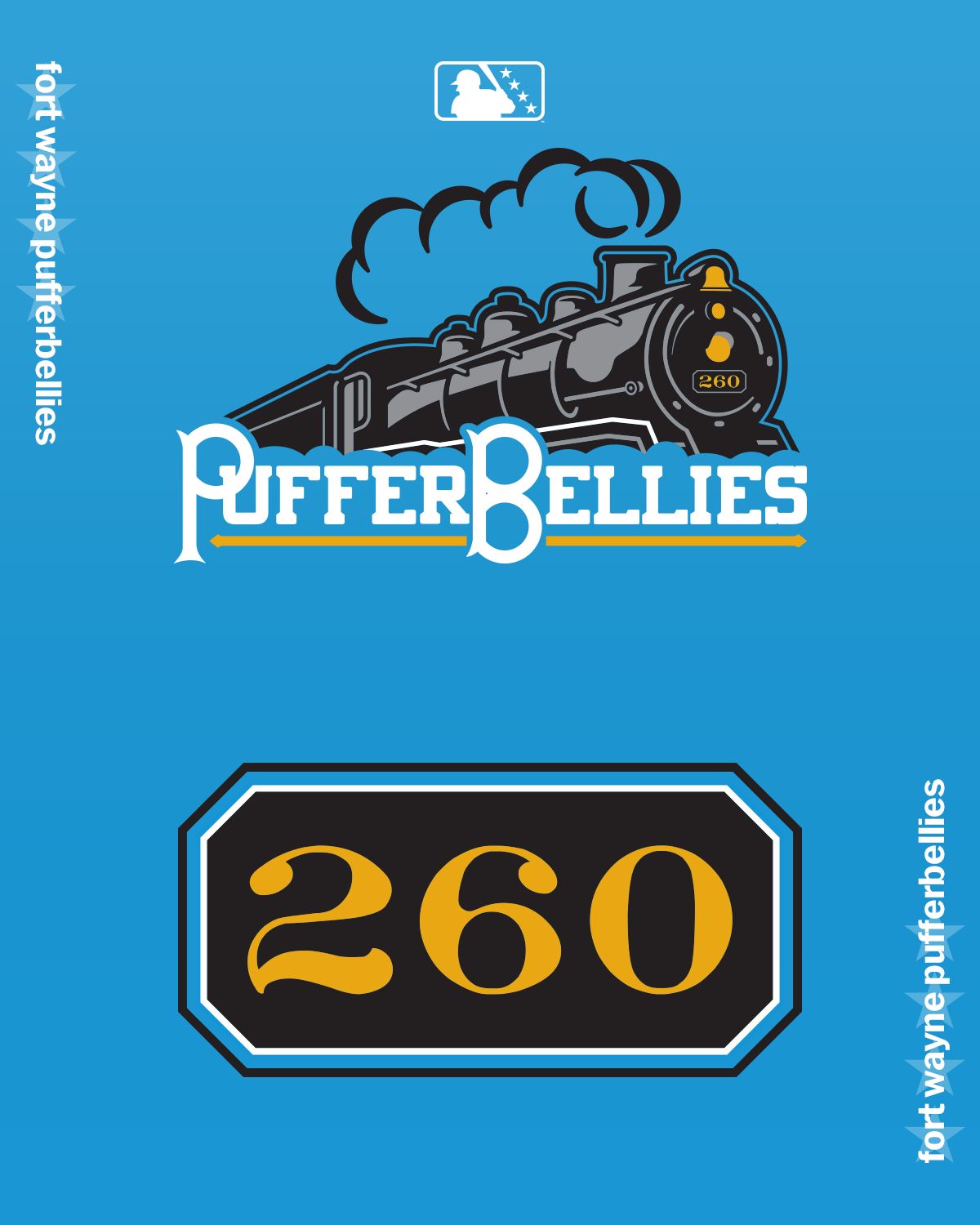
The PufferBellies primary logo features the iconic profile of a steam-powered engine, also includes the PufferBellies wordmark. The wordmark font is inspired by the same font and colors used by the Nickel Plate Road – gold lettering on a black background.
The interlocking “PB” hat logo draws its design from the interlocking “P” and “L” in Nickel Plate Road.
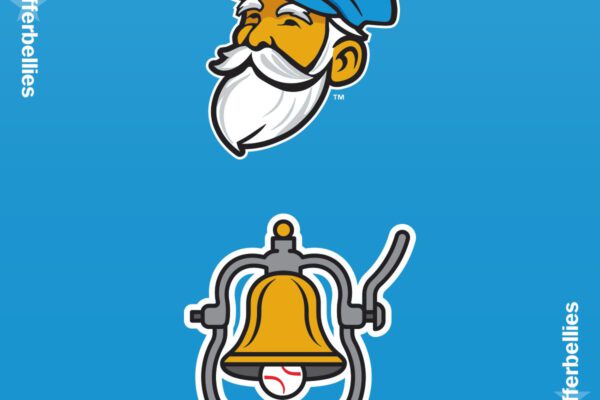
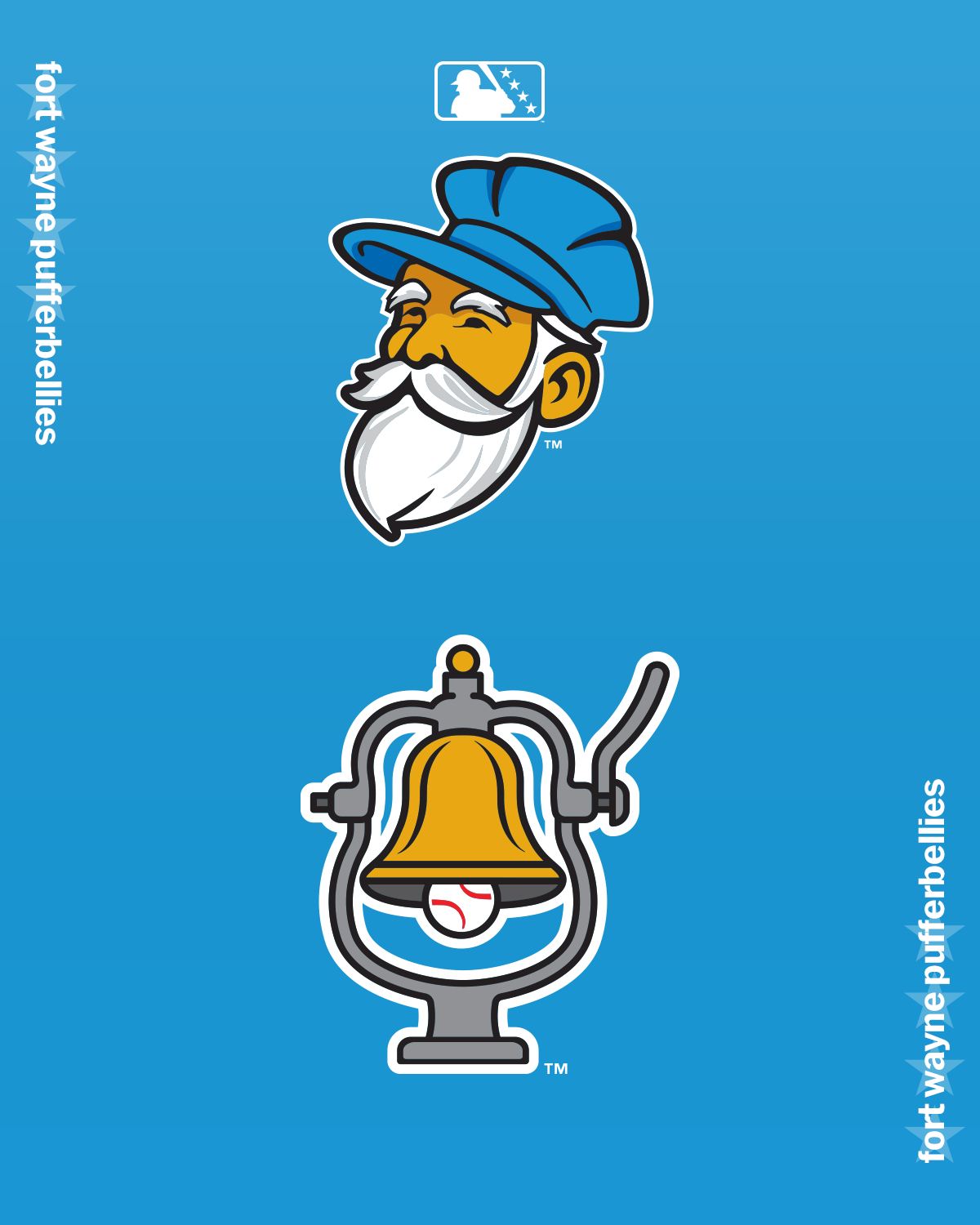
The ancillary marks are all symbols of the railway, with a friendly conductor, engine bell, and an engine number plate emblazoned with “260” in honor our community’s area code.
The PufferBellies logos were designed entirely by TinCaps Creative Director, Tony DesPlaines.
The Fort Wayne PufferBellies will also wear specially designed uniforms. The team’s jerseys will be black, gold, and teal, featuring the PufferBellies logo across on the chest. The back displays the players’ numbers in gold, while the sleeves include a teal-accented train track.
Similarly, the two-toned caps have a teal bill with a black outline and white forward front panel with the interlocking “PB” logo in the center. The uniform will be worn with black pants, belt and socks.
ABOUT THE FORT WAYNE RAILROAD
For more than 50 years, the Fort Wayne Railroad has created unique, memorable experiences celebrating the Golden Age of Railroading — a transformative era of American transportation, innovation, and connectivity spanning the 1930s through the 1950s. Founded in 1972, the nonprofit is best known for operating world-famous Nickel Plate Road steam locomotive No. 765 in public exhibitions and passenger excursions that routinely draw visitors from all 50 states and several countries.
ABOUT THE TINCAPS
Since Fort Wayne’s Minor League Baseball franchise was founded in 1993 (known as the Wizards through 2008), 235 players have gone on to play in Major League Baseball. Since opening in 2009, Parkview Field has been perennially ranked as the No. 1 ballpark experience in the minors by Baseball America and Stadium Journey. Over the years, the TinCaps have been awarded as Minor League Baseball’s Organization of the Year, and also received accolades for community service, hospitality, promotions, and more. In 2022, Team President Mike Nutter won Minor League Baseball’s Executive of the Year Award and was named the Journal Gazette’s Fort Wayne Citizen of the Year in 2024.